Artwork
Dives (Calvados)
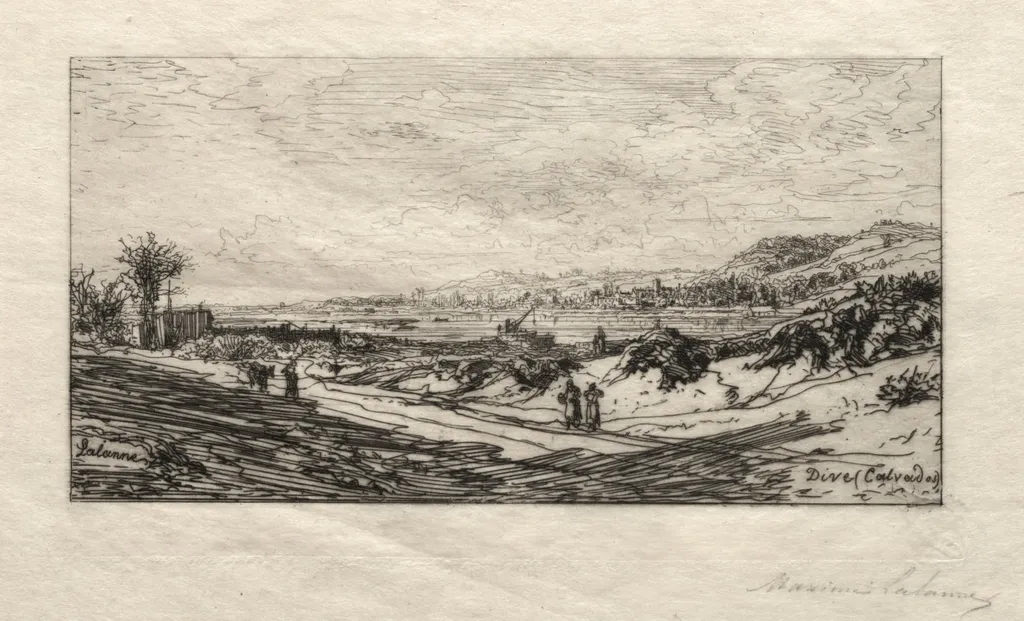
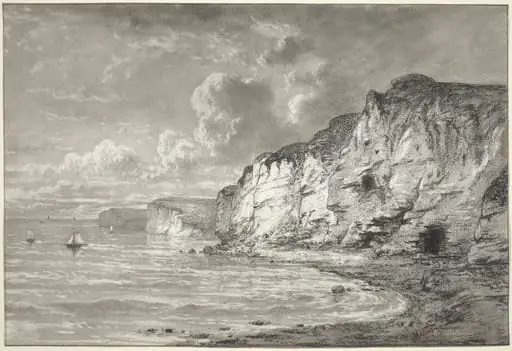
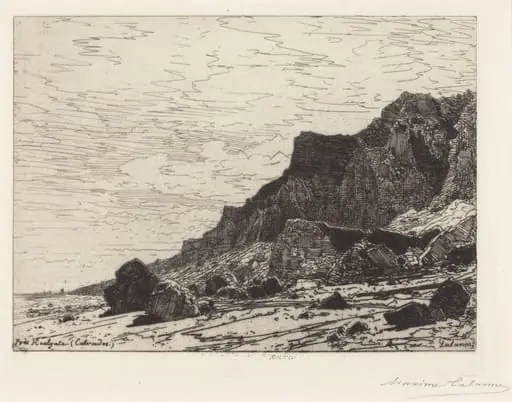
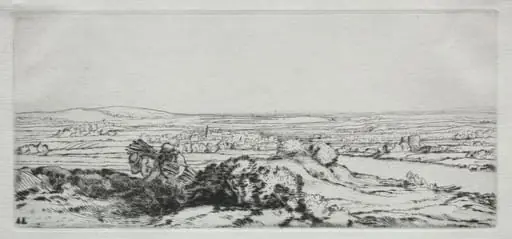
Dives (Calvados) is a print by the Impressionist artist Maxime Lalanne. It dates from 1869 and is held in the collection of the Cleveland Museum of Art.
About this work
Overview
Created in 1869 by French artist Maxime Lalanne, *Dives (Calvados)* is an etching that captures a quiet rural landscape in the Calvados region of Normandy.
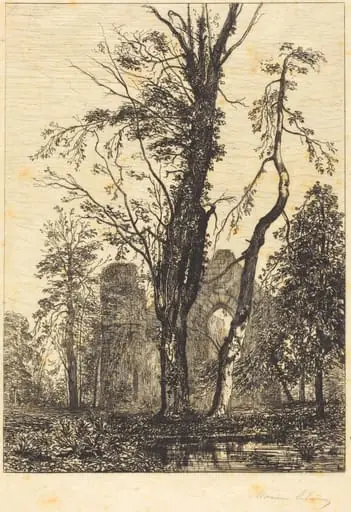
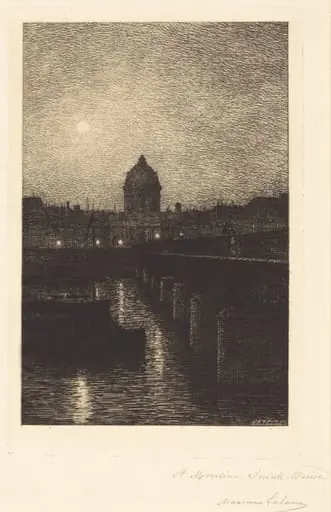
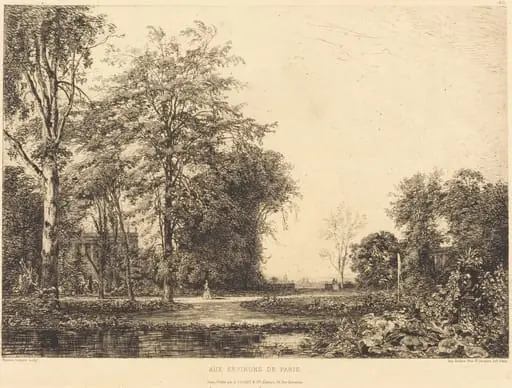
Created in 1869 by French artist Maxime Lalanne, *Dives (Calvados)* is an etching that captures a quiet rural landscape in the Calvados region of Normandy. The work belongs to the Cleveland Museum of Art’s print collection and exemplifies Lalanne’s mastery of tonal etching, a technique that emphasizes atmosphere over narrative. Unlike oil paintings of the period, this piece relies on ink lines and subtle gradations to convey depth and mood.
Subject & Meaning
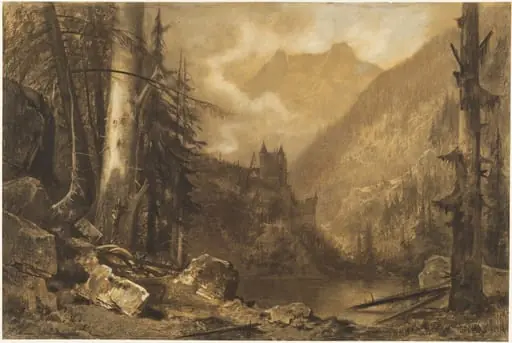
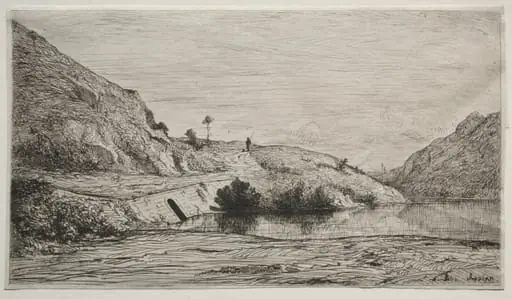
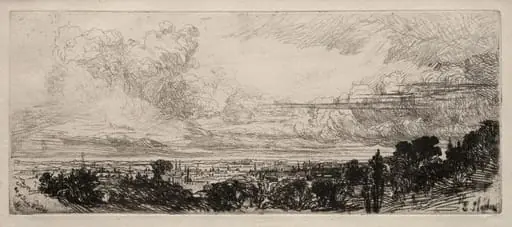
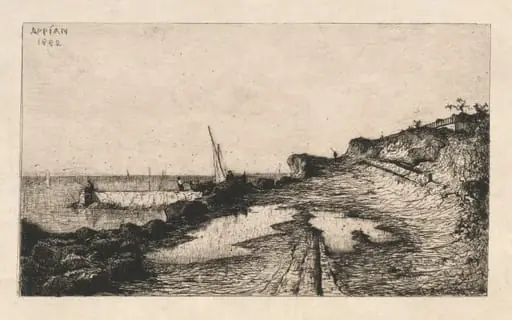
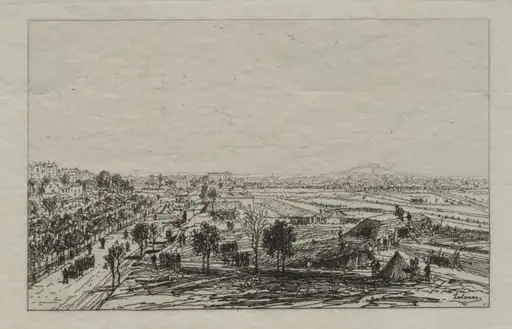
The scene depicts a tranquil, nearly deserted stretch of countryside at twilight. A narrow path winds through darkened trees toward a distant body of water, its surface rendered as a near-absence of light. There is no human presence, and the absence of detail in the horizon suggests contemplation rather than documentation. The title references a local place name, grounding the image in specificity while evoking a sense of solitude inherent to the rural French landscape.
Technique & Style
Lalanne employed fine-line etching with careful burin work to build layers of shadow and texture. The dark tones are achieved not through heavy ink washes but through dense, overlapping lines and controlled aquatint. The composition avoids dramatic contrast, favoring a muted tonal range that mimics the quiet transition from day to night. This method aligns with 19th-century French printmaking traditions that prioritized subtlety and atmospheric precision.
History & Provenance
The print was produced during Lalanne’s most active period as a printmaker, following his training at the École des Beaux-Arts and his involvement with the Société des Aquafortistes. It entered the Cleveland Museum of Art’s collection in the early 20th century, likely through a donation or acquisition focused on European graphic arts. Its provenance reflects the museum’s broader interest in French etchings from the post-Romantic era.
Context
In 1869, French artists were increasingly turning to landscape as a subject independent of historical or mythological themes. Lalanne’s work emerged alongside the early stages of Impressionism but remained rooted in the detailed, tonal traditions of Barbizon School etchers. While contemporaries like Daubigny painted en plein air, Lalanne worked from sketches, refining his compositions in the studio with an emphasis on mood and structure.
Legacy
Lalanne’s etchings, including *Dives (Calvados)*, influenced later generations of printmakers who valued tonal nuance over bold expression. Though less widely known than his painterly contemporaries, his technical discipline helped preserve the integrity of etching as a serious medium in an age increasingly dominated by photography and oil painting. The work remains a quiet testament to the expressive potential of line and shadow.
Artist & collection
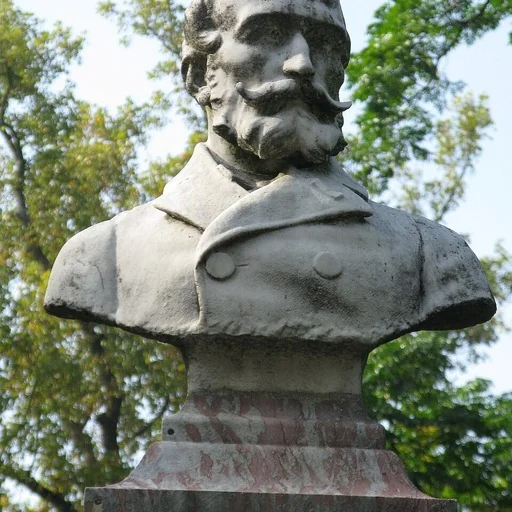
Artist
François Antoine Maxime Lalanne (November 27, 1827 – July 29, 1886) was a French artist known for his etchings and charcoal drawings (fusain).