Artwork
Kidwelly Town
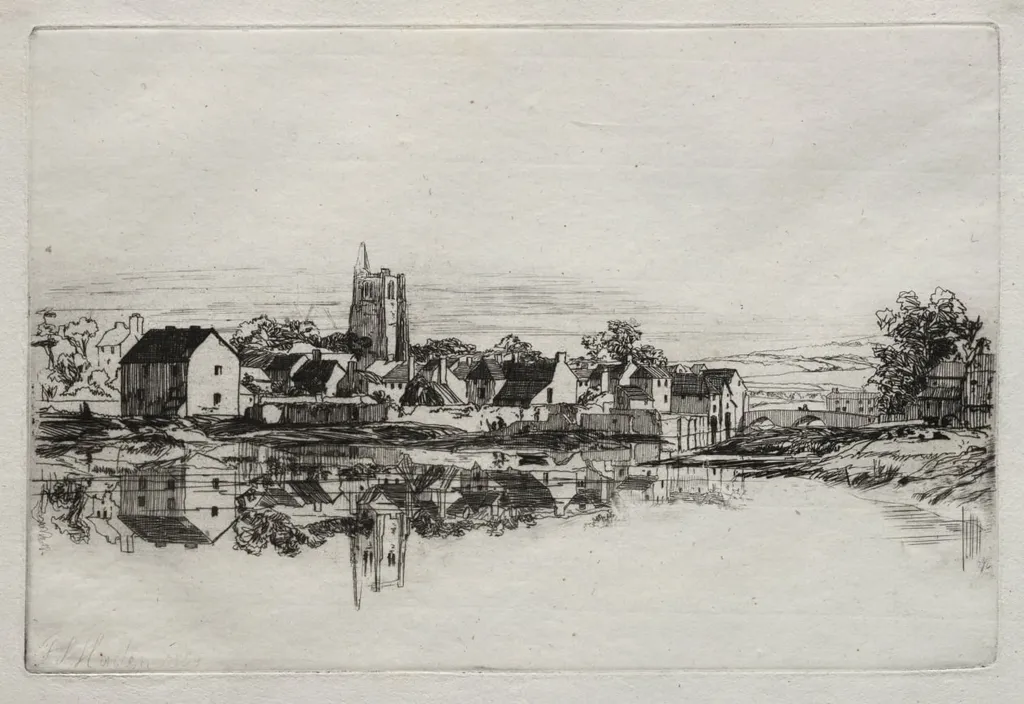
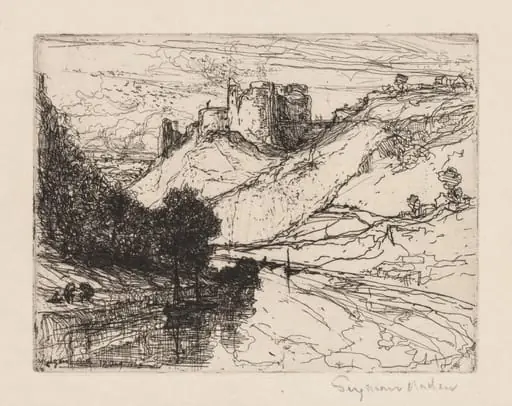
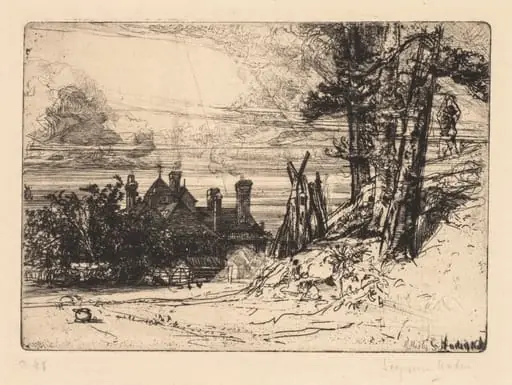
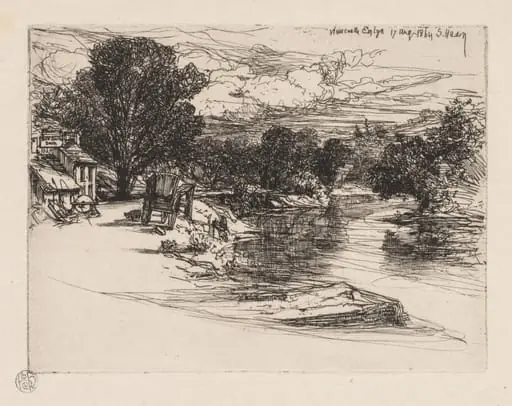
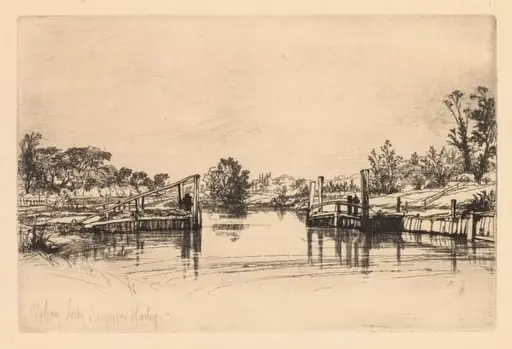
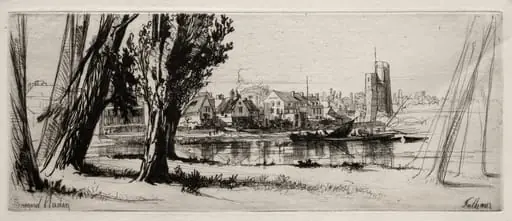
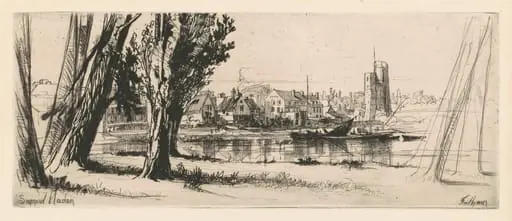
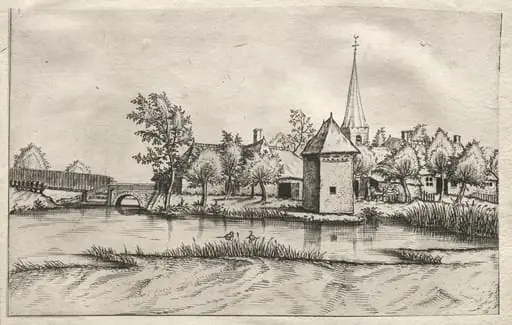
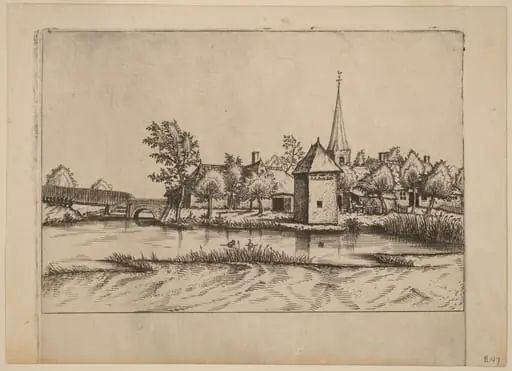
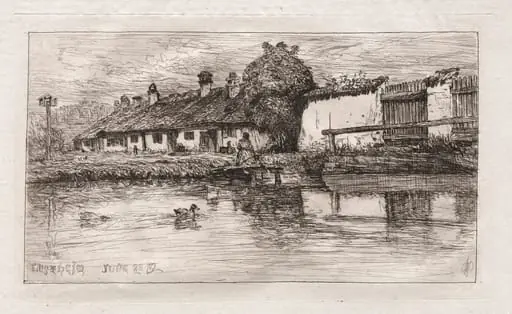
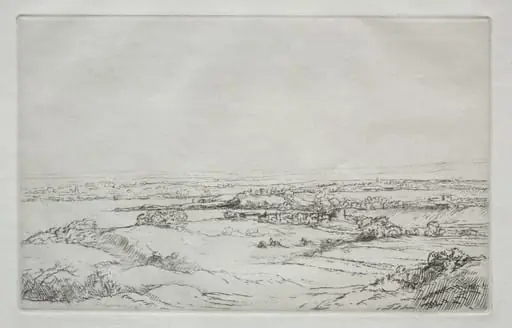
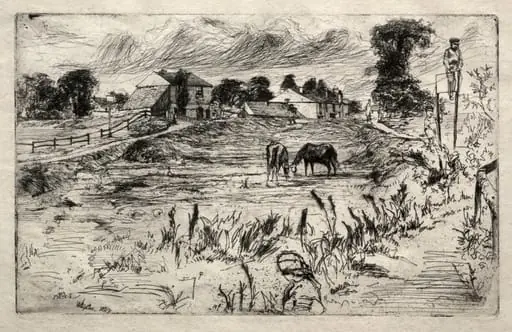
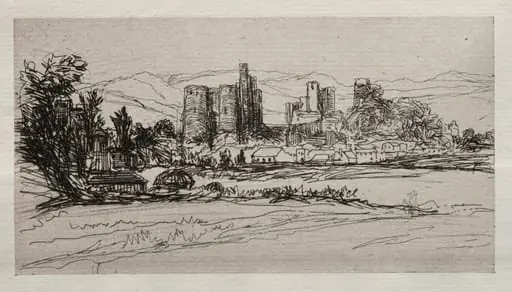
Kidwelly Town is a print by the Impressionist artist Francis Seymour Haden. It dates from 1859 and is held in the collection of the Cleveland Museum of Art.
About this work
Overview
Its modest scale and lack of ornamentation reflect a deliberate focus on ordinary observation rather than idealized composition.
Created in 1859 by Francis Seymour Haden, this print depicts the Welsh town of Kidwelly with restrained precision. Executed in delicate, unshaded lines, the work captures a quiet riverside scene without dramatic emphasis. Its modest scale and lack of ornamentation reflect a deliberate focus on ordinary observation rather than idealized composition. The piece resides in The Cleveland Museum of Art’s collection.
Subject & Meaning
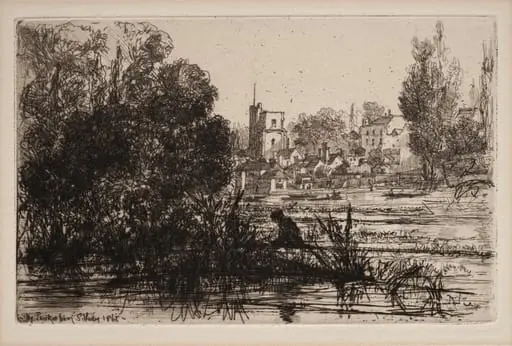
The scene presents a tranquil riverside settlement with modest dwellings and a single prominent church steeple. Trees fringe the water’s edge, their forms rendered with subtle economy. The calm reflection of buildings in the river enhances the stillness of the moment. Haden avoids narrative or symbolism, instead conveying a sense of quiet, unremarkable daily life, grounded in direct observation.
Technique & Style
Haden employed fine, continuous lines with minimal tonal variation, avoiding shading or cross-hatching. The precision of the draftsmanship suggests a direct, on-site sketch translated into print. The absence of embellishment and the flat, linear treatment emphasize clarity over atmosphere. This approach aligns with a preference for structural honesty, prioritizing form and spatial relationships over decorative effect.
History & Provenance
The print was made in 1859 during Haden’s early period of landscape work, before his later prominence as an etcher. It entered The Cleveland Museum of Art’s collection through documented acquisition, though its immediate provenance prior to museum ownership remains unrecorded in public sources. The work reflects Haden’s formative interest in recording vernacular English and Welsh scenery.
Context
In mid-19th-century Britain, artists increasingly turned to everyday landscapes as subjects, rejecting romanticized history painting. Haden’s approach aligns with emerging realist tendencies, where truth to visual experience superseded theatricality. His focus on unadorned towns and natural settings mirrored broader cultural shifts toward valuing the ordinary and the locally observed.
Legacy
Though not widely exhibited, this print exemplifies Haden’s early commitment to direct observation and technical restraint. It contributed to a quiet but significant shift in British printmaking, influencing later artists who valued clarity and sincerity over ornamental flourish. The work remains a quiet testament to the artistic value found in unremarkable places.
Artist & collection