Artwork
Saint John and the Lamb
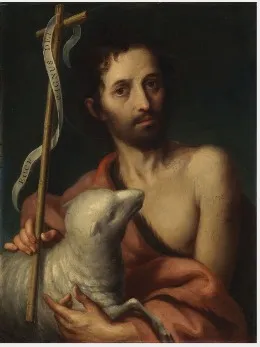
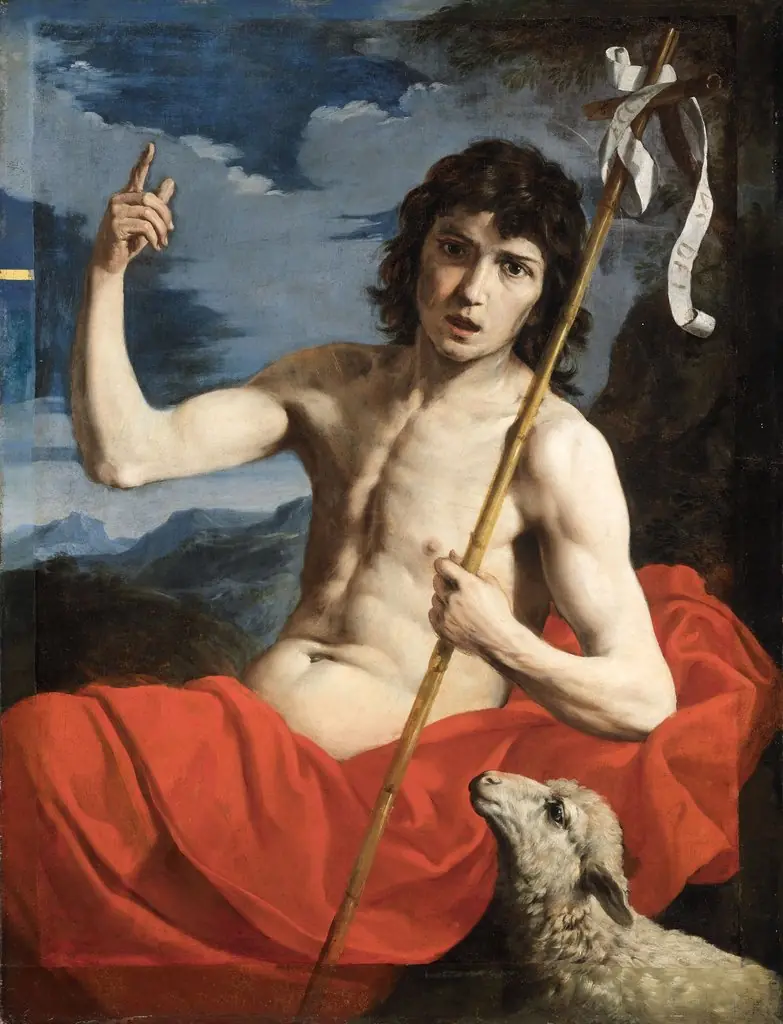
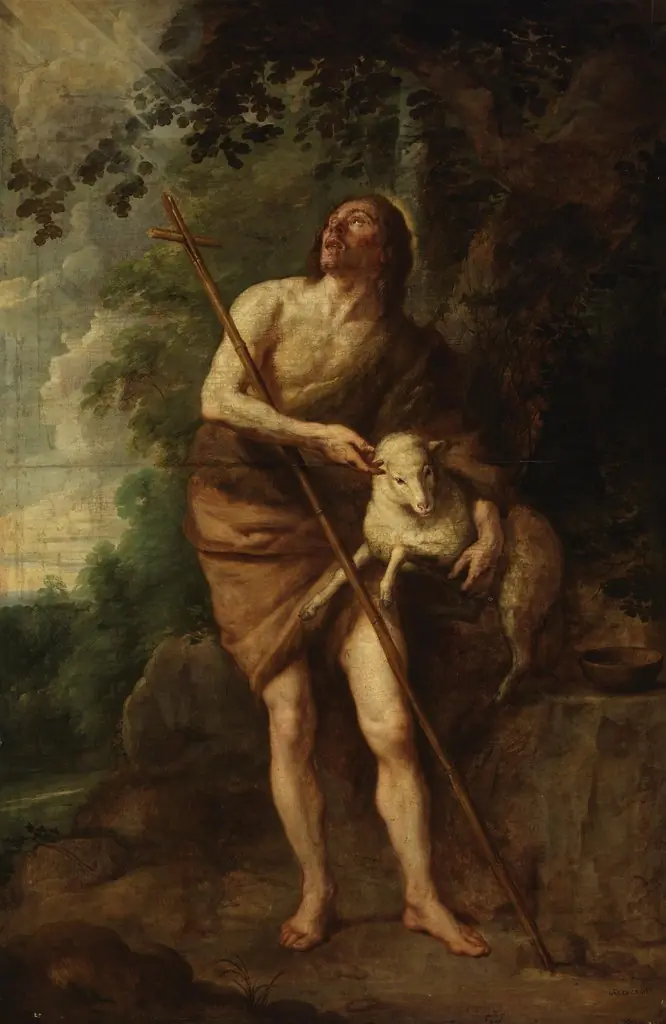
Saint John and the Lamb is an unspecified painting by the Rococo painting artist Francisco Antonio Vallejo. It dates from 1770 and is held in the collection of the National Gallery of Ireland.
About this work
Overview
Saint John and the Lamb, painted in 1770 by Mexican artist Francisco Antonio Vallejo, is a religious genre painting characteristic of the late Mexican baroque period, with influences from the rococo movement.
Subject & Meaning
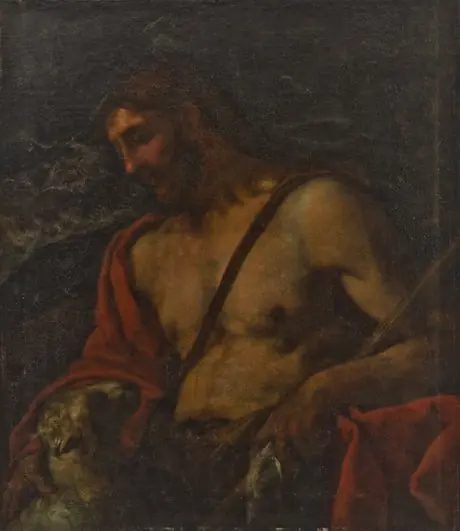
The painting depicts a serene, shirtless figure, identified as a saint (likely Saint John), draped in a red robe, holding a staff with an unreadable white ribbon and gently cradling a white lamb in his left arm, his gaze downward, symbolizing devotion and innocence.
Technique & Style
Vallejo's signature vivid palette, notably his expressive use of blue (though not prominently described here), and theatrical composition are evident. The stark contrast between the dark background and the luminous figures of the saint and lamb enhances the dramatic and contemplative ambiance.
History & Provenance
Created in 1770, the painting is now part of the National Gallery of Ireland's collection, reflecting its recognized artistic and historical value.
Context
As a work of the late Mexican baroque with rococo influences, it reflects the artistic crosscurrents of 18th-century Mexico, blending traditional religious themes with the lighter, more ornate elements of rococo.
Legacy
While specific impacts or notable exhibitions are not detailed, its presence in a national gallery suggests it contributes to the understanding and appreciation of Mexican baroque and the artist's oeuvre.
Artist & collection
Artist
Francisco Antonio Vallejo (1722–1785) was a Mexican muralist. He worked over 30 years. His main work is located in the La Enseñanza Church in Mexico City; the chapel sacristy of the School of Saint Ildefonso; and the…