Artwork
La Tauramaquia: A Spanish Knight Kills the Bull after Having Lost His Horse
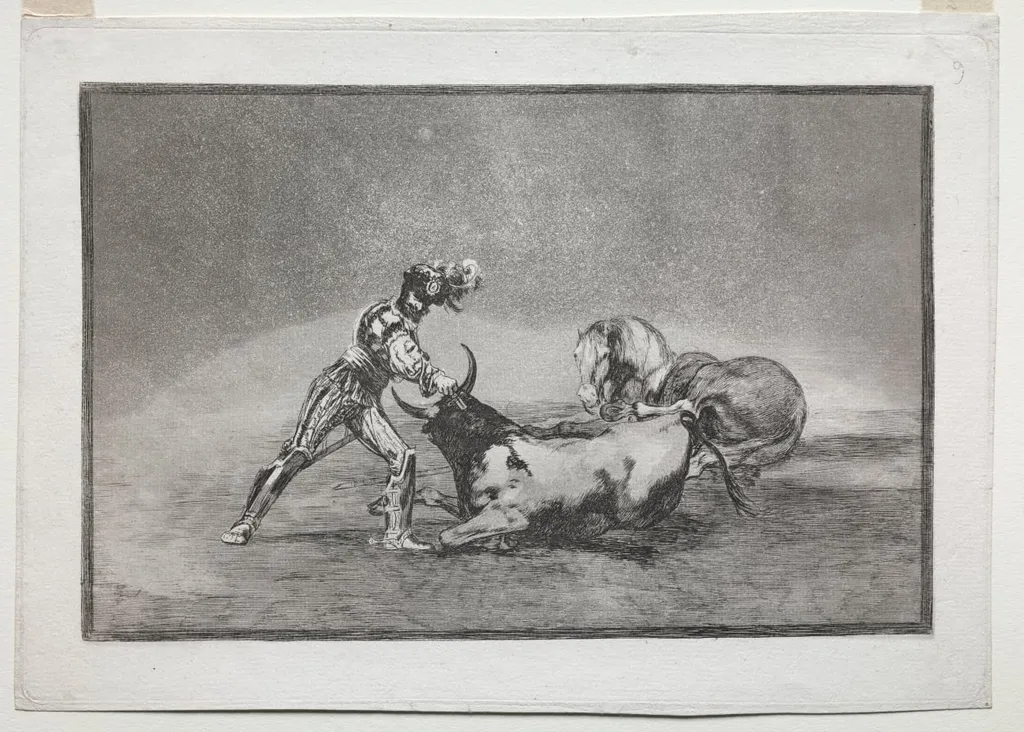
La Tauramaquia: A Spanish Knight Kills the Bull after Having Lost His Horse is a print by the Romanticist artist Francisco Goya. It dates from 1816 and is held in the collection of the Cleveland Museum of Art. Created in 1816, this print by Francisco de Goya portrays a dramatic episode from a Spanish bull‑fighting spectacle.
About this work
Overview
Created in 1816, this print by Francisco de Goya portrays a dramatic episode from a Spanish bull‑fighting spectacle. A dismounted knight confronts a charging bull, emphasizing the peril and vigor of the encounter. The work is part of the collection of the Cleveland Museum of Art.
Subject & Meaning
The image captures a moment when a Spanish cavalier, having lost his mount, must face the bull on foot. The composition underscores the bravery and desperation inherent in traditional bullfighting, reflecting broader themes of human struggle against powerful natural forces.
Technique & Style
Goya employs strong contrasts of light and shadow, a chiaroscuro effect that heightens the tension and gives the figures a three‑dimensional presence. The bold line work and dramatic tonal shifts are characteristic of his printmaking approach during the early 19th century.
History & Provenance
The print was produced in the aftermath of the Peninsular War, a period when Goya turned to subjects drawn from Spanish popular culture. It entered the Cleveland Museum of Art’s collection through acquisition in the late 20th century, where it remains on display.
Artist & collection
Artist
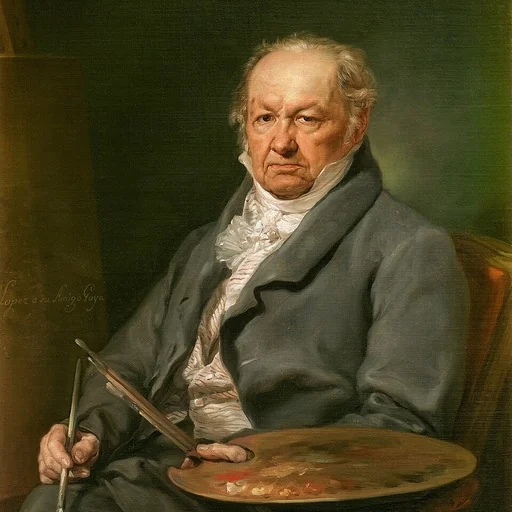
Francisco José de Goya y Lucientes (; Spanish: ; 30 March 1746 – 16 April 1828) was a Spanish romantic painter and printmaker.

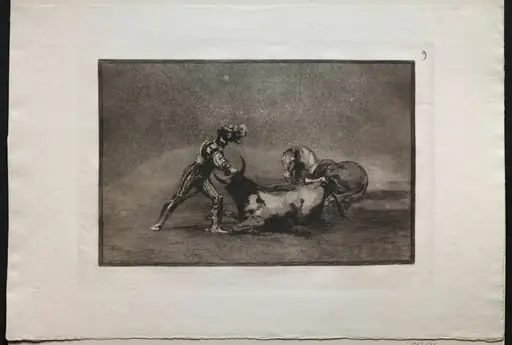 Bullfights: A Spanish Knight Kills the Bull After Having Lost His Horse
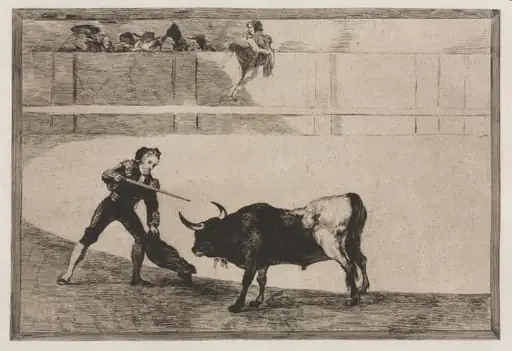 Bullfights: Pedro Romeo Killing the Halted Bull
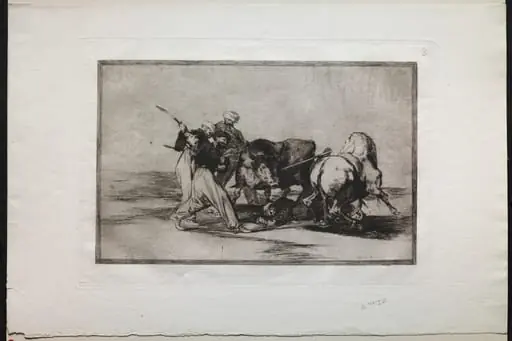 Bullfights: The Moors Settled in Spain, Giving Up the Superstitions of the Qur’an, Adopted this Art of Hunting, and Spear a Bull in the Open
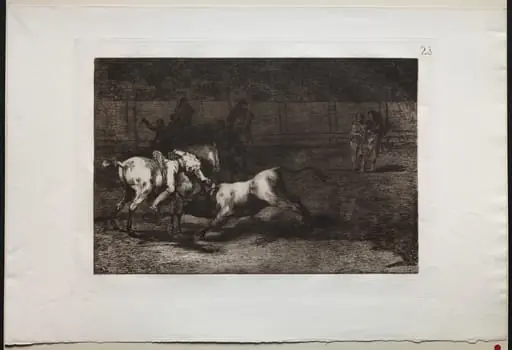 Bullfights: Mariano Ceballos, Alias the Indian, Kills the Bull From his Horse
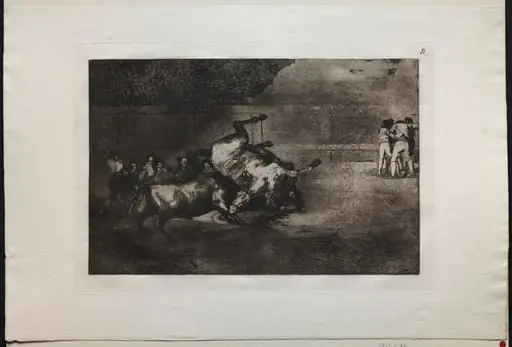 Bullfights: A Horse Thrown by the Bull
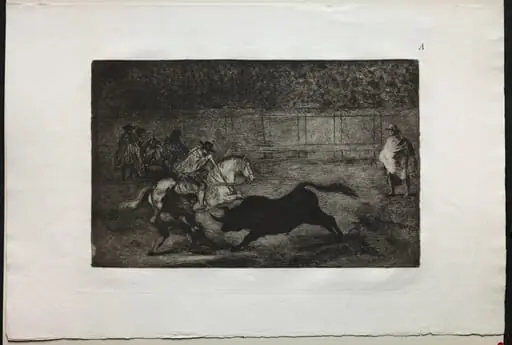 Bullfights: A Spanish Mounted Knight Breaking Short Spears with the Help of Assistants
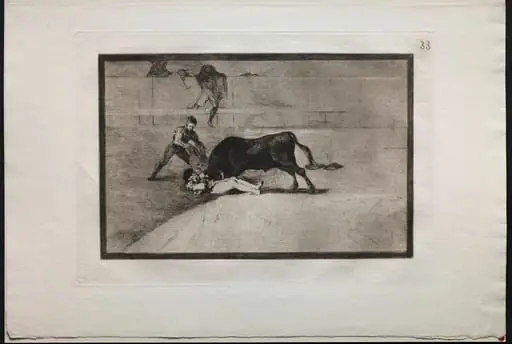 Bullfights: The Unlucky Death of Pepe Illo, in the Ring at Madrid
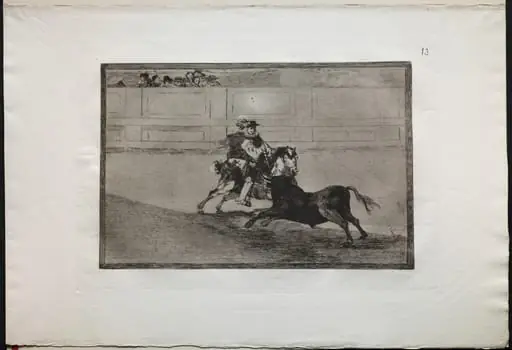 Bullfights: A Spanish Mounted Knight in the Ring Breaking Short Spears Without the Help of Assistants
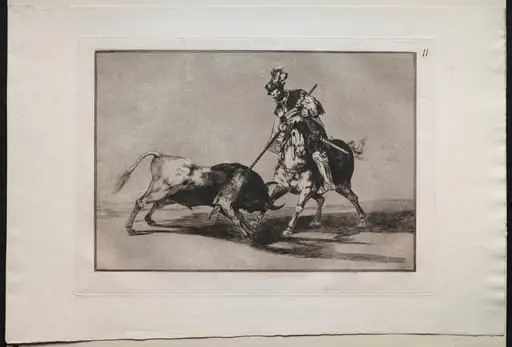 Bullfights: El Cid Campeador Spearing Another Bull
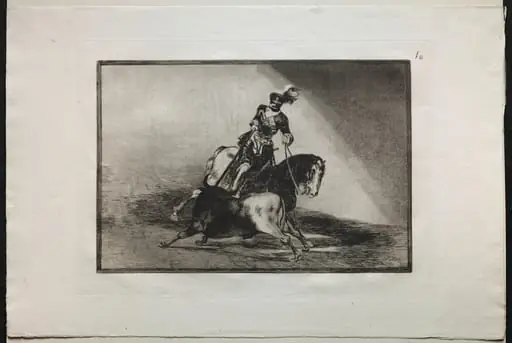 Bullfights: Charles V spearing a bull
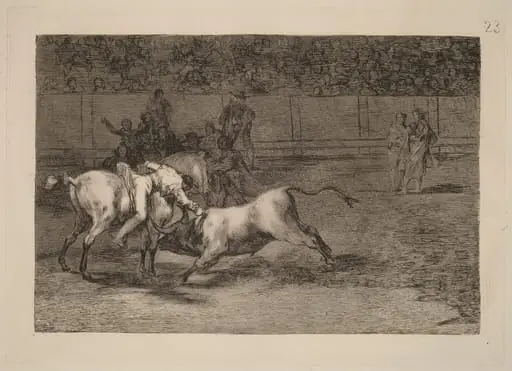 Mariano Ceballos, alias el Indio, mata el toro desde su caballo (Mariano Ceballos, Alias the Indian, Kills the Bull from His Horse)
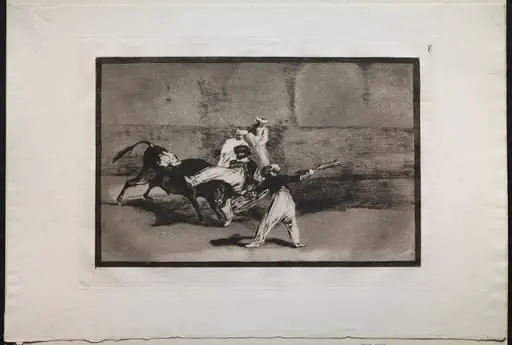 Bullfights: A Moor Caught by a Bull in the Ring