Artwork
Mariano Ceballos, alias el Indio, mata el toro desde su caballo (Mariano Ceballos, Alias the Indian, Kills the Bull from His Horse)
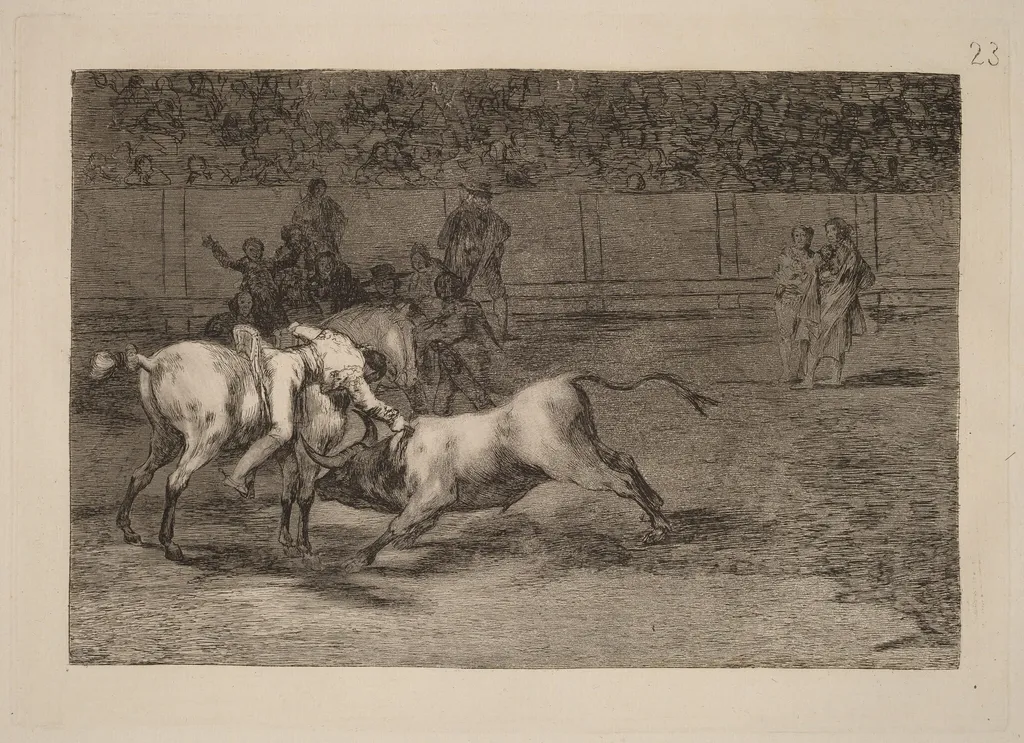
Mariano Ceballos, alias el Indio, mata el toro desde su caballo (Mariano Ceballos, Alias the Indian, Kills the Bull from His Horse) is an ink print by the Romanticist artist Francisco Goya. It dates from 1816 and is held in the collection of the National Gallery of Art.
About this work
Overview
This 1816 etching and burnished aquatint print by Francisco Goya captures a dramatic moment in a bullfight, depicting Mariano Ceballos, known as 'el Indio', killing a bull from horseback. The work exemplifies Goya's exploration of Spanish culture through his innovative printmaking techniques.
Subject & Meaning
The print portrays a specific historical event featuring the renowned bullfighter Mariano Ceballos. By depicting this scene, Goya engages with traditional Spanish practices, potentially commenting on the spectacle and brutality of bullfighting, as well as the skill and danger involved.
Technique & Style
Goya utilized etching and burnished aquatint to achieve contrasting textures and depths. The etching needle crafted detailed, dynamic lines for the horse's mane and the bull's muscles, while the aquatint created soft, expressive shadows, enhancing the scene's tension and realism.
History & Provenance
Created in 1816, this is a first edition impression of the print. It belongs to a series of works where Goya explored Spanish cultural themes, reflecting his evolving artistic approach during the late 18th and early 19th centuries.
Context
This work is set against the backdrop of Goya's broader exploration of Spanish life and his experimentation with printmaking techniques. It highlights the significance of bullfighting in Spanish culture during the period, as well as Goya's ability to transform a violent spectacle into a nuanced artistic expression.
Legacy
This etching demonstrates Goya's pioneering use of combined printmaking techniques, influencing later artists. The work's depiction of a brutal yet culturally ingrained practice also contributes to Goya's legacy as an artist who critically examined the societal norms of his time.
Own this work as a print
Artist & collection
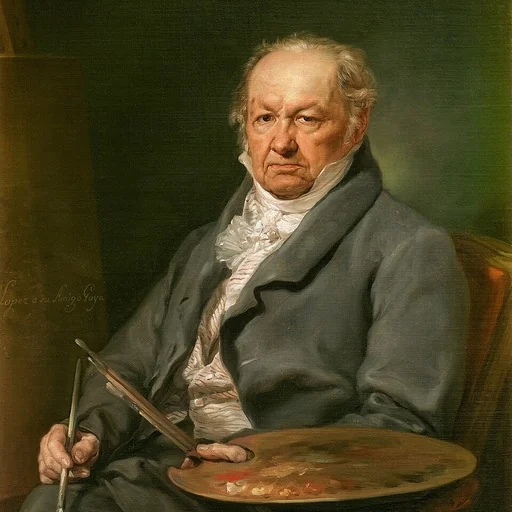
Artist
Francisco José de Goya y Lucientes (; Spanish: ; 30 March 1746 – 16 April 1828) was a Spanish romantic painter and printmaker.

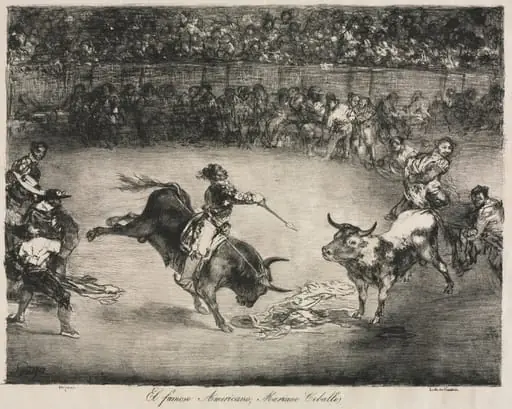 The Bulls of Bordeaux: The Famous American, Mariano Ceballos
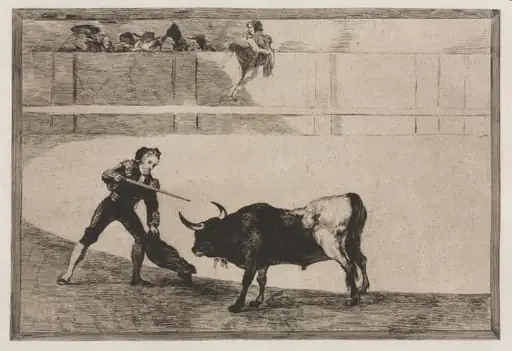 Bullfights: Pedro Romeo Killing the Halted Bull
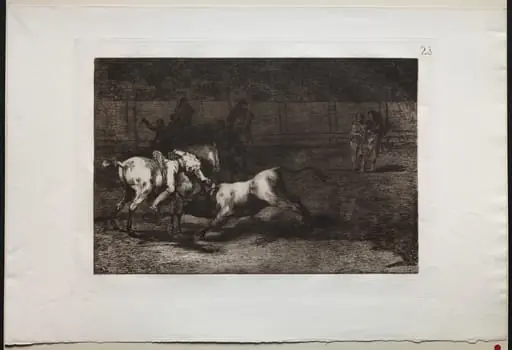 Bullfights: Mariano Ceballos, Alias the Indian, Kills the Bull From his Horse
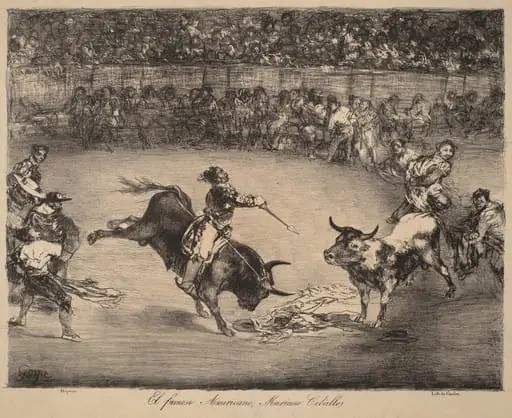 El famoso Americano, Mariano Ceballos (The Famous American, Mariano Ceballos)
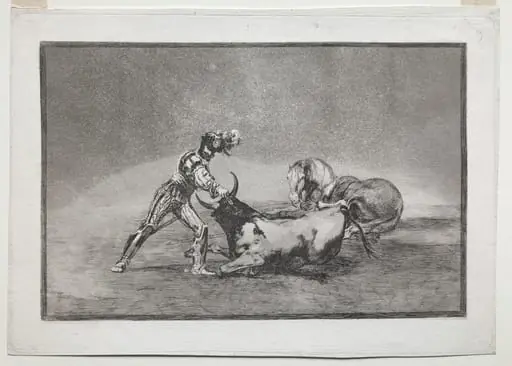 La Tauramaquia: A Spanish Knight Kills the Bull after Having Lost His Horse
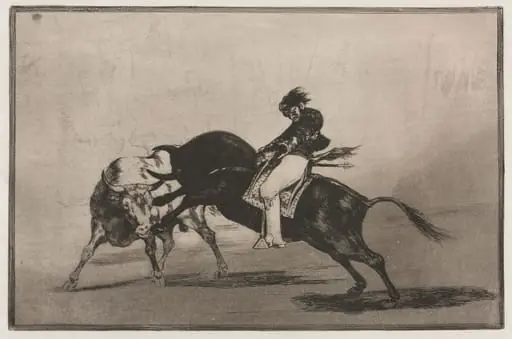 Bullfights: The Same Ceballos Mounted on Another Bull Breaks Short Spears in the Ring at Madrid
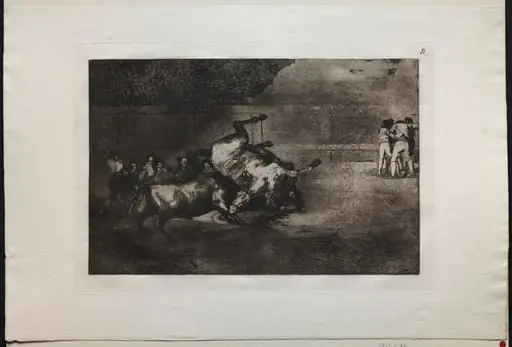 Bullfights: A Horse Thrown by the Bull
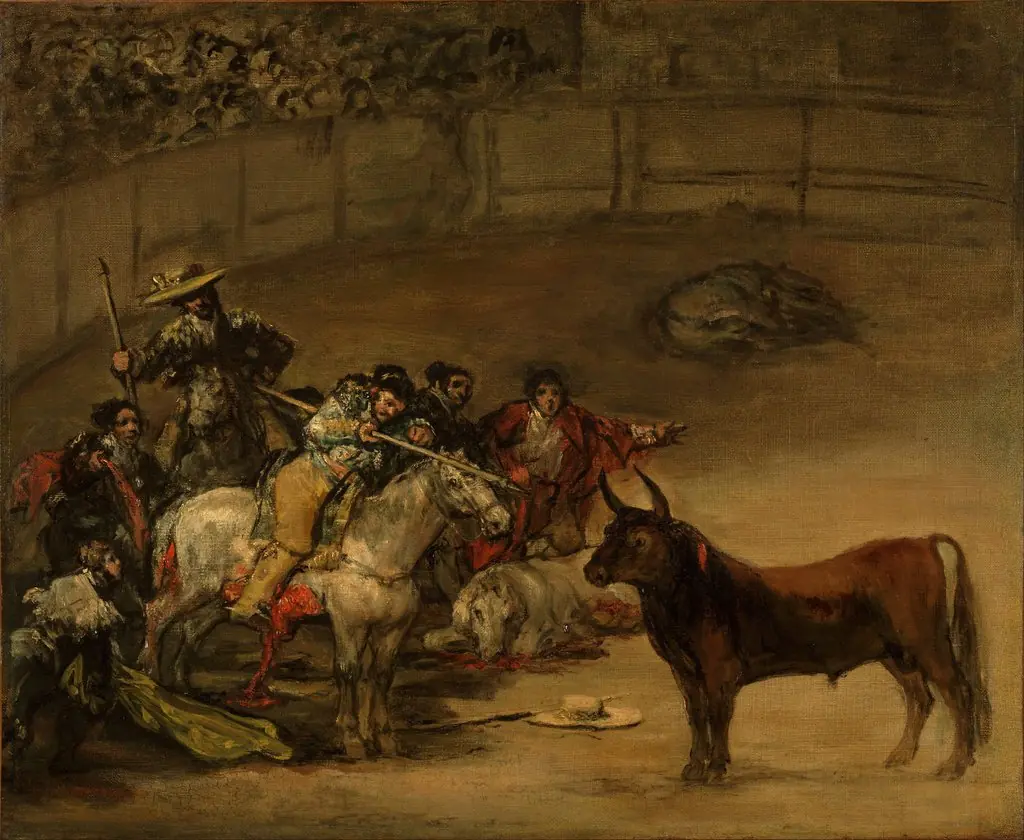 Bullfight, Suerte de Varas
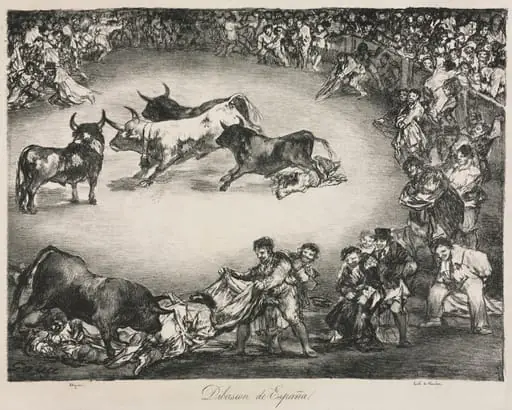 The Bulls of Bordeaux: Spanish Entertainment
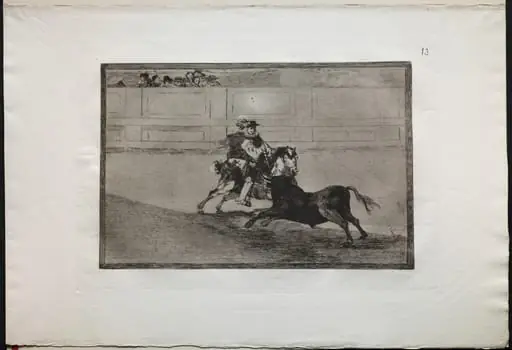 Bullfights: A Spanish Mounted Knight in the Ring Breaking Short Spears Without the Help of Assistants
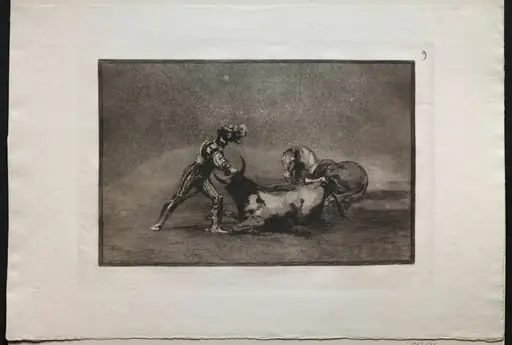 Bullfights: A Spanish Knight Kills the Bull After Having Lost His Horse
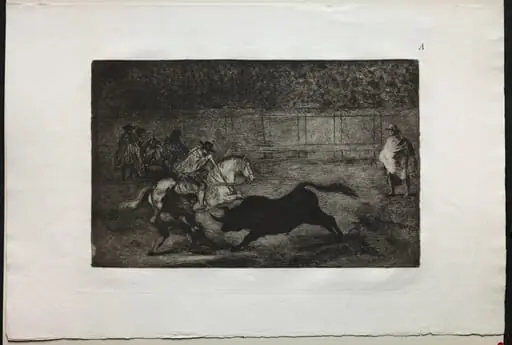 Bullfights: A Spanish Mounted Knight Breaking Short Spears with the Help of Assistants