Artwork
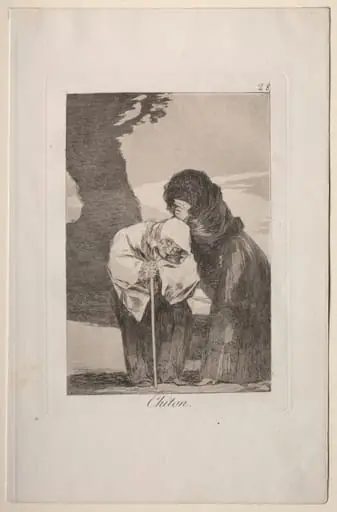
Poor Little Girls!, Plate 22
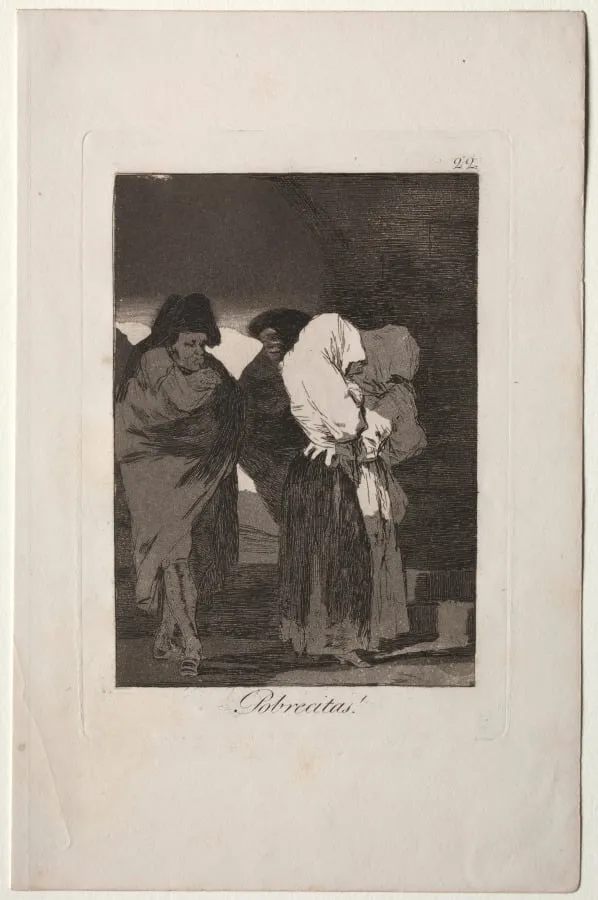
Poor Little Girls!, Plate 22 is a print by the Romanticist artist Francisco Goya. It dates from 1799 and is held in the collection of the Cleveland Museum of Art. Created around 1799, Poor Little Girls!
About this work
Overview
The composition relies on minimal detail and dramatic lighting to evoke emotional weight without narrative clarity.
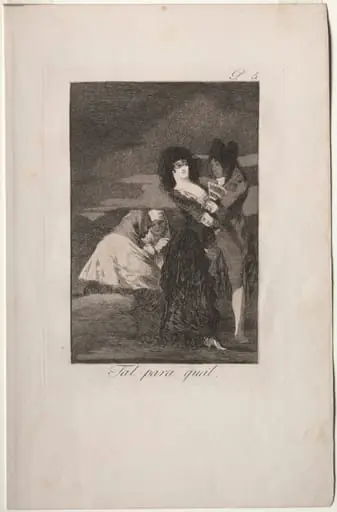
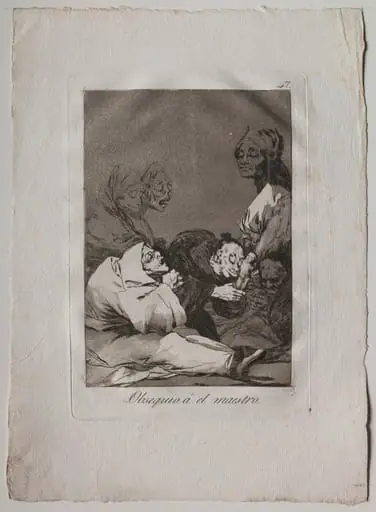
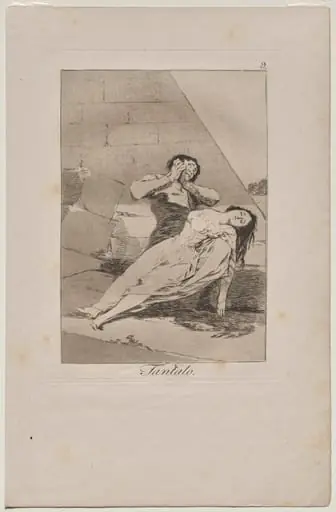
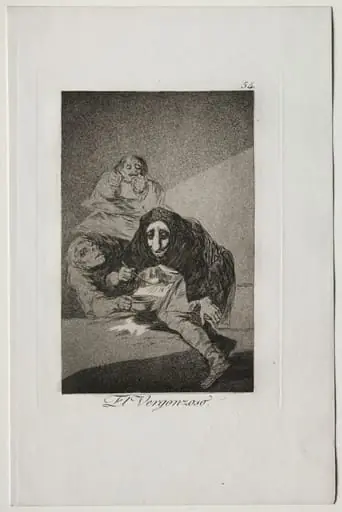
Created around 1799, Poor Little Girls!, Plate 22 is one of Francisco de Goya’s etchings from the series Los Caprichos. It is a drypoint and aquatint print, currently held by The Cleveland Museum of Art. The image captures two young girls in a stark interior, their postures conveying quiet distress. The composition relies on minimal detail and dramatic lighting to evoke emotional weight without narrative clarity.
Subject & Meaning
The two girls, dressed in dark, plain garments and hunched in isolation, suggest vulnerability and emotional withdrawal. Their bowed heads and closed gestures imply internalized sorrow, possibly reflecting societal neglect of children or the loss of innocence. Goya offers no explicit context, leaving interpretation open to the viewer’s perception of childhood, authority, or social indifference.
Technique & Style
Goya employed drypoint and aquatint to achieve rich tonal contrasts and soft gradations. The dim, directional light from a high window carves the girls’ forms from shadow, emphasizing their fragility. The absence of furnishings or background detail focuses attention entirely on their posture and expression, heightening the psychological intensity through restraint and chiaroscuro.
History & Provenance
The print originated in Goya’s 1799 series Los Caprichos, a set of 80 satirical prints critiquing Spanish society. Poor Little Girls! was not widely distributed during his lifetime; early impressions were rare. The Cleveland Museum of Art acquired its copy in the 20th century, among a group of Caprichos prints collected for their historical and artistic significance.
Context
Produced during a period of political and social unrest in Spain, Los Caprichos responded to Enlightenment ideals and their failures. Goya’s imagery often targeted hypocrisy, superstition, and institutional neglect. This plate, like others in the series, avoids direct satire, instead using quiet, haunting scenes to suggest deeper societal fractures.
Legacy
Poor Little Girls! exemplifies Goya’s shift toward psychological realism, influencing later artists who explored inner states through minimalism and shadow. Its emotional resonance, detached from overt commentary, anticipated modernist approaches to human vulnerability. The print remains a quiet but enduring testament to Goya’s ability to convey complex emotion with sparse means.
Artist & collection
Artist
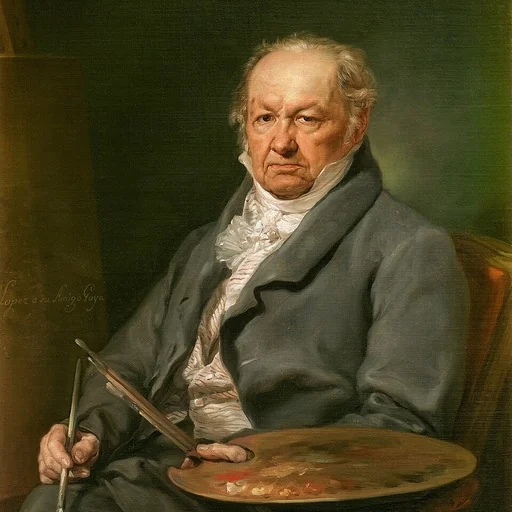
Francisco José de Goya y Lucientes (; Spanish: ; 30 March 1746 – 16 April 1828) was a Spanish romantic painter and printmaker.