Artwork
The Proverbs: Folly of Fear
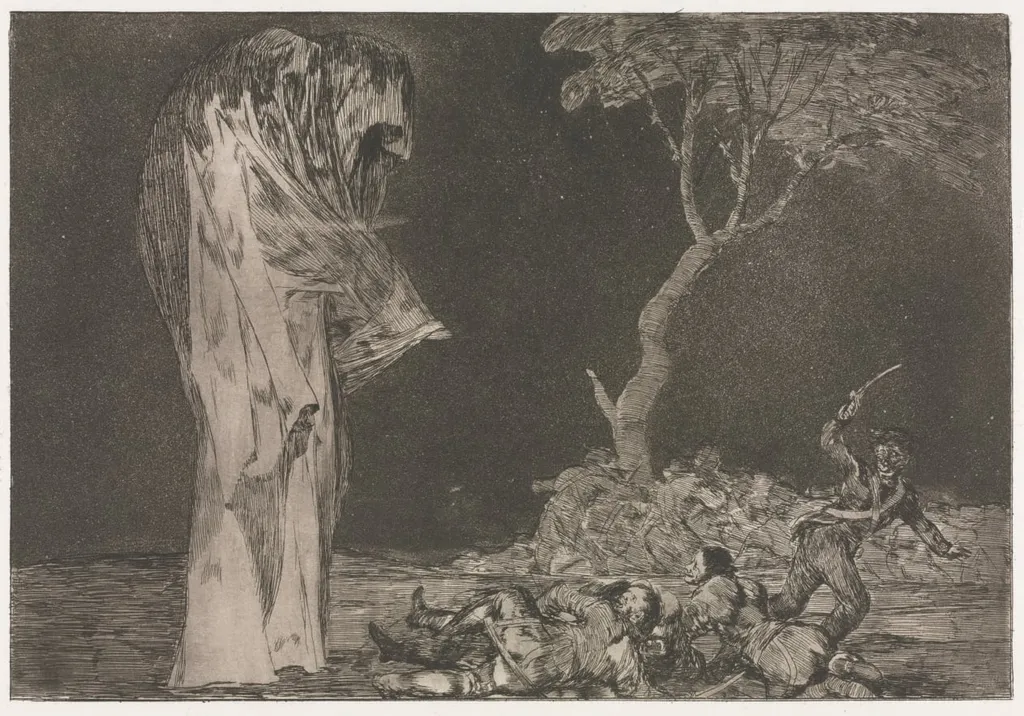
The Proverbs: Folly of Fear is a print by the Impressionist artist Francisco Goya. It is held in the collection of the Cleveland Museum of Art.
About this work
Overview
Francisco de Goya’s print titled *The Proverbs: Folly of Fear* dates from 1864 and is part of the collection at the Cleveland Museum of Art. The composition presents a stark, nocturnal tableau dominated by a towering, hooded figure whose concealed face looks down upon a cluster of distressed figures on the ground.
Subject & Meaning
The work visualises an allegorical warning against fear, with the looming cloaked presence embodying the oppressive force that overwhelms the vulnerable. The gathered figures appear trapped and anxious, suggesting the psychological weight of dread and the paralysis it can impose on ordinary people.
Technique & Style
Executed as a print, Goya employs dramatic chiaroscuro, allowing a single, unseen light source to carve deep shadows and accentuate the contrast between the dark background and the illuminated forms. The stark tonal range and bold outlines heighten the sense of menace and emotional intensity.
History & Provenance
The piece entered the Cleveland Museum of Art’s holdings after being acquired from a private collection, though its earlier ownership trail remains limited in documentation. Its dating to the mid‑19th century places it among Goya’s later, more somber works.
Context
Created during a period when Goya explored darker, more introspective themes, the print reflects the artist’s preoccupation with human folly and the psychological effects of terror. It aligns with his broader series of moralizing images that critique societal anxieties.
Artist & collection
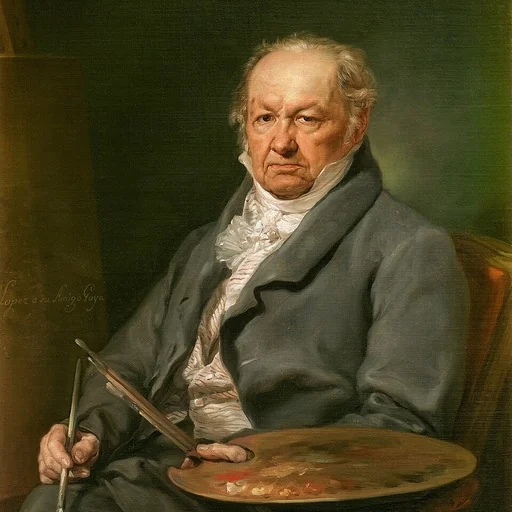
Artist
Francisco José de Goya y Lucientes (; Spanish: ; 30 March 1746 – 16 April 1828) was a Spanish romantic painter and printmaker.

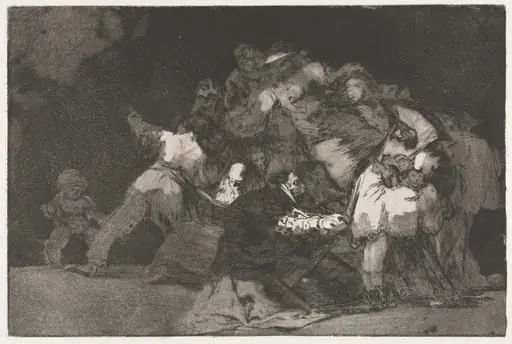 The Proverbs: General Folly
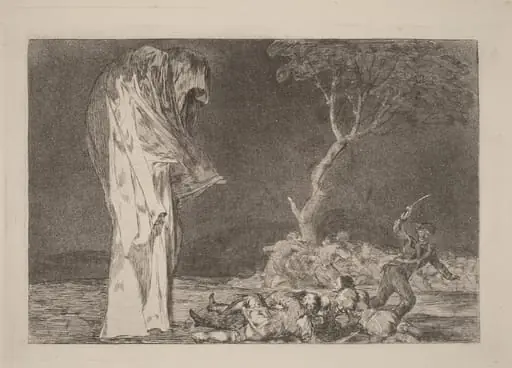 Disparate de miedo (Folly of Fear)
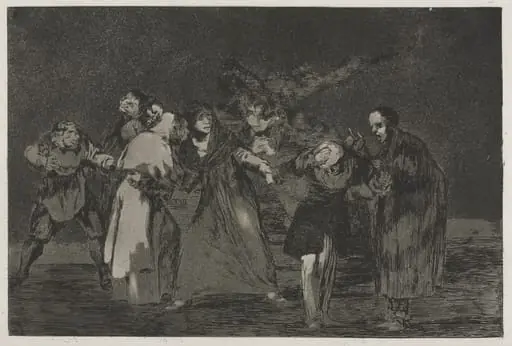 The Proverbs: Wounds Heal Quicker Than Hasty Words
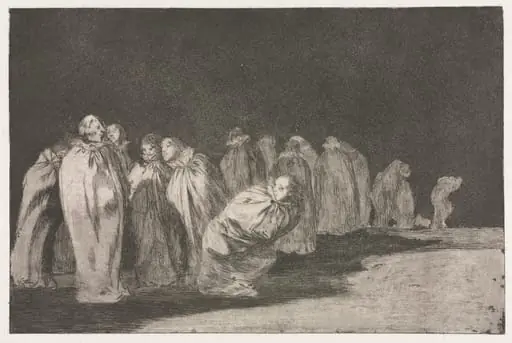 The Proverbs: The Men in Sacks
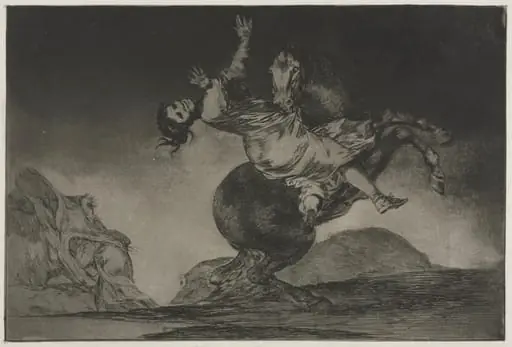 The Proverbs: The Horse-Abductor
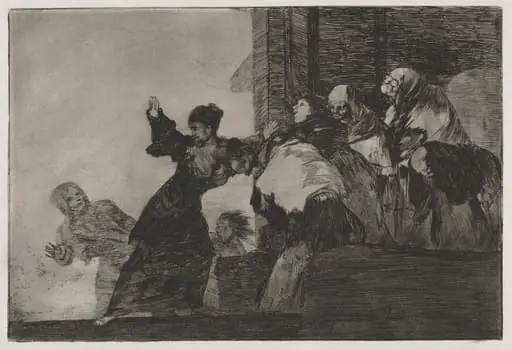 The Proverbs: Poor Folly
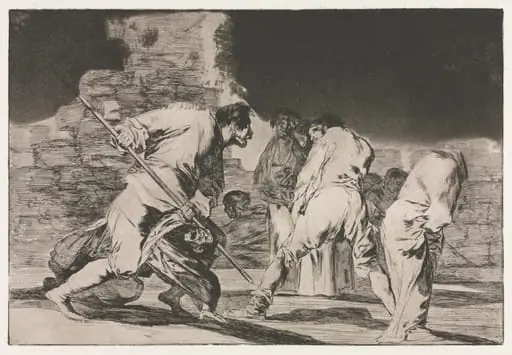 The Proverbs: The Folly of Fury
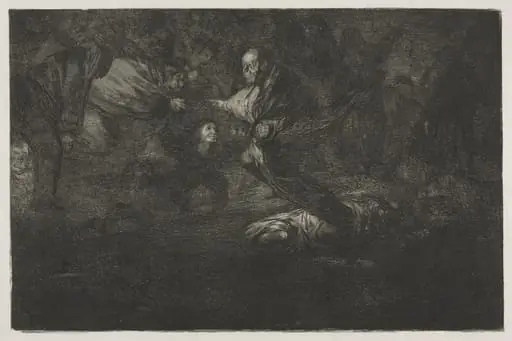 The Proverbs: God Creates Them and They Join Up Together
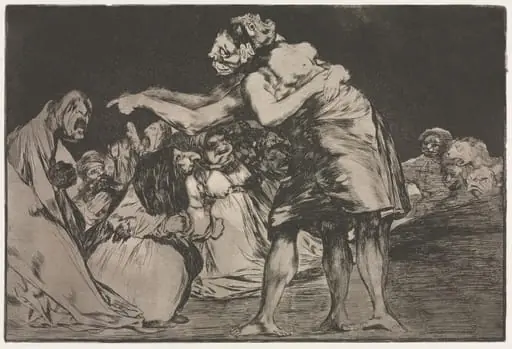 The Proverbs: Matrimonial Folly
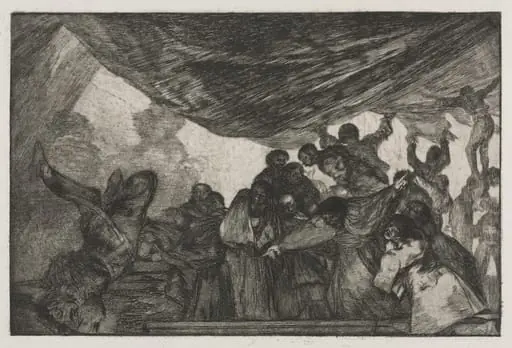 The Proverbs: Clear Folly
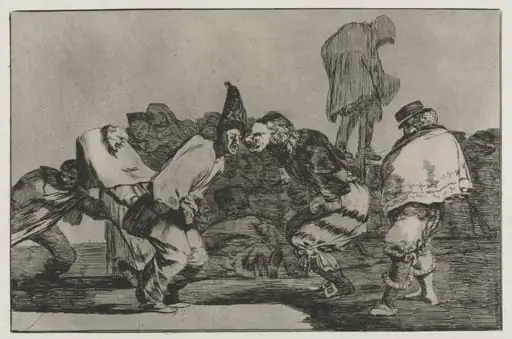 The Proverbs: Carnival Folly
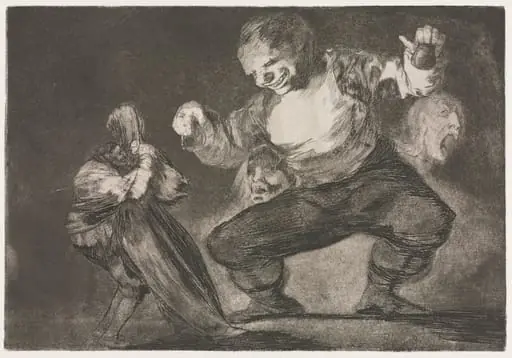 The Proverbs: Simpleton