Artwork
There It Goes, Plate 66
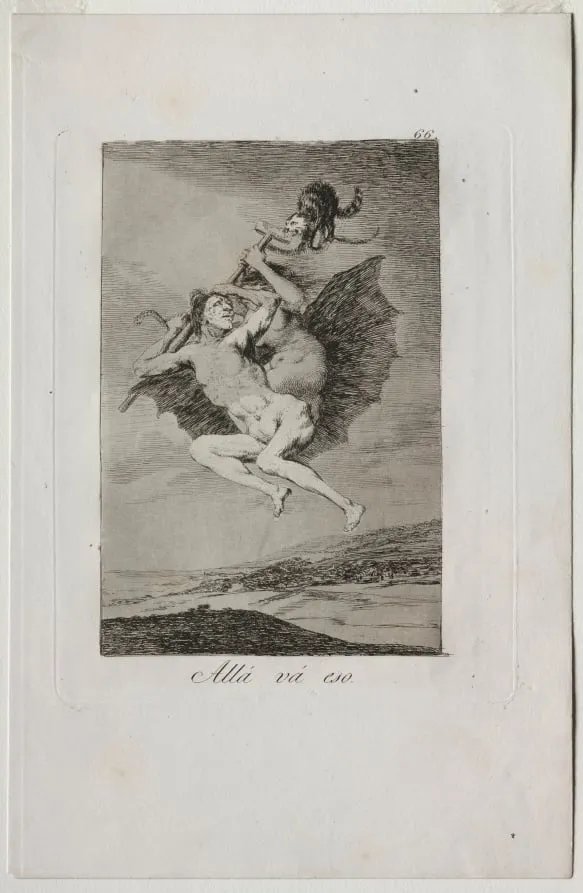
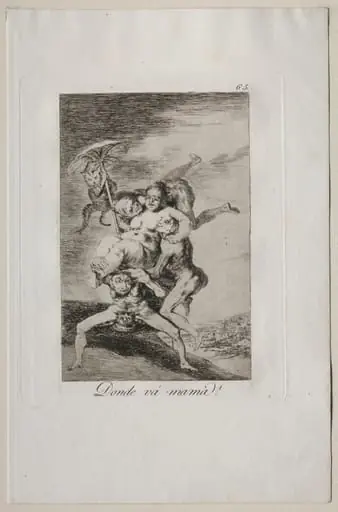
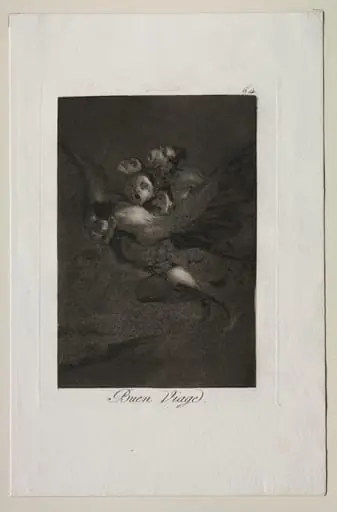
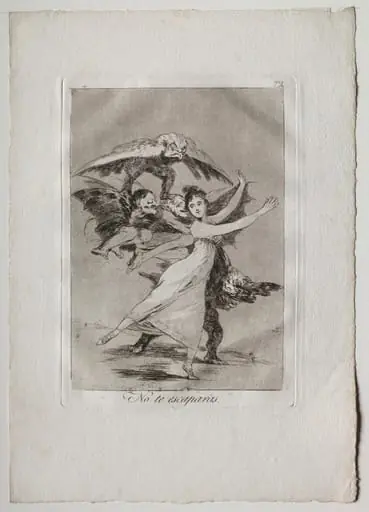
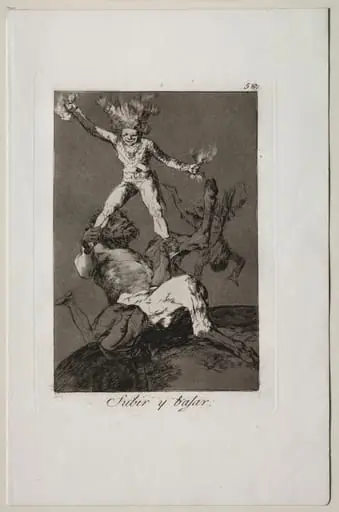
There It Goes, Plate 66 is a print by the Romanticist artist Francisco Goya. It dates from 1799 and is held in the collection of the Cleveland Museum of Art.
About this work
Overview
Created around 1799, *There It Goes, Plate 66* is a print by Spanish artist Francisco de Goya. The work belongs to the Cleveland Museum of Art’s collection. It presents a tumultuous tableau that combines elements of spectacle and satire, characteristic of Goya’s late eighteenth‑century output.
Subject & Meaning
The image depicts a rider clinging to a frenzied bull, while a diminutive figure perched on the animal’s back blows a flute. Dark, storm‑laden clouds loom overhead and churning waves surge below, amplifying the sense of chaos. The Spanish title, *Allá va eso* ("There it goes"), underscores the absurd, almost comic, inevitability of the scene.
Technique & Style
Executed as a print, the composition relies on stark contrasts of line and tone to convey movement and tension. Goya’s handling of the turbulent sky and foaming sea demonstrates his skill in rendering atmospheric effects, while the exaggerated figures reflect a satirical, almost caricatural approach.
Context
The work emerges at a time when Romantic sensibilities were gaining prominence, emphasizing emotion, drama, and the sublime power of nature. Goya’s blend of humor with darker themes aligns with the period’s fascination with the irrational and the grotesque, situating the print within the broader Romantic discourse.
History & Provenance
*There It Goes, Plate 66* entered the Cleveland Museum of Art’s holdings through acquisition (specific details of purchase are not recorded in the provided data). Its presence in an American public collection reflects the international appreciation of Goya’s printmaking legacy.
Artist & collection
Artist
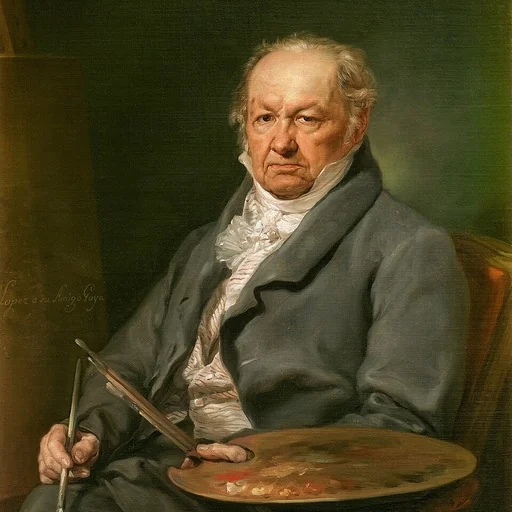
Francisco José de Goya y Lucientes (; Spanish: ; 30 March 1746 – 16 April 1828) was a Spanish romantic painter and printmaker.