Artwork
Saint Francis
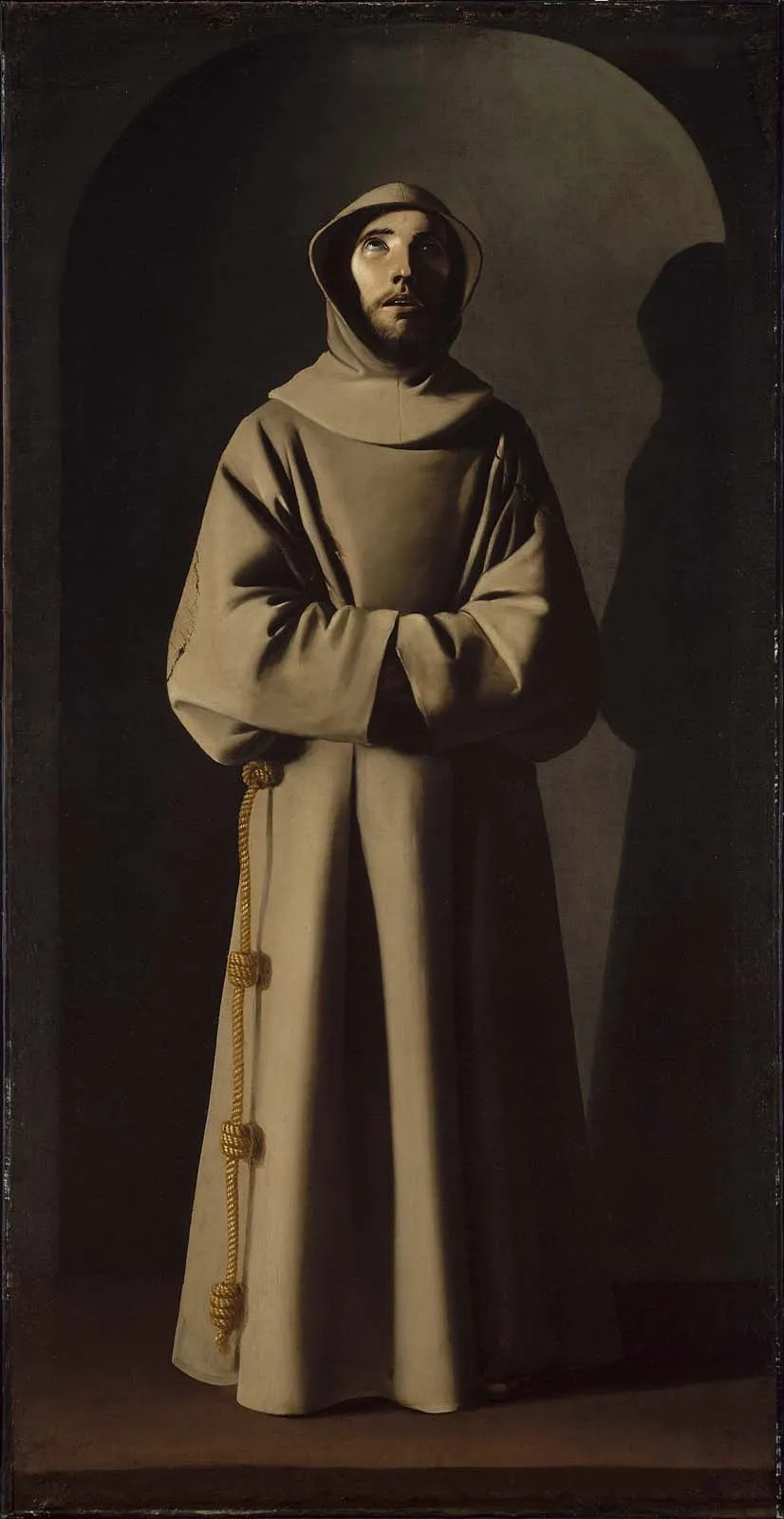
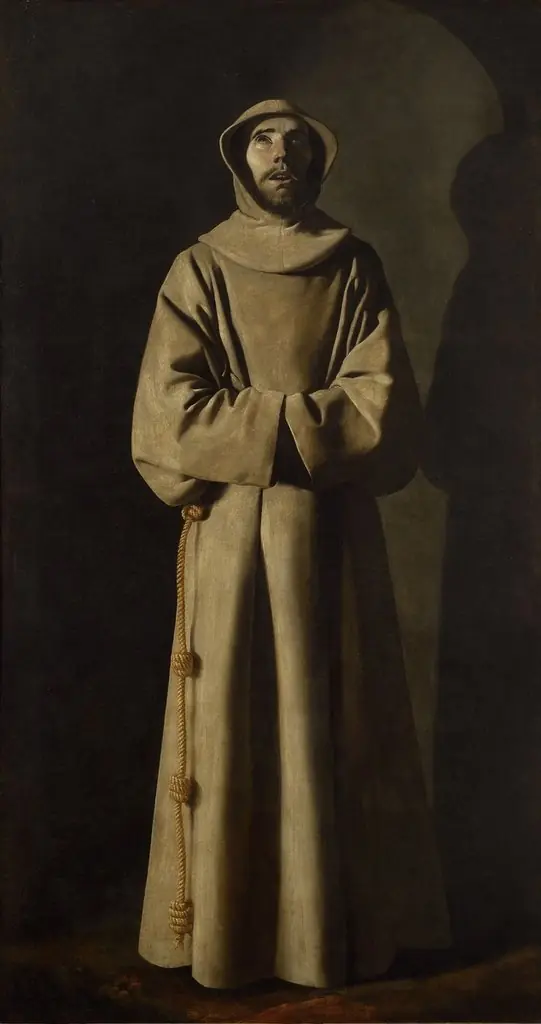
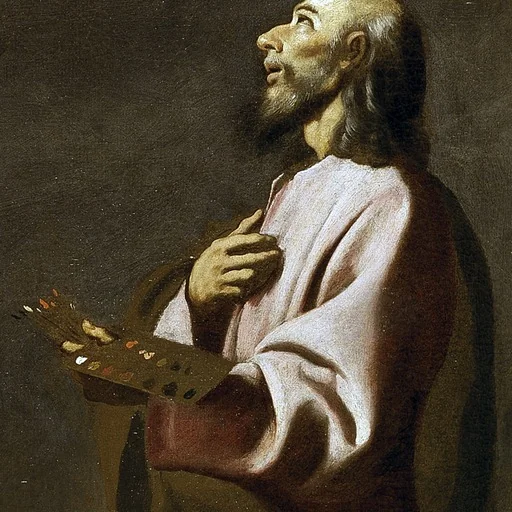
Saint Francis is an oil painting by the Early Baroque Italian artist Francisco de Zurbarán. It dates from 1642 and is held in the collection of the Museum of Fine Arts Boston.
About this work
Overview
The composition relies on the artist's mastery of tenebrism, a technique derived from Caravaggio, to create a sense of volume and solemnity.
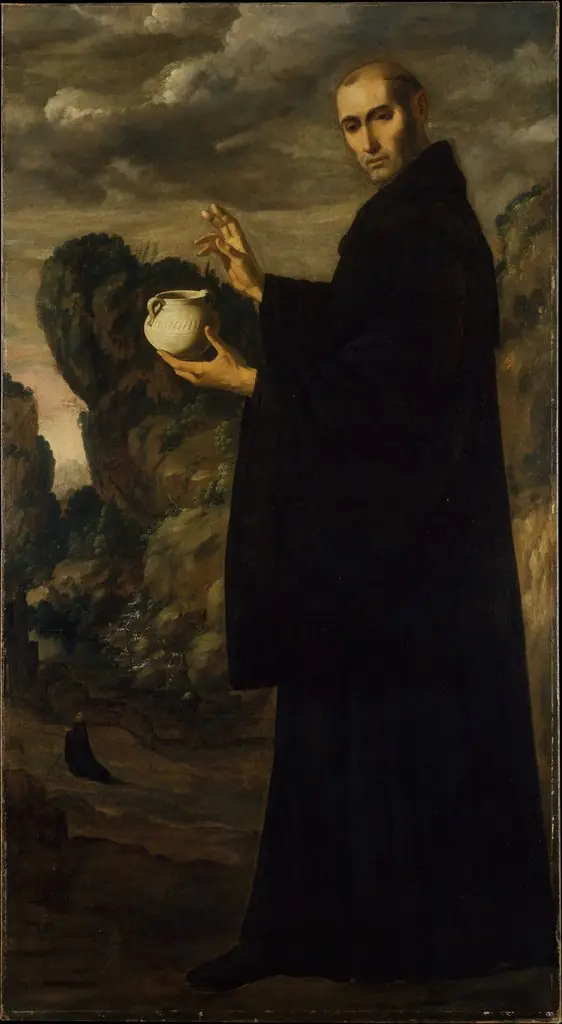
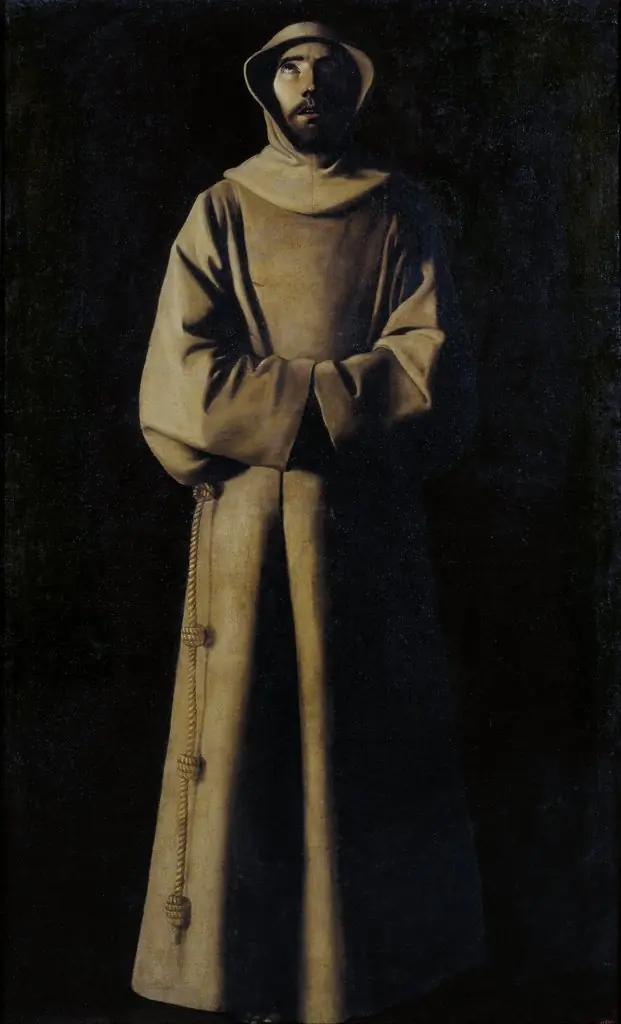
Painted in 1642, Saint Francis depicts the 13th-century founder of the Franciscan Order in a moment of intense spiritual contemplation. The figure stands isolated against a stark, dark background, illuminated by a dramatic light source that highlights the rough texture of his coarse wool habit and the simple rope belt tied at his waist. Zurbarán renders the saint with a hood pulled back to reveal a gaunt, ascetic face, his hands clasped in prayer and his gaze directed upward, suggesting a vision or divine communication. The composition relies on the artist's mastery of tenebrism, a technique derived from Caravaggio, to create a sense of volume and solemnity. This work exemplifies Zurbarán's specialization in religious imagery for Spanish monastic orders, characterized by a hyper-realistic treatment of fabrics and a focus on mystical introspection. Created during the height of the Spanish Golden Age, the painting reflects the Counter-Reformation emphasis on personal piety and the visual power of religious art to inspire devotion. It remains a definitive example of Zurbarán's ability to convey spiritual gravity through minimal means and rigorous naturalism.
Subject & Meaning
The saint depicted is Francis of Assisi, founder of the Franciscan order, traditionally associated with humility and devotion. In this rendering, his hands are clasped, and his expression is contemplative, suggesting an inner focus on spiritual contemplation rather than external narrative. The subdued setting reinforces the saint’s renunciation of worldly distraction, inviting viewers to share in his quiet reverence.
Technique & Style
Zurbarán employs a pronounced chiaroscuro, contrasting the illuminated torso and face against a deep, indeterminate background. The subtle gradations of light model the folds of the hooded robe and the rope belt, granting the figure a three‑dimensional solidity. The restrained palette and smooth brushwork contribute to a sense of stillness, directing attention to the saint’s expression and hands.
History & Provenance
Created in the early 1640s, the painting entered the Museum of Fine Arts, Boston, where it remains on display. Its acquisition reflects the museum’s broader effort to represent Spanish Baroque art, and the work has been cited in scholarly surveys of Zurbarán’s religious oeuvre, underscoring its role within the artist’s series of saintly portraits.
Artist & collection
Artist
Francisco de Zurbarán was a Spanish Baroque painter. He is known primarily for his religious paintings depicting monks, nuns, and martyrs, and for his still-lifes. Zurbarán gained the nickname "Spanish Caravaggio",…