Artwork
the washerwomen
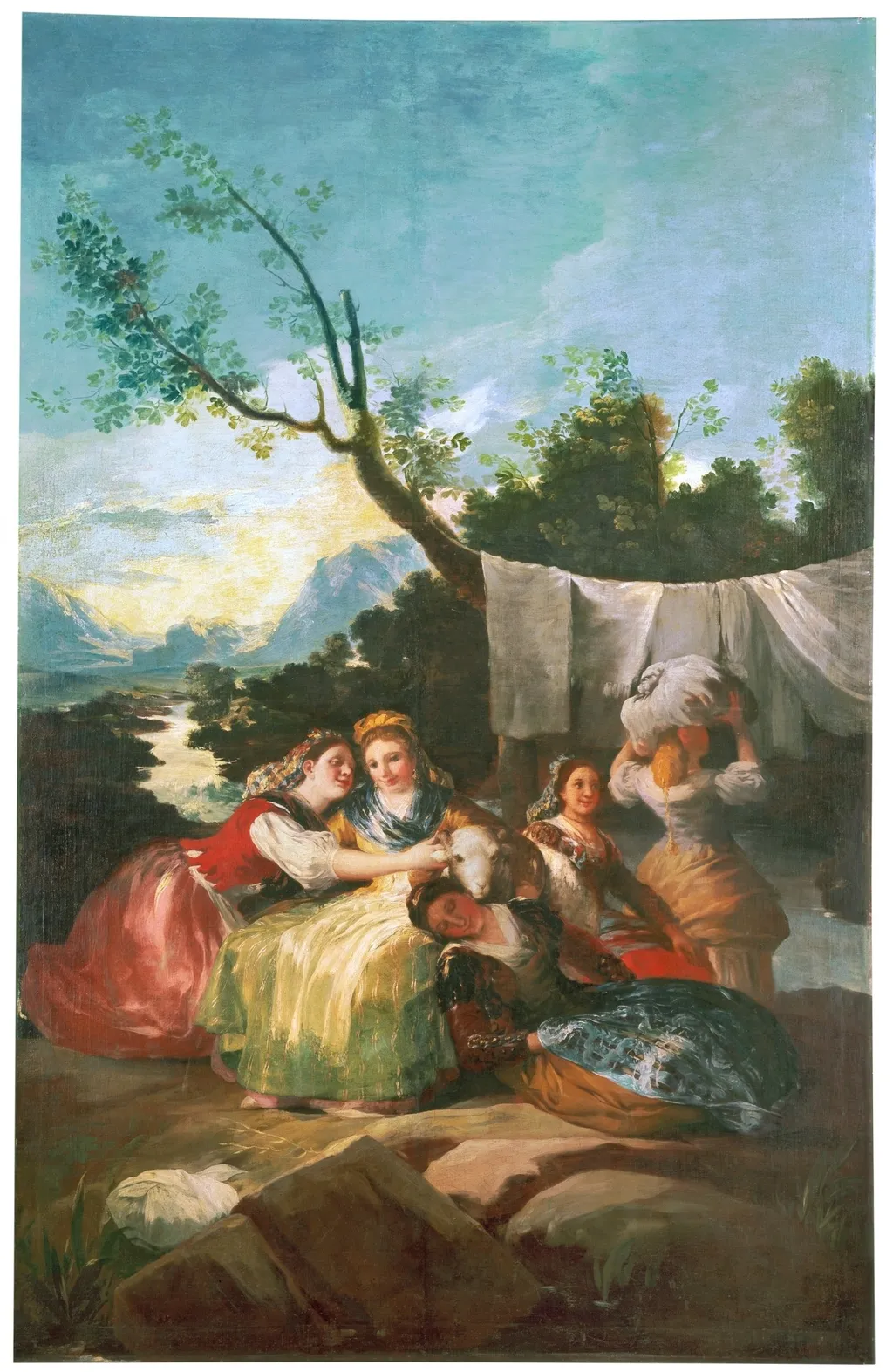
the washerwomen is an oil painting by the Rococo painting artist Francisco Goya. It dates from 1790 and is held in the collection of the Museo del Prado.
About this work
Overview
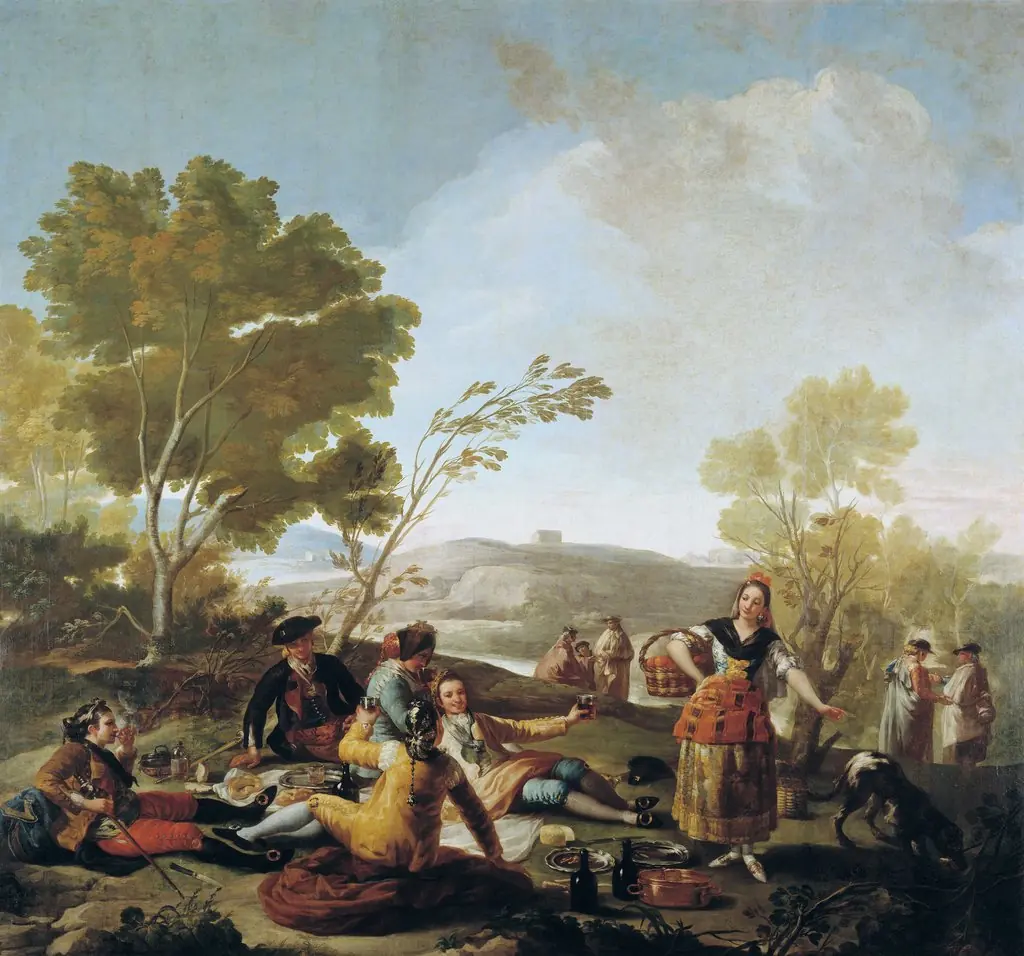
Created in 1790, this oil painting by the Spanish artist Francisco Goya portrays a group of women engaged in laundry work beside a river. The composition places the figures in a natural setting, with distant trees and mountains forming the backdrop. The work belongs to the collection of the Museo del Prado in Madrid.
Subject & Meaning
The scene captures everyday labor, showing several women in traditional dress washing garments, one of them accompanied by a goat. Their varied postures—kneeling, seated, standing—convey a sense of communal activity and the rhythms of rural life, reflecting Goya’s interest in the lives of ordinary people.
Technique & Style
Goya employs a balanced palette, contrasting bright colors of the women's clothing with the subdued tones of the surrounding landscape. Subtle chiaroscuro models the figures, giving them volume and drawing the eye into the depth of the riverbank. The handling of light and shadow aligns with late Rococo sensibilities while hinting at the artist’s emerging realism.
History & Provenance
Painted during Goya’s early career, the work was produced at a time when he was still influenced by the Rococo tradition prevalent in Spain. It entered the holdings of the Museo del Prado, where it remains on display as part of the museum’s representation of Goya’s formative period.
Context
The late eighteenth century in Spain was marked by social and political change, and Goya’s choice to depict laborers reflects a broader shift toward genre scenes that document everyday life. This focus anticipates his later, more critical works that examine the human condition within Spanish society.
Own this work as a print
Artist & collection
Artist
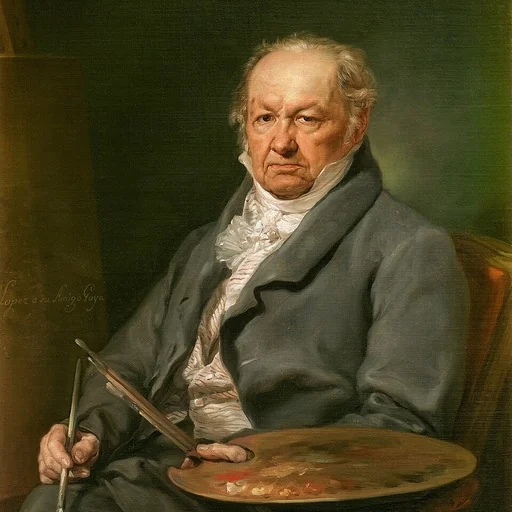
Francisco José de Goya y Lucientes (; Spanish: ; 30 March 1746 – 16 April 1828) was a Spanish romantic painter and printmaker.