Artwork
The Dream of Saint Joseph
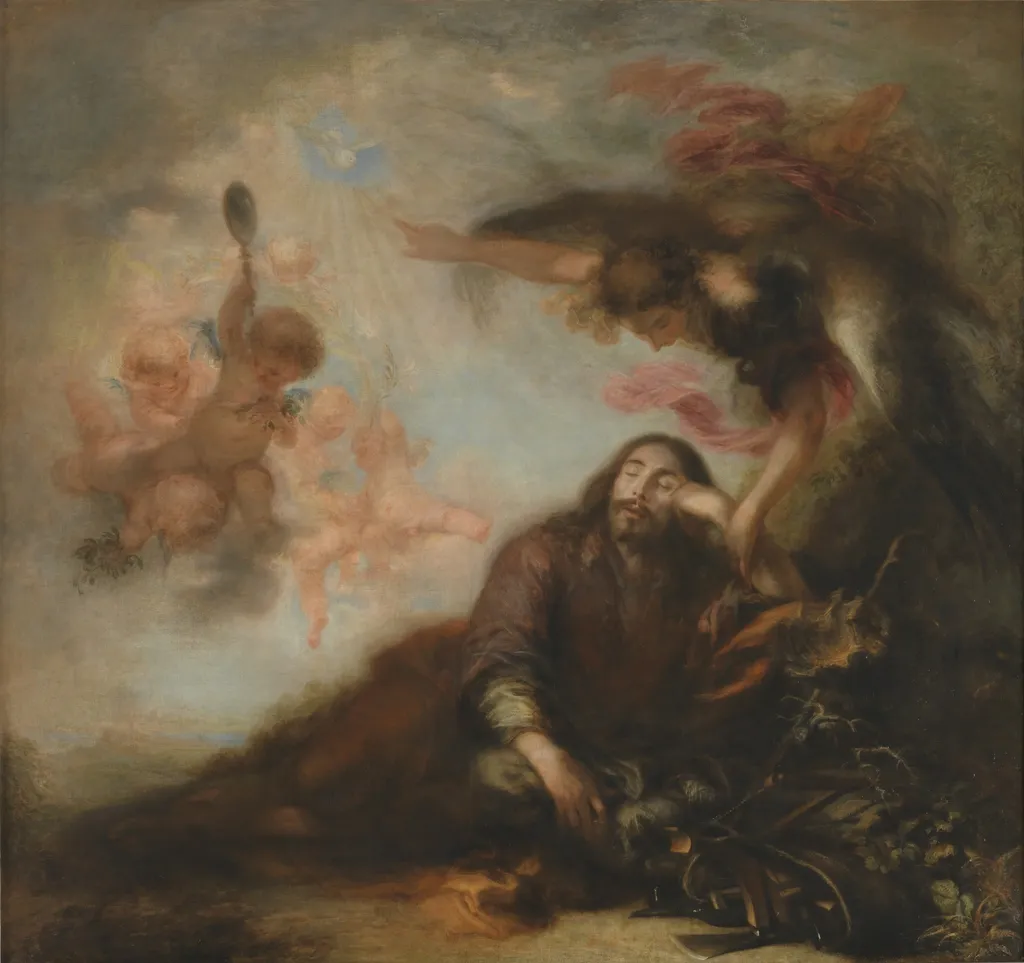
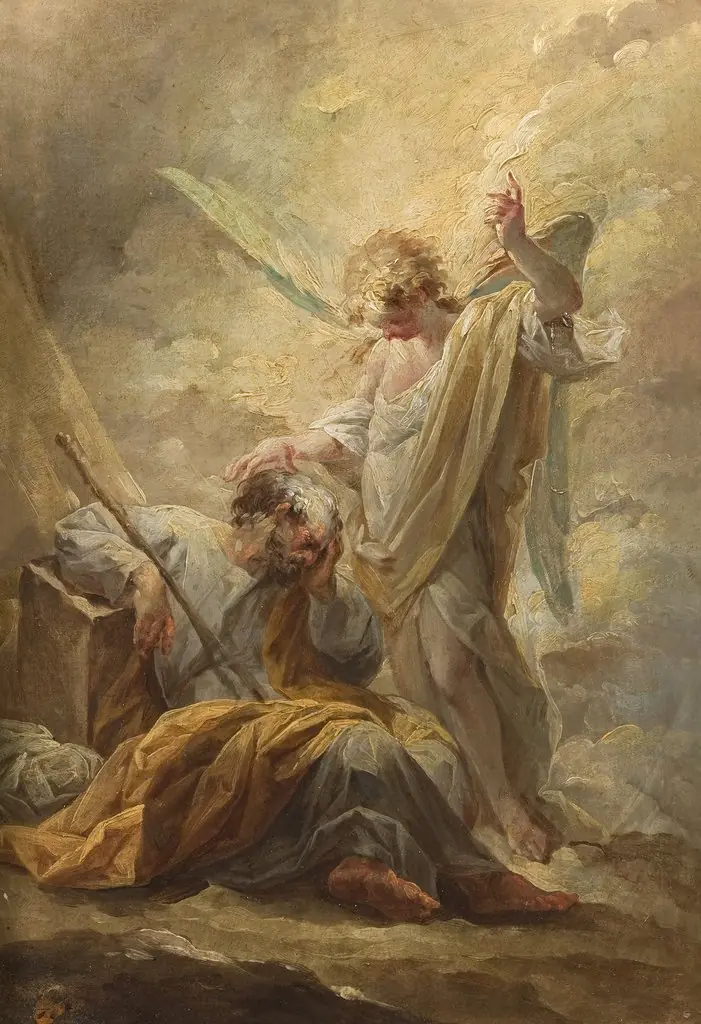
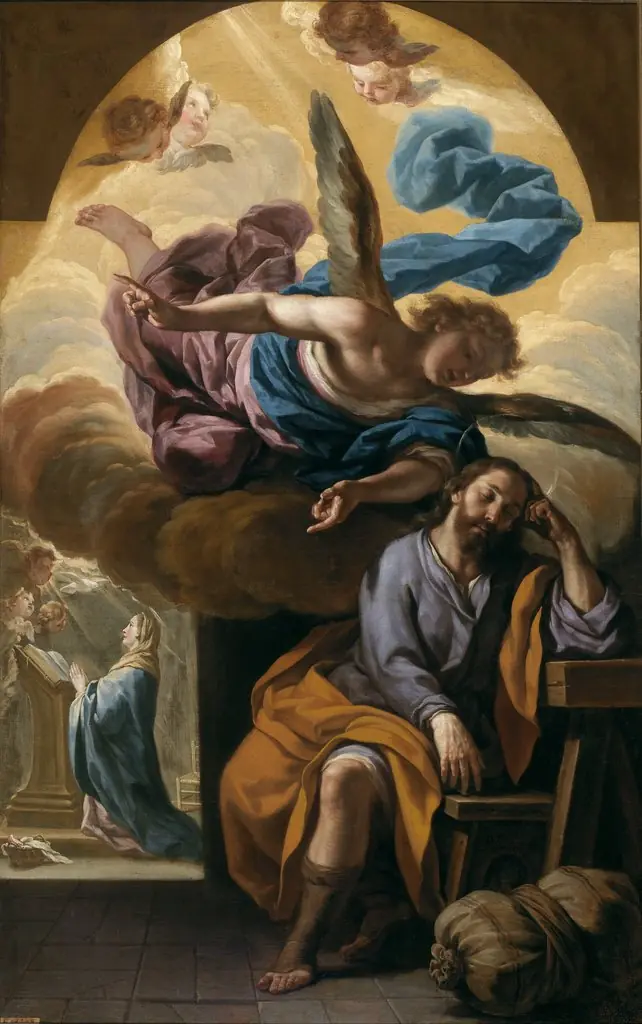
The Dream of Saint Joseph is an oil painting by the Early Baroque Italian artist Francisco Herrera the Younger. It dates from 1662 and is held in the collection of the Museo del Prado.
About this work
Overview
Herrera employs a muted palette dominated by earthy browns and pale blues, creating a harmonious atmosphere that unifies the terrestrial and celestial realms.
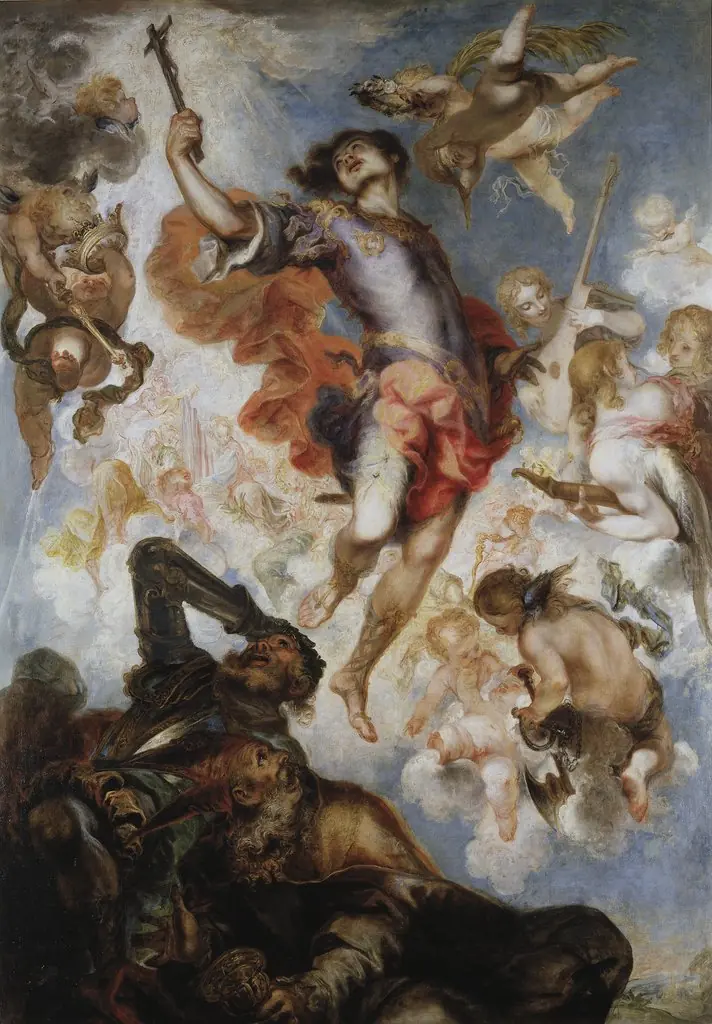
Painted in 1662, Francisco Herrera the Younger's 'The Dream of Saint Joseph' depicts the biblical episode where an angel appears to Joseph in a dream to instruct him to flee to Egypt. The composition centers on the saint, a bearded figure in a brown robe, reclining on rocky terrain with his head supported by his arm in a state of slumber. Above him, the sky is populated by soft clouds and two winged angels; one holds a cross, symbolizing the Passion, while the other gestures upward, directing attention to the divine message. Herrera employs a muted palette dominated by earthy browns and pale blues, creating a harmonious atmosphere that unifies the terrestrial and celestial realms. Executed during the artist's mature period in Seville, the work reflects the influence of the Baroque style while maintaining a distinct clarity of form. The painting demonstrates Herrera's ability to balance dramatic religious narrative with a restrained, atmospheric treatment of light and space, marking a significant contribution to Spanish religious art of the mid-seventeenth century.
Subject & Meaning
The composition illustrates the biblical episode in which Saint Joseph receives a divine vision, a motif common in Counter‑Reformation art. The sleeping man, identified by his humble attire and beard, is visited by two angelic figures—one bearing a cross and the other gesturing upward—signifying the heavenly message that guides his future actions.
Technique & Style
Herrera employs chiaroscuro to model the saint’s features, allowing a soft illumination to accentuate his face while deeper shadows recede into the surrounding landscape. The muted colour scheme and gentle cloud formations contribute to a tranquil atmosphere, while the delicate handling of light underscores the spiritual revelation.
History & Provenance
Created in the mid‑17th century, the painting entered the Spanish royal collection before being transferred to the Prado Museum, where it remains on display. Its provenance reflects the typical trajectory of court‑commissioned religious works, moving from private devotional settings to public exhibition as part of Spain’s national artistic heritage.
Own this work as a print
Artist & collection
Artist
Francisco Herrera the Younger filled Spanish church walls with oil paintings of saints and holy visions.