Artwork
The Sacrifice of Abraham
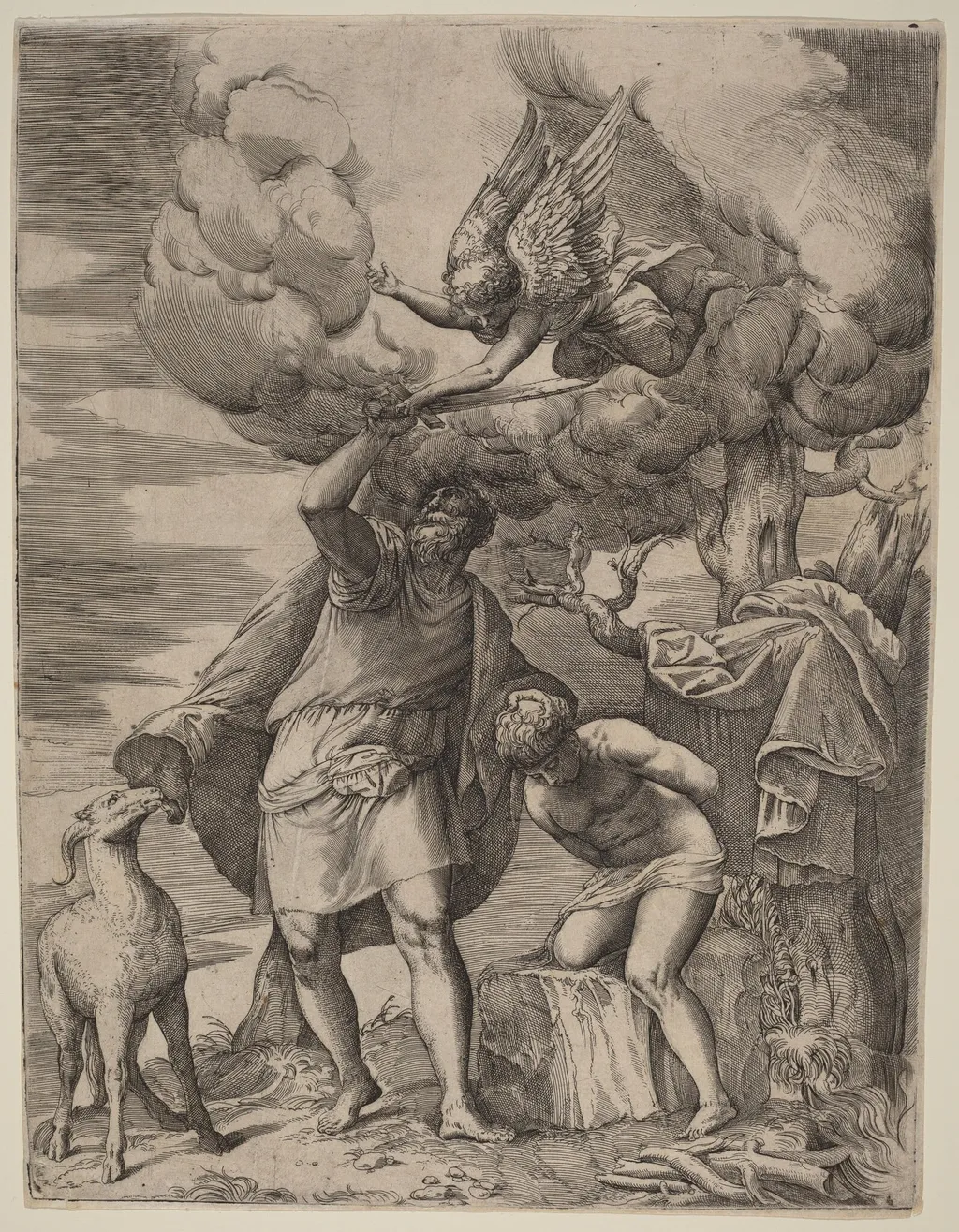
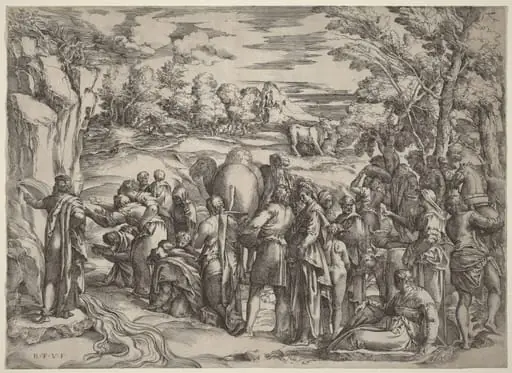
The Sacrifice of Abraham is an ink print by the Renaissance artist Battista Franco. It dates from 1554 and is held in the collection of the National Gallery of Art.
About this work
Overview
Battista Franco’s print, The Sacrifice of Abraham, dates from around 1554 and is executed as an etching combined with engraving on laid paper. The work captures a pivotal instant from the biblical narrative, rendered in monochrome with intricate line work that conveys tension among the figures.
Subject & Meaning
The composition depicts Abraham poised to sacrifice his son, who lies bound on the ground, while an angel intervenes, grasping Abraham’s wrist to halt the act. A ram, its head turned toward the scene, suggests the alternative offering, underscoring themes of obedience, divine mercy, and the testing of faith.
Technique & Style
Franco employed a hybrid of etching and engraving, allowing both fluid, spontaneous lines and precise, controlled incisions. The chiaroscuro effect emerges from cross‑hatching that models musculature and drapery, while swirling, dense strokes intensify the dramatic atmosphere despite the absence of colour.
History & Provenance
Created in the mid‑sixteenth century, the print reflects the period’s interest in biblical subjects for devotional and instructional purposes. Though specific ownership records are scarce, the work has been catalogued among Franco’s prints and appears in several European collections of Renaissance graphic art.
Context
The image aligns with contemporary Counter‑Reformation efforts to reinforce scriptural narratives through accessible media. Prints like this could be disseminated more widely than paintings, reaching a broader audience and contributing to the visual culture that emphasized moral exempla drawn from Old Testament stories.
Artist & collection