Artwork
Aeneid
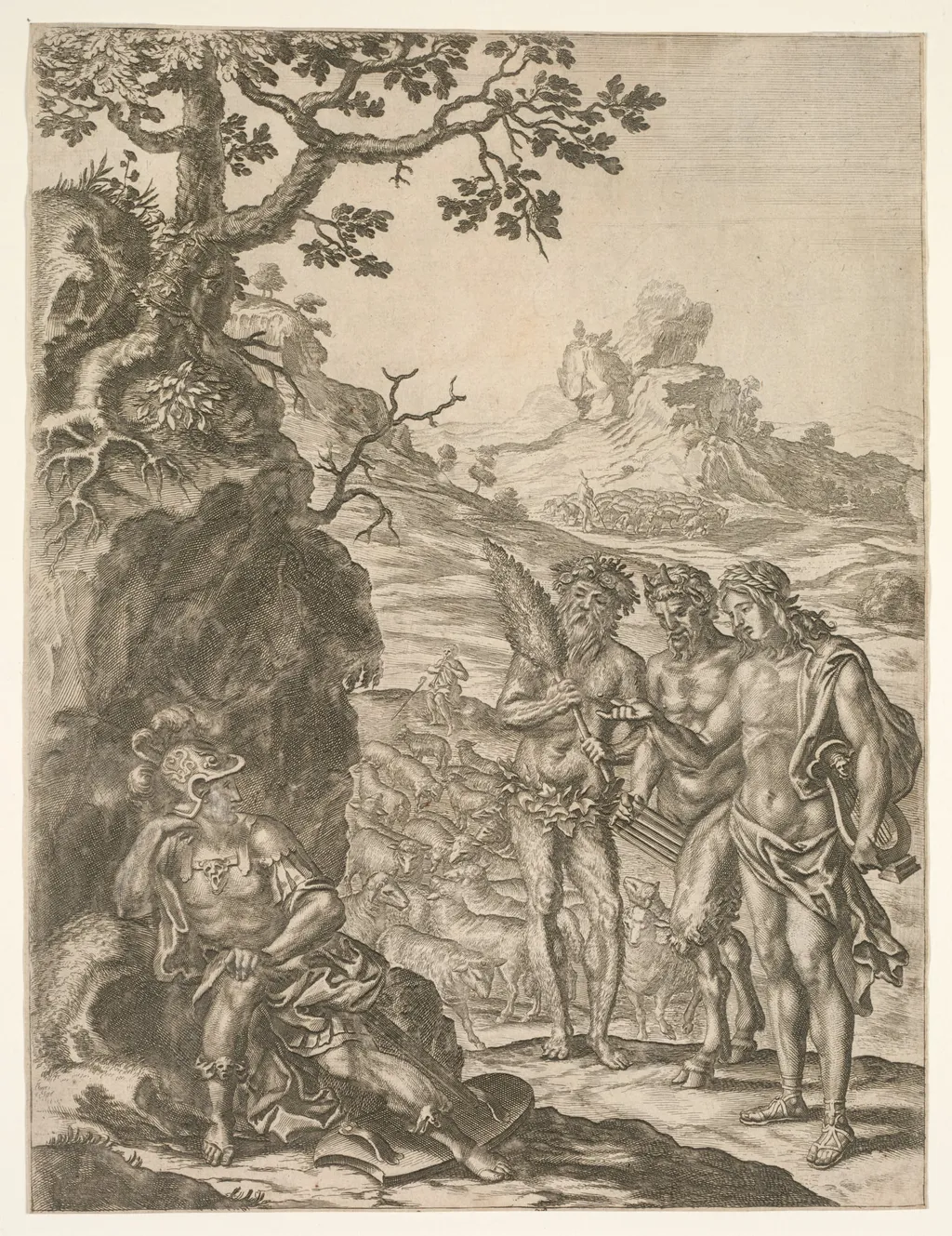
Aeneid is a print by the Baroque artist Pierre Lombart. It dates from 1658 and is held in the collection of the Cleveland Museum of Art.
About this work
Overview
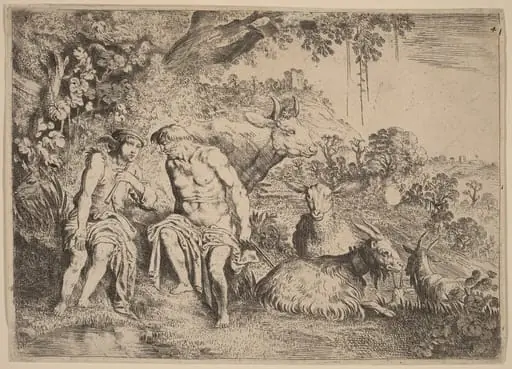
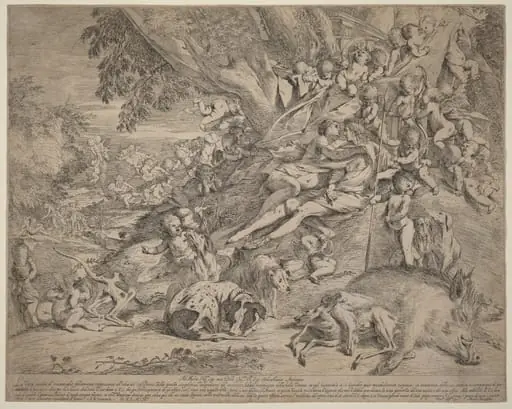
Created in 1658 by Pierre Lombart, this etching illustrates a scene inspired by the Aeneid, Virgil’s epic poem.
Created in 1658 by Pierre Lombart, this etching illustrates a scene inspired by the Aeneid, Virgil’s epic poem. The work is part of the collection at The Cleveland Museum of Art. Rendered in fine linear detail, it presents a mythological tableau set within a natural landscape, combining human figures with elements of wilderness and distant activity to suggest narrative depth beyond the immediate frame.
Subject & Meaning
The three central figures, bare-chested and posed with theatrical gravity, likely represent Aeneas and his companions from the Aeneid. The wreath, scroll, and flowing cloak are traditional emblems of triumph, knowledge, and authority—symbols tied to leadership in classical mythology. The crouching figure at the tree’s base and the distant laborers near a ship imply unseen events: perhaps a moment of rest before duty resumes, or the aftermath of a journey.
Technique & Style
Lombart employed etching to achieve sharp contrasts between light and shadow, emphasizing the muscular forms of the figures and the textured bark of the tree. The composition uses layered perspective: foreground figures are detailed and robust, while the background recedes into delicate, sparse lines suggesting river, hills, and ships. This method aligns with Baroque tendencies toward dynamic movement and atmospheric depth.
History & Provenance
The print was produced in 1658 during a period of renewed interest in classical literature among European artists. It entered the Cleveland Museum of Art’s collection through documented acquisition, though its earlier ownership history remains unclear. As a standalone print, it was likely circulated among collectors and scholars who valued mythological imagery as both artistic and intellectual objects.
Context
In mid-17th-century Europe, classical texts like the Aeneid were frequently referenced in visual art to convey moral and political ideals. Lombart’s etching reflects this trend, using myth to explore themes of destiny and duty. The inclusion of natural elements and distant activity mirrors contemporary printmaking practices that sought to embed narrative within expansive, immersive landscapes.
Legacy
Though not widely reproduced or studied today, the etching stands as an example of how Baroque-era artists interpreted ancient literature through intimate, detailed compositions. Its preservation in a major museum underscores its role as a cultural artifact of intellectual engagement with antiquity, offering insight into how classical narratives were visually sustained beyond painting and sculpture.
Artist & collection