Artwork
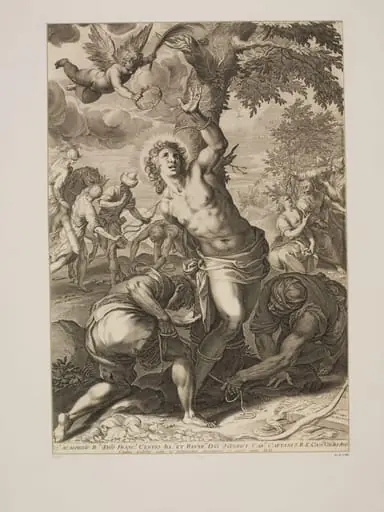
Saint Roch with a Donor
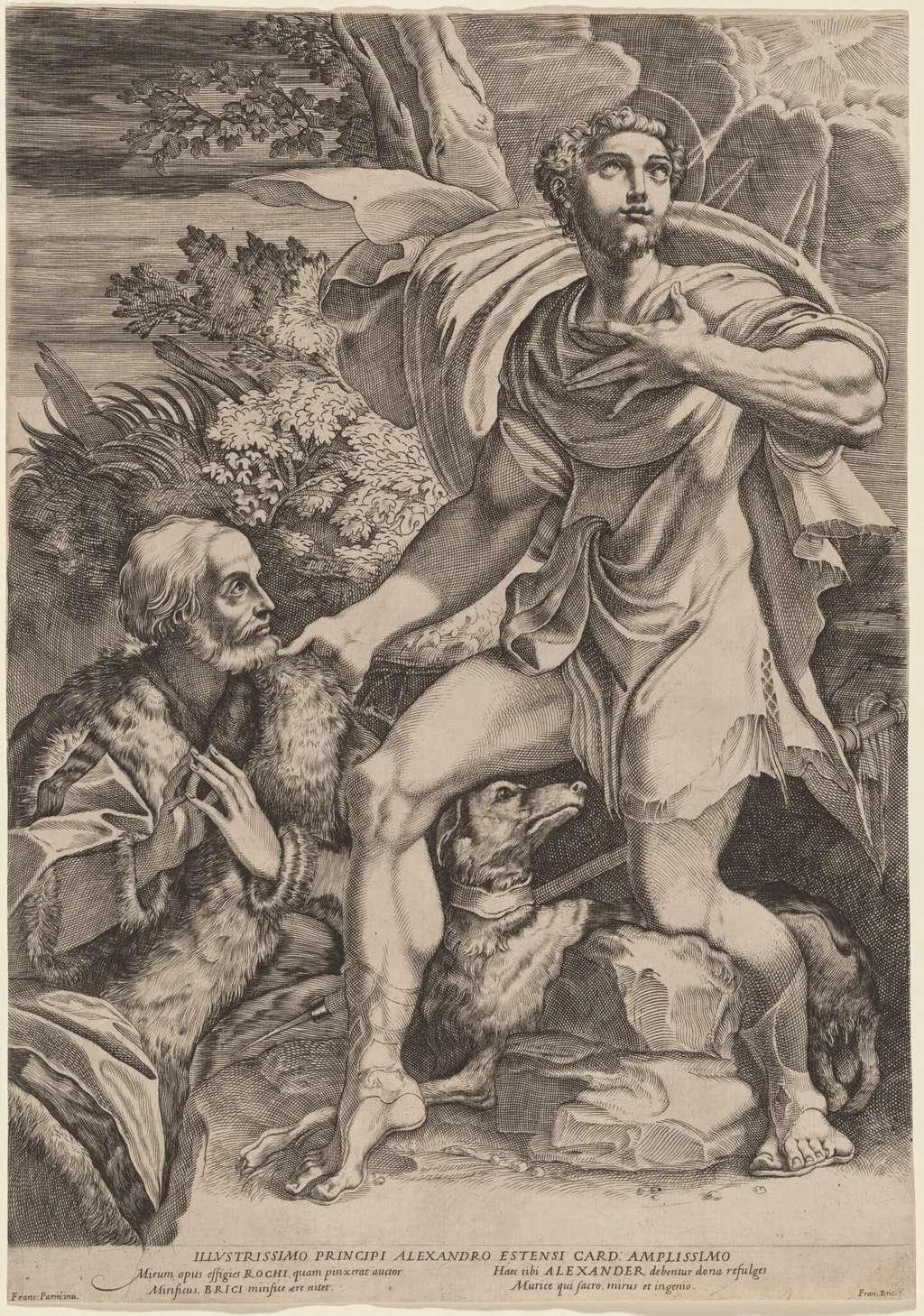
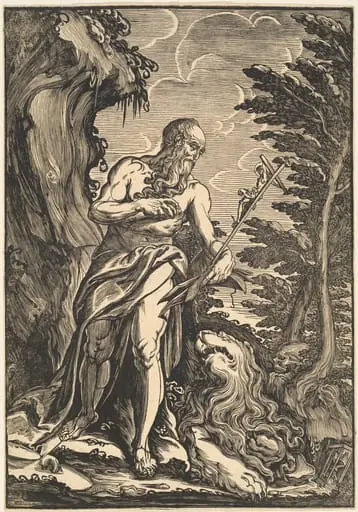
Saint Roch with a Donor is an ink print by the Renaissance artist Francesco Brizio. It dates from 1603 and is held in the collection of the National Gallery of Art.
About this work
Overview
The work belongs to the late Renaissance tradition of religious prints, intended for private contemplation rather than public display.
Created around 1603 by Francesco Brizio, this print combines etching and engraving on laid paper to depict a devotional scene. It presents Saint Roch alongside a kneeling donor, framed within a quiet natural setting. The work belongs to the late Renaissance tradition of religious prints, intended for private contemplation rather than public display. Its fine linear detail and balanced composition reflect the technical precision valued in early 17th-century Italian printmaking.
Subject & Meaning
Saint Roch, recognized by his halo and the wound on his thigh, is shown in a moment of divine intercession. The donor, positioned in humble prayer, embodies the act of personal devotion common in Counter-Reformation piety. The dog at the donor’s side alludes to the legend of Roch’s care during plague, when a dog brought him bread. Together, the figures convey themes of mercy, faith, and divine protection through intercessory saints.
Technique & Style
Brizio employed fine, controlled lines to render textures in fabric, skin, and foliage. The etching’s delicate hatching builds volume and depth, while engraving adds sharp definition to contours and details like the dog’s fur and the donor’s robes. The landscape behind is rendered with soft, receding tones, enhancing spatial harmony. The style reflects Renaissance ideals of naturalism and orderly composition, grounded in observation rather than idealization.
History & Provenance
The print was produced in Bologna during a period of active printmaking under the influence of the Carracci circle. Brizio, a student of the Carracci, adapted their emphasis on clarity and emotional restraint for religious subjects. While no specific early ownership records survive, similar prints from this era were commonly collected by clergy and educated patrons for personal devotion, suggesting a modest but enduring circulation.
Context
This work emerged during the Counter-Reformation, when the Catholic Church encouraged visual aids to foster personal piety. Prints like this one allowed wider access to sacred imagery beyond altarpieces. Saint Roch, a plague saint, was especially venerated in Italy during outbreaks. The inclusion of a donor reflects a growing trend in religious art to personalize devotion, inviting viewers to see themselves in the kneeling figure.
Legacy
Brizio’s print exemplifies the role of reproductive and original prints in disseminating religious iconography across Italy. Though not widely known today, it represents a quiet but significant strand of early Baroque print culture—focused on intimacy, moral instruction, and technical refinement. Its legacy lies in its embodiment of devotional practice rather than artistic innovation, preserving a moment of personal faith through meticulous craft.
Artist & collection