Artwork
Piazza San Marco, Venice
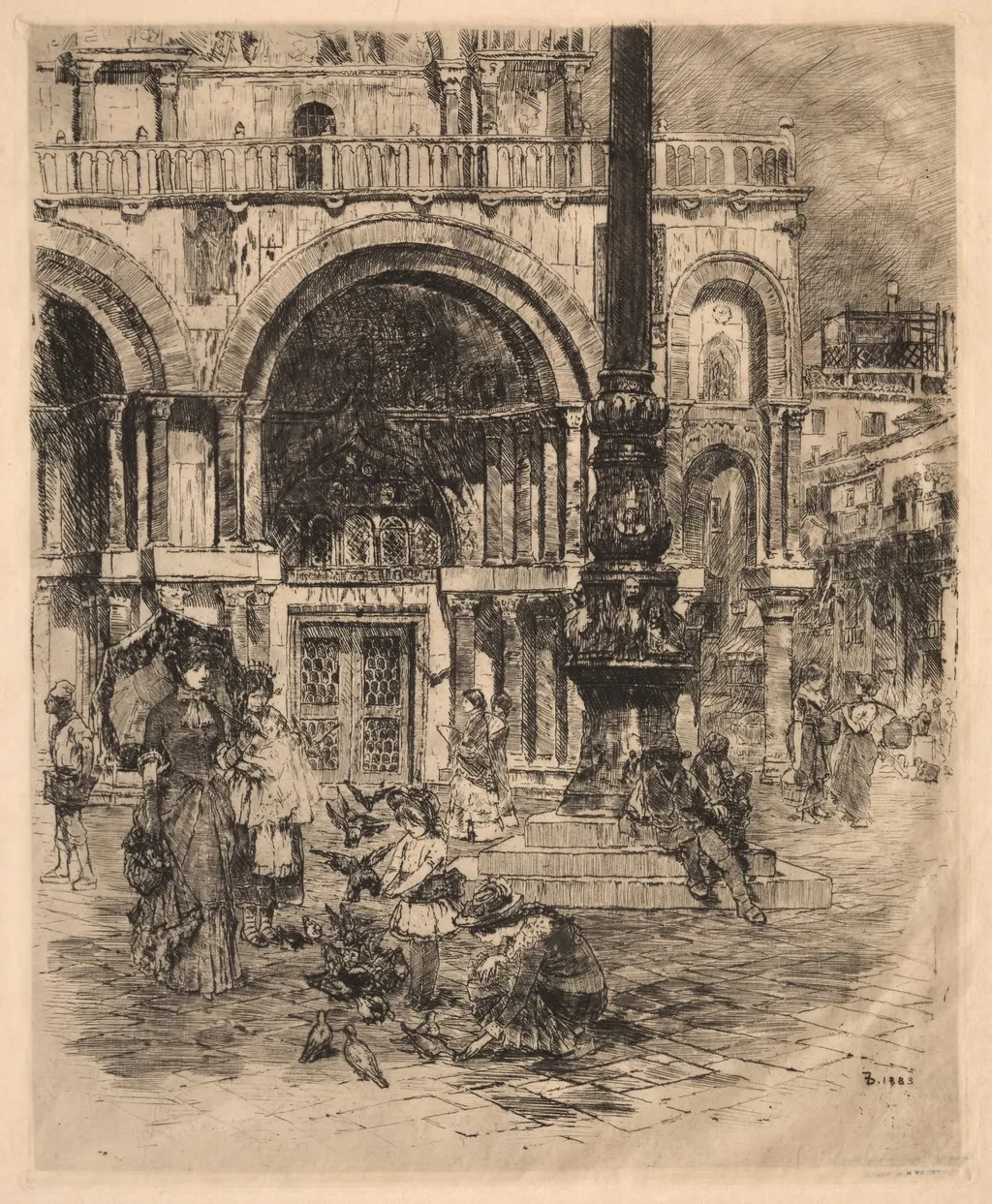
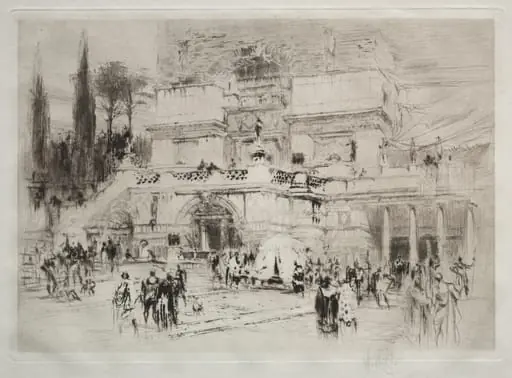
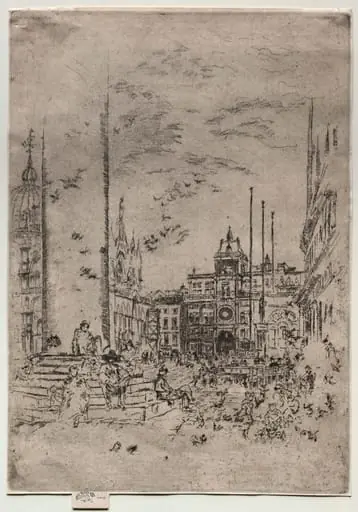
Piazza San Marco, Venice is a print by the Impressionist artist Frank Duveneck. It dates from 1883 and is held in the collection of the Cleveland Museum of Art.
About this work
Notice how the artist captures the mix of movement and stillness—people and birds seem almost alive, while the buildings stand solid.
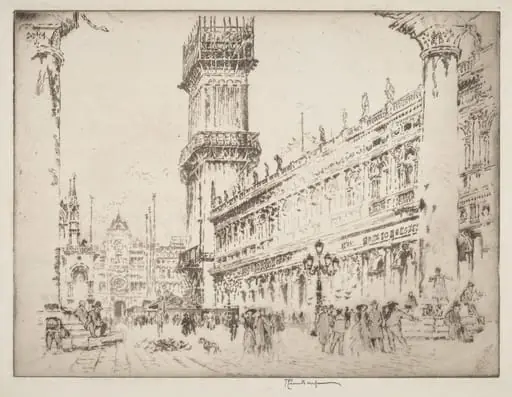
This sketch shows a busy square with a large archway in the center, framed by buildings with balconies and windows. People are scattered around—some standing, others walking or sitting on the steps. A tall lamp post stands near the arch, and a small group of pigeons or birds is on the ground. The drawing is mostly in black and white, with quick, sketchy lines that give it a rough, lively feel.
Notice how the artist captures the mix of movement and stillness—people and birds seem almost alive, while the buildings stand solid. The date in the corner (1883) tells us this is an old sketch, but the style looks fresh and quick, like a snapshot.
If you like this sketchy, busy style, look up chiaroscuro to see how artists use light and shadow to add drama.
Overview
Created in 1883, this ink sketch by Frank Duveneck depicts the bustling Piazza San Marco in Venice. Executed in rapid, expressive lines, it captures the square’s architectural grandeur and transient human activity. The work is held in the collection of The Cleveland Museum of Art, where it is valued for its immediacy and observational energy, reflecting the artist’s interest in spontaneous urban scenes during his European travels.
Subject & Meaning
The scene centers on a monumental archway flanked by ornate buildings with balconies and windows, their solidity contrasting with the fleeting gestures of passersby. Figures are scattered across the piazza—some standing, others moving—while a cluster of birds on the ground adds a quiet, natural rhythm. The composition suggests a moment suspended between stillness and motion, emphasizing the piazza as both a civic space and a stage for everyday life.
Technique & Style
Duveneck employed loose, gestural ink lines to convey texture and movement with minimal detail. The monochromatic palette enhances the sketch’s spontaneity, avoiding finish in favor of dynamic energy. The quick strokes suggest a direct response to the scene, as if drawn on-site, with shadows and forms implied rather than defined. This approach aligns with a tradition of rapid observational drawing favored by 19th-century realist artists.
History & Provenance
The sketch was made during Duveneck’s time in Venice in 1883, part of a series of works he produced while traveling in Europe. It entered the Cleveland Museum of Art’s collection through established acquisition channels, likely as part of a broader effort to document American artists’ engagement with European subjects. Its preservation reflects its significance as a personal record of the artist’s visual studies.
Context
Duveneck’s sketch reflects the broader 19th-century trend among American artists to study abroad, particularly in Italy, where they sought to refine their draftsmanship through direct observation. Piazza San Marco, a well-known public space, offered rich material for capturing light, architecture, and crowd dynamics. This work stands as an example of how artists translated fleeting moments into enduring visual records.
Legacy
Though not widely exhibited, the sketch remains a key example of Duveneck’s commitment to direct, unidealized observation. Its informal quality influenced later generations of American draftsmen who valued immediacy over polish. It also contributes to the historical record of how foreign artists perceived Venice—not as a romanticized ruin, but as a living, breathing urban environment.
Artist & collection