Artwork
Untitled
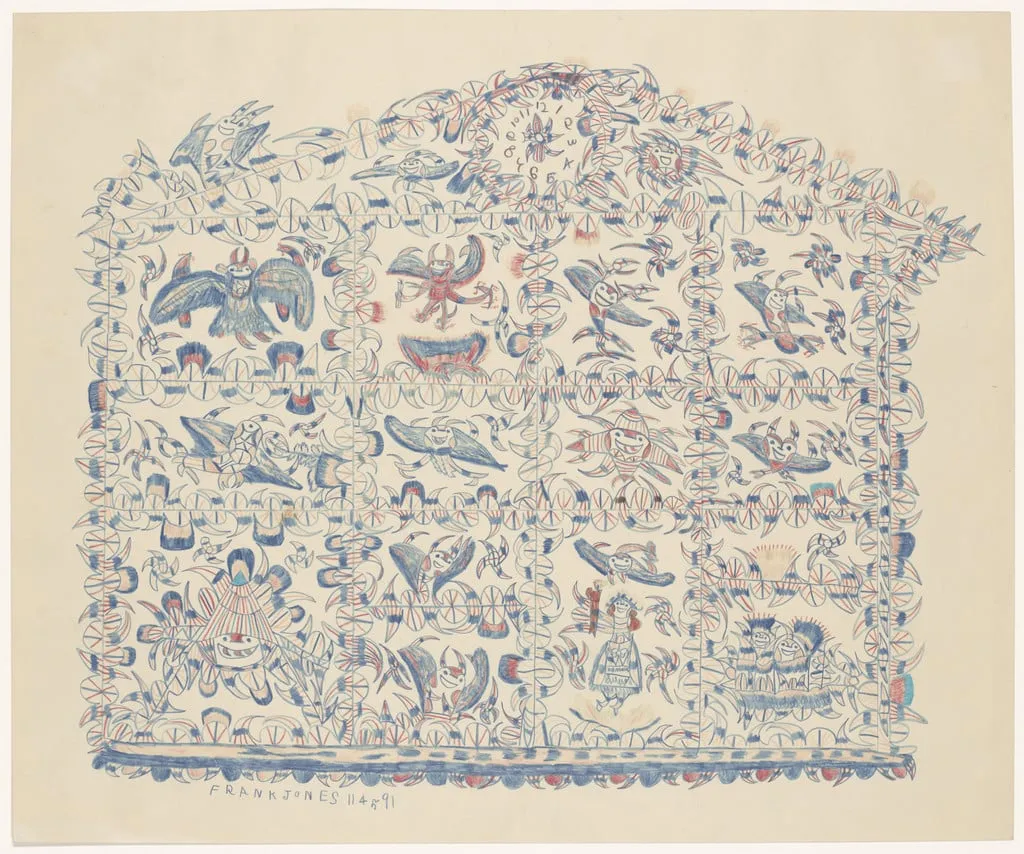
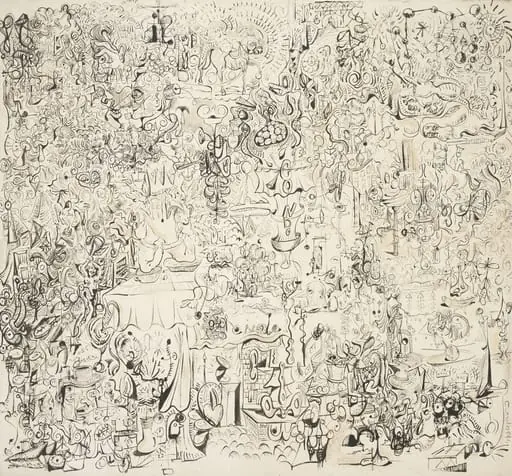
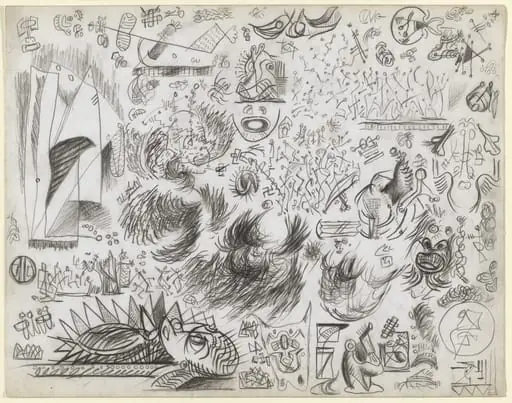
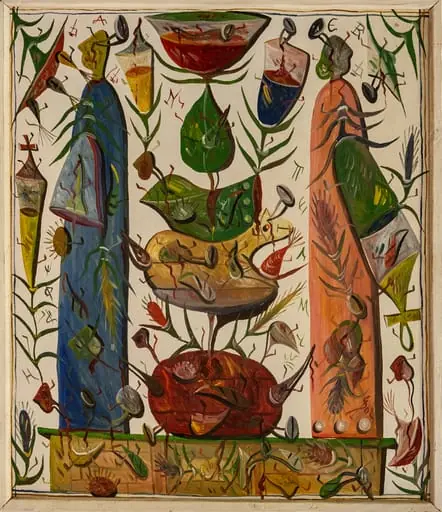
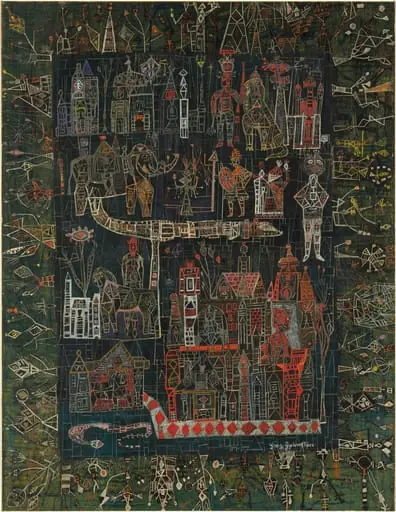
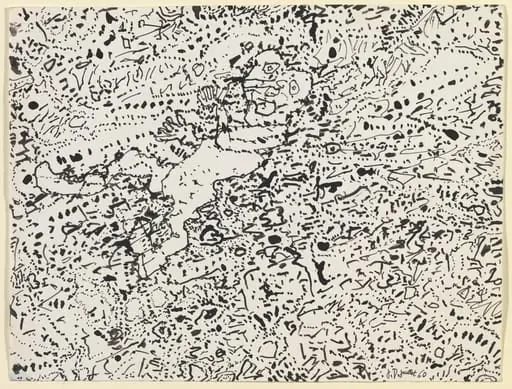
Untitled is a graphite drawing by Frank Jones. It dates from 1967 and is held in the collection of the Museum of Modern Art.
About this work
Overview
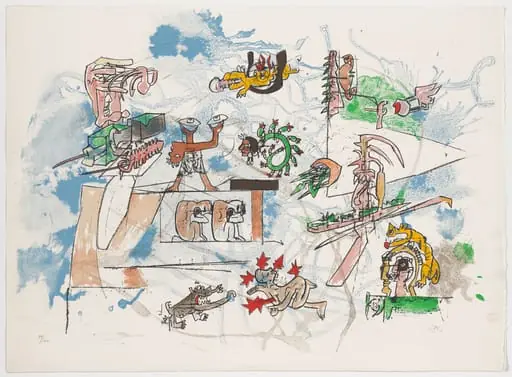
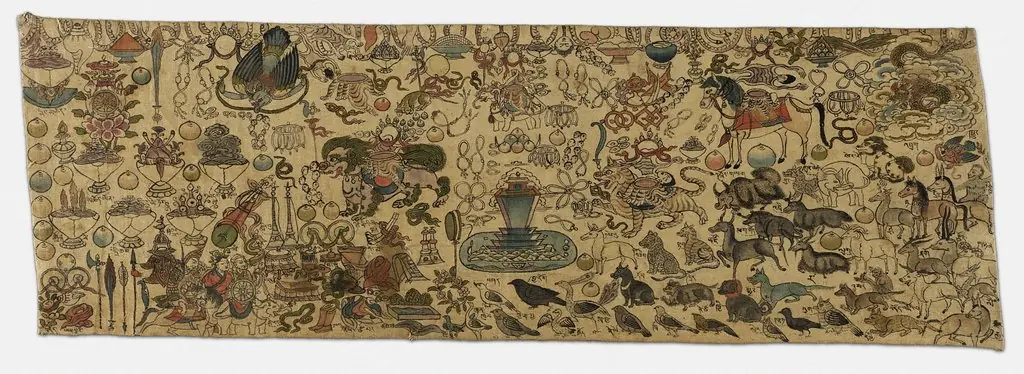
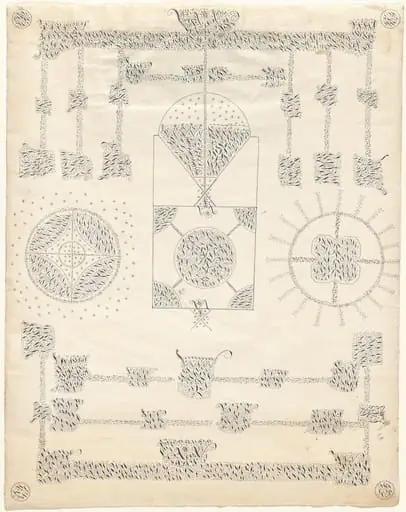
It presents a dense, intricate composition built from countless fine lines and small marks, forming a surface that feels both crowded and rhythmically balanced.
Created around 1967, this drawing by Frank Jones is executed in colored pencil on paper and resides in the collection of The Museum of Modern Art. It presents a dense, intricate composition built from countless fine lines and small marks, forming a surface that feels both crowded and rhythmically balanced. The work resists clear narrative, instead inviting sustained observation of its layered textures and subtle color shifts.
Subject & Meaning
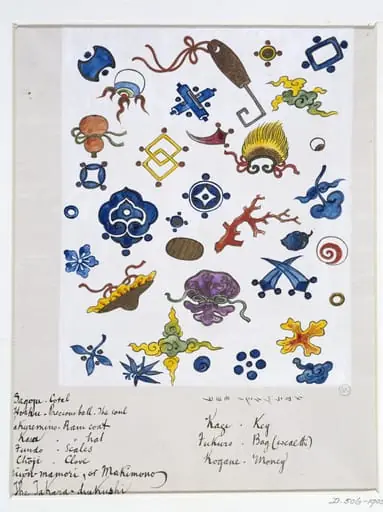
The drawing contains abstracted forms—suggestive of birds, blossoms, and ambiguous figures—that intertwine without clear hierarchy or spatial order. No single element dominates; instead, the imagery emerges through repetition and proximity. The lack of defined boundaries suggests a continuous, organic flow, evoking natural systems or internal states rather than external scenes.
Technique & Style
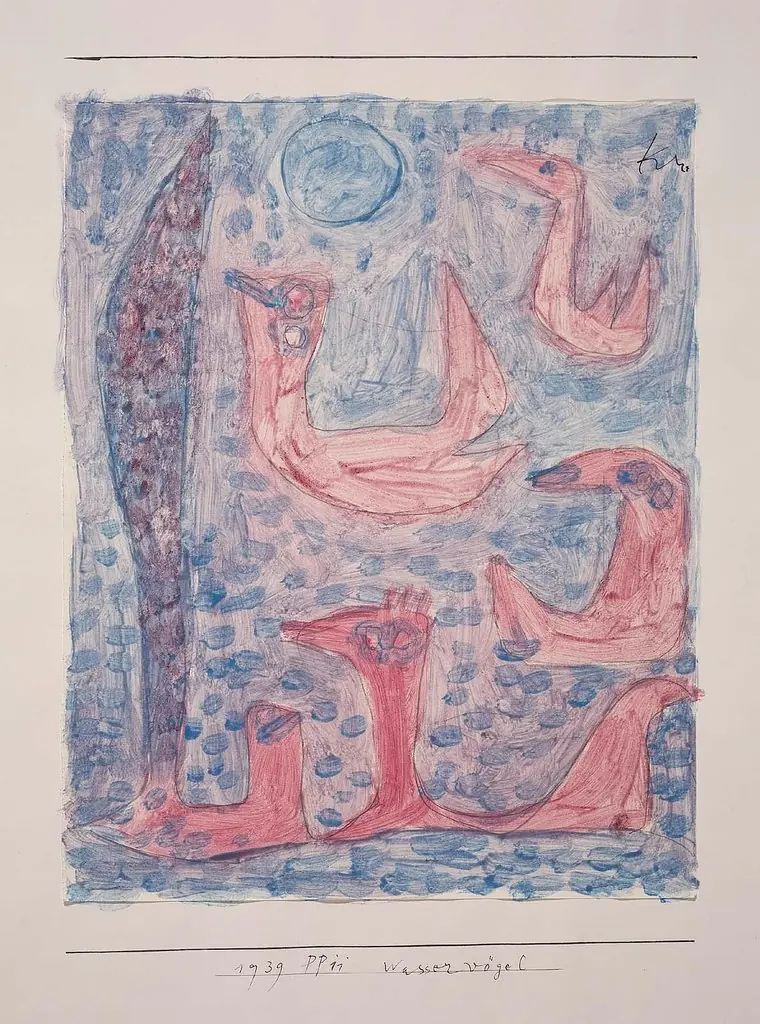
Jones employed meticulous, repetitive mark-making using thin lines and delicate dots in blue, pink, and white. The accumulation of these marks creates tonal variation and texture without shading or blending. Areas of high density contrast with open spaces, producing visual breathing room within an otherwise crowded field. The technique emphasizes process over representation.
History & Provenance
The work was made in the late 1960s and entered The Museum of Modern Art’s collection shortly thereafter. Its acquisition reflects the institution’s interest in non-traditional drawing practices of the period. No public record details its creation context or prior ownership, and it has remained in the museum’s care since.
Context
Emerging during a time when artists were redefining drawing beyond preparatory sketches, Jones’s work aligns with contemporaries exploring obsessive mark-making and non-representational systems. His approach shares affinities with patterns found in folk art, textile design, and psychedelic visual culture, though it avoids overt symbolism or political reference.
Legacy
The drawing contributes to a broader reevaluation of drawing as a primary medium in late 20th-century art. Its quiet intensity and labor-intensive method have influenced later artists interested in repetition, micro-detail, and the meditative potential of line. It remains a quiet example of how minimal tools can generate complex visual experiences.
Artist & collection