Artwork
Various Treasure Motifs (Takara tsukushi no mōyō)
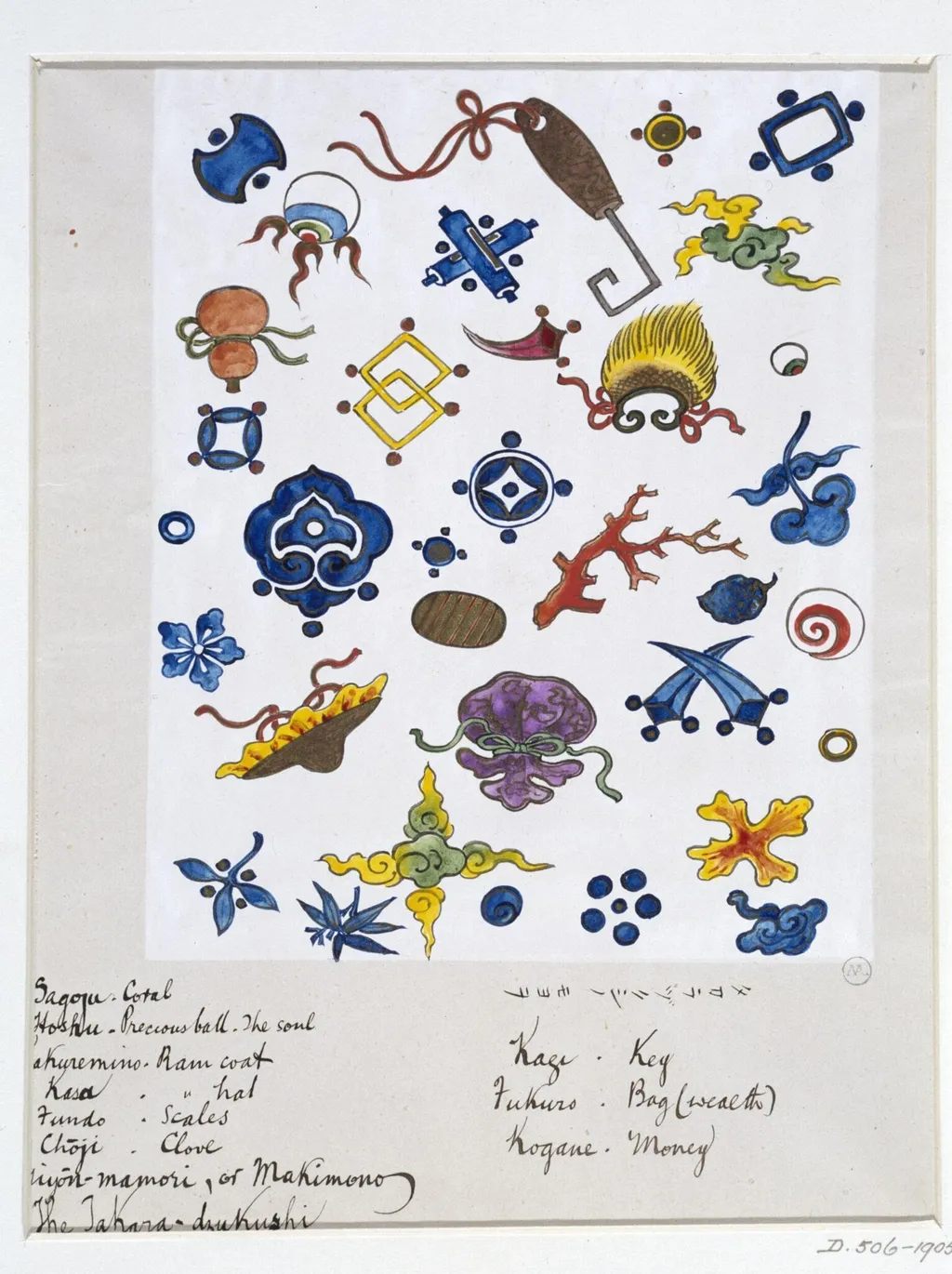
Various Treasure Motifs (Takara tsukushi no mōyō) is a paint painting by the Impressionist artist Unknown. It dates from 1877 and is held in the collection of the Victoria and Albert Museum.
About this work
Overview
The work functions as a visual catalog, blending natural and fantastical elements without narrative sequence, emphasizing symbolic resonance over realism.
Created in 1877, this vertical scroll presents a dense arrangement of symbolic objects drawn from Japanese and broader East Asian traditions. Each item—coins, keys, flowers, ceremonial vessels—is rendered in vivid hues with strong black outlines, forming a rhythmic, non-linear composition. The work functions as a visual catalog, blending natural and fantastical elements without narrative sequence, emphasizing symbolic resonance over realism.
Subject & Meaning
The motifs include both tangible items like coins and hats, and abstracted forms such as a face-bearing flower or a clove, suggesting layered cultural meanings. Labels in Japanese and English identify each object, with terms like 'key,' 'money,' and 'soul' hinting at metaphysical associations. These symbols may reflect beliefs in abundance, protection, or spiritual value, common in Edo-period decorative arts and folk traditions.
Technique & Style
Executed in opaque watercolor on paper, the scroll employs flat planes of saturated color—blue, red, yellow—outlined in bold ink to enhance clarity and visual impact. Forms are stylized rather than naturalistic, with exaggerated proportions and whimsical details. The hand-lettered annotations, integrated into the design, reinforce the didactic intent, aligning with 19th-century Japanese decorative manuals that cataloged auspicious symbols.
History & Provenance
The scroll was acquired by the Victoria and Albert Museum in 1905 from Miss Mary Dresser, who inherited it from her husband, Christopher Dresser, a British designer and collector of Japanese art. His interest in Japanese aesthetics influenced Western design movements, and this piece likely served as a reference for his studies of ornamentation and symbolic form in non-Western traditions.
Context
Produced during the Meiji era, the scroll reflects Japan’s engagement with both traditional iconography and international exchange. While rooted in Edo-period motifs used in textiles and ceramics, its bilingual labeling and systematic presentation suggest adaptation for Western audiences. Such works were often created for export or educational purposes, bridging cultural understanding through visual taxonomy.
Legacy
The scroll remains a key example of how Japanese symbolic motifs were documented and reinterpreted during a period of rapid modernization. Its preservation in a major Western museum underscores its role in shaping early Western appreciation of Japanese design principles. It continues to inform studies on cross-cultural ornamentation and the transmission of symbolic systems across borders.
Artist & collection

 Domestic Scene
 Giacomo and Cardinal Marco, investing Andrea, Abbot of San Zeno, with his Benefice
 The Nymph of Fontainebleau
 Portrait of a Woman
 Madonna and Child with Saints in the Enclosed Garden
 Venus and Minerva
 Family Group of Four on Sofa
 Wall painting from Room H of the Villa of P. Fannius Synistor at Boscoreale
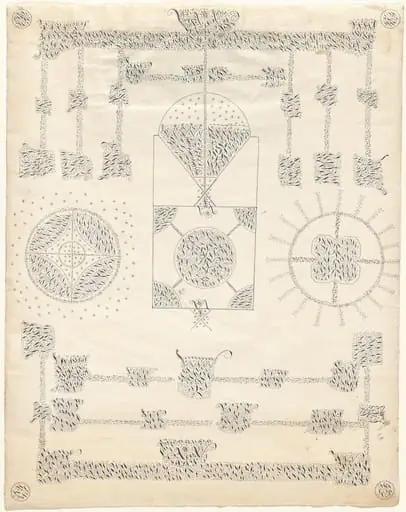 A Sacred Sheet Sent from Holy Mother Wisdom by Her Angel of Many Signs
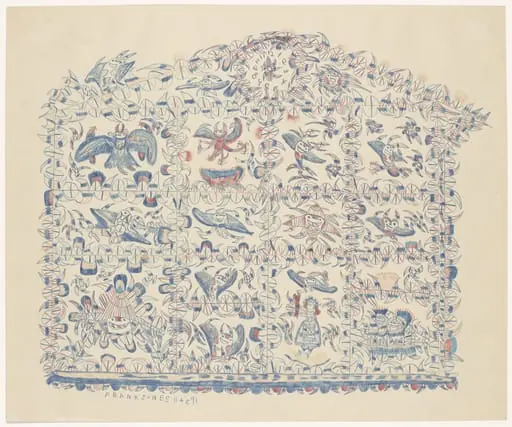 Untitled
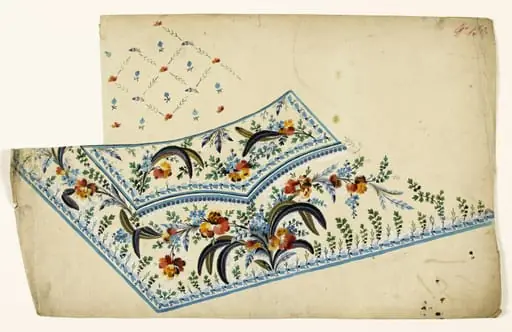 Composition de fleurs et de plumes en bouquets, frises de perles et de fleurs bleues, croisillons de plumes et de fleurs à semis de fleurs, projets de broderies de gilet, XVIIIème siècle
 Gilet à la bordure de svastika, projets de broderies de gilet, XVIIIème siècle
 Ceiling Pattern, Tomb of Qenamun
 Utensils used at the Kiku no sekku, 9th day of 9th month
 Untitled
 Untitled
 Untitled
 Imari
Imari Composition en bouquets de branches fleuries et guirlande de passementerie bleue, projets de broderies de gilet, XVIIIème siècle
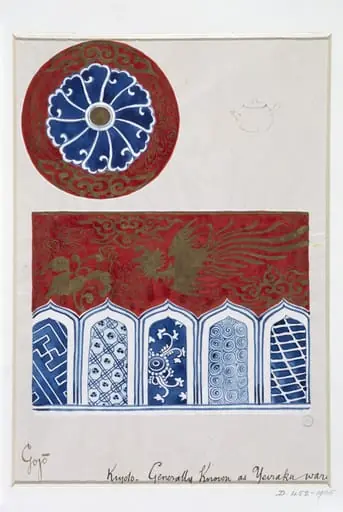 Kiyoto - Generally Known as Yeiraku ware