Artwork
Game Stall
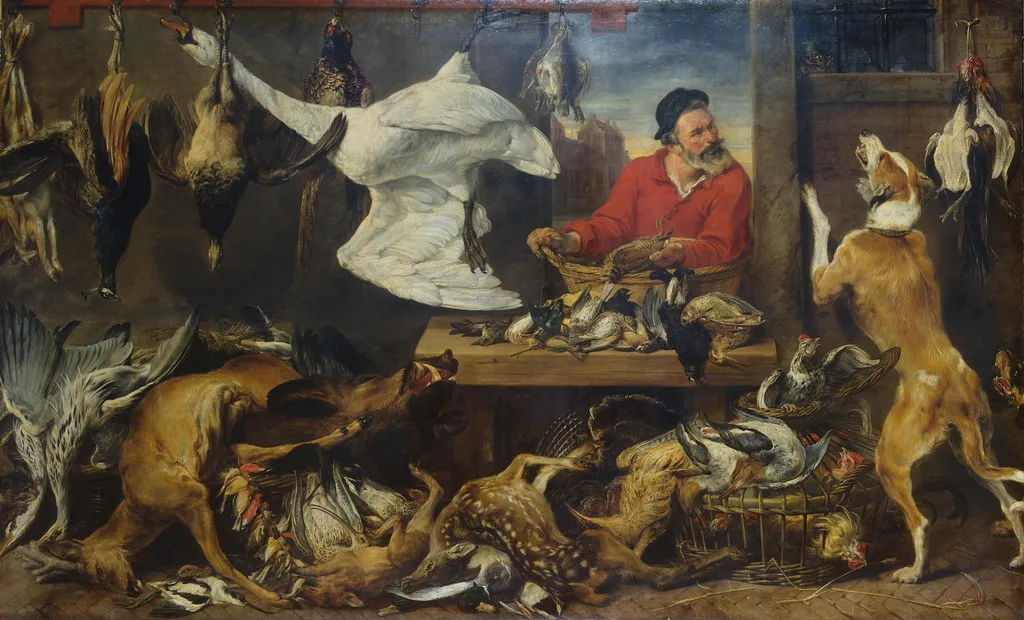
Game Stall is an oil painting by the Flemish Baroque painting artist Frans Snyders. It dates from 1619 and is held in the collection of the Hermitage Museum.
About this work
Overview
Its composition balances commercial activity with naturalistic rendering, capturing the textures and arrangements of dead game in a controlled, intimate space.
Painted in 1619 by Frans Snyders, Game Stall is an oil-on-canvas still life depicting a market scene centered on the sale of hunted game. The work resides in the State Hermitage Museum and exemplifies the Flemish tradition of detailed animal and market imagery. Its composition balances commercial activity with naturalistic rendering, capturing the textures and arrangements of dead game in a controlled, intimate space.
Subject & Meaning
The painting portrays a vendor in a red coat presiding over a stall laden with rabbits, birds, and other game, suspended and stacked for sale. A dog, rearing on its hind legs, draws attention to the transactional dynamic between human and animal. The scene reflects the economic and social role of game in early 17th-century markets, where hunting surplus became a visible commodity, devoid of romanticism but rich in everyday realism.
Technique & Style
Snyders employs precise brushwork to render fur, feathers, and skin with clinical attention, emphasizing tactile variety. A dark, neutral background heightens the contrast of the animals’ forms, while subtle chiaroscuro models volume without dramatic lighting. The composition is tightly organized, with layered goods creating depth, and the figures’ stillness contrasts with the dog’s kinetic posture, reinforcing the painting’s quiet tension between order and vitality.
History & Provenance
Commissioned during Snyders’ mature period in Antwerp, the painting entered the Hermitage collection in the 18th century, likely through European royal acquisitions. It was cataloged among Flemish still lifes acquired by Catherine the Great’s agents. Its survival in near-original condition reflects its early recognition as a significant example of genre-driven animal painting in the Southern Netherlands.
Context
In early 17th-century Flanders, still lifes featuring game were popular among urban elites who valued displays of wealth and control over nature. Snyders, trained under Peter Paul Rubens, contributed to a genre that merged natural observation with symbolic abundance. Unlike religious or mythological scenes, these works celebrated the material world without allegory, aligning with growing secular tastes in merchant society.
Legacy
Game Stall influenced later still life painters in the Netherlands and beyond, particularly in the treatment of animal textures and spatial arrangement. Its unembellished depiction of commerce helped define a secular tradition in Flemish art, distinct from idealized or allegorical forms. While not widely exhibited today, it remains a key reference in studies of early modern visual culture and the representation of the natural world in art.
Own this work as a print
Artist & collection
Artist
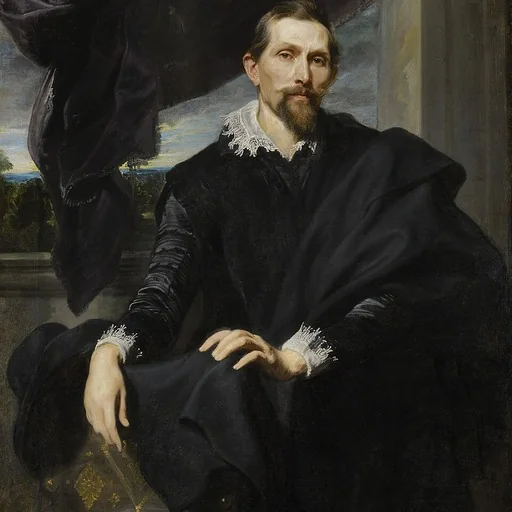
Frans Snyders or Frans Snijders was a Flemish painter of animals, hunting scenes, market scenes, and still lifes.

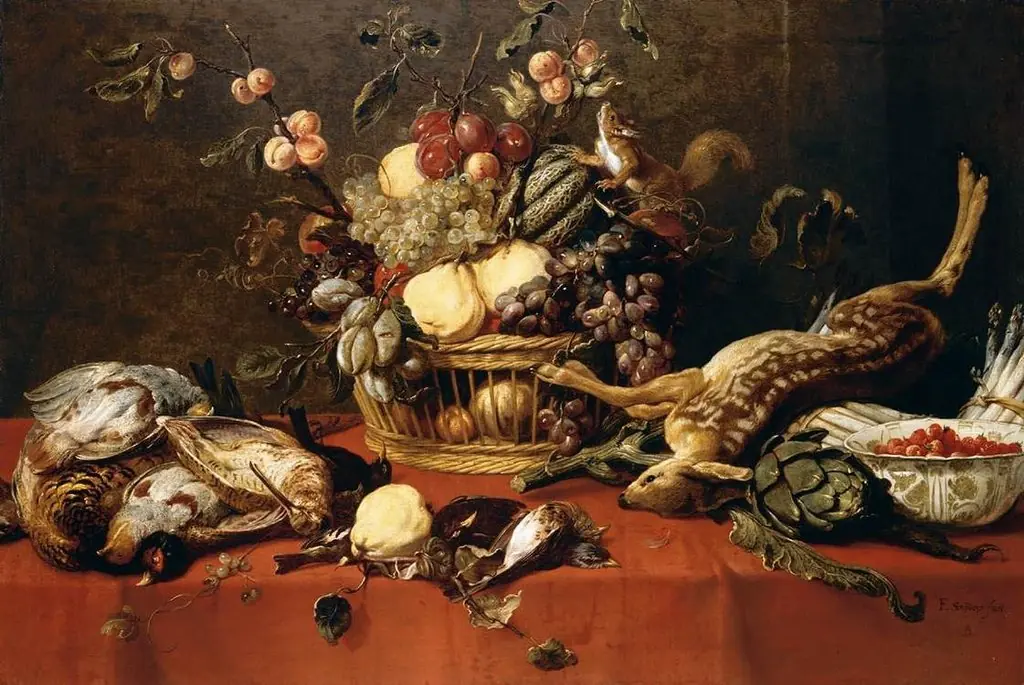 Still life of fruit in a basket together with game, a bowl of fraises-de-bois, artichokes, asparagus and a squirrel upon a table draped with a red cloth
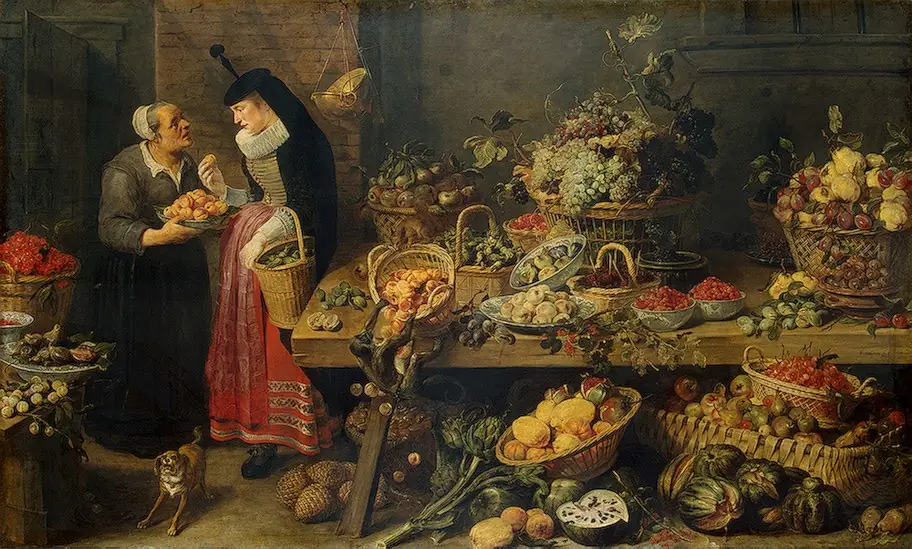 The Fruit Shop
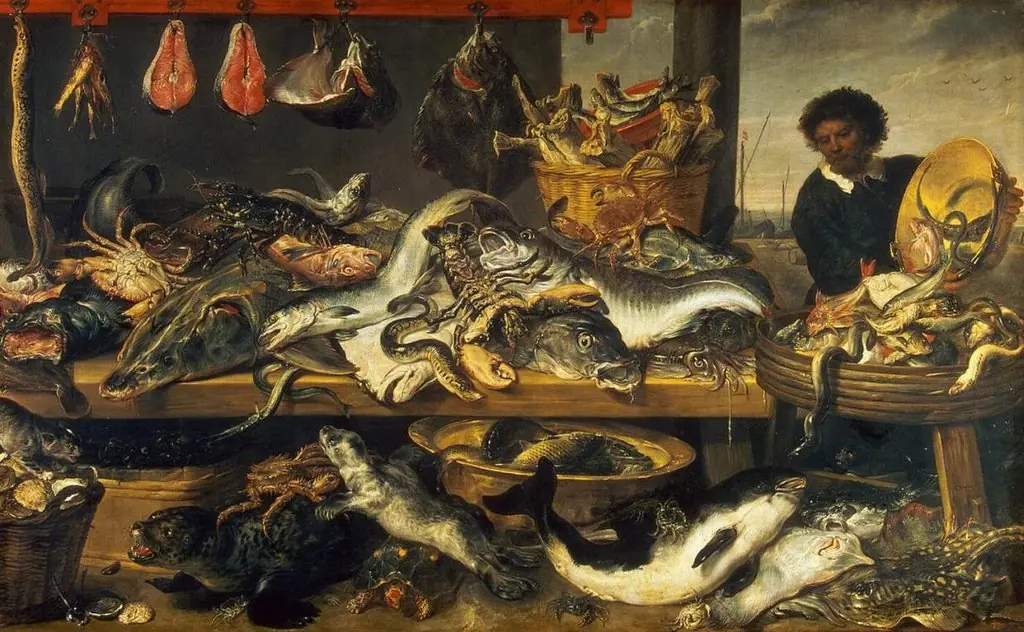 Fish Market
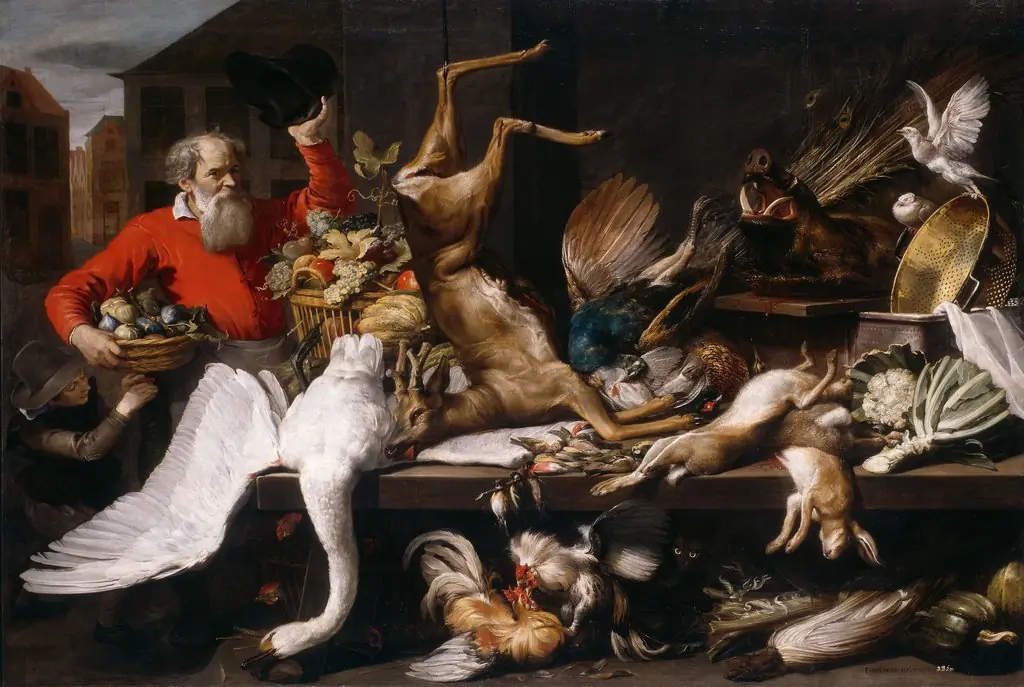 Still Life with Dead Game, Fruits, and Vegetables in a Market
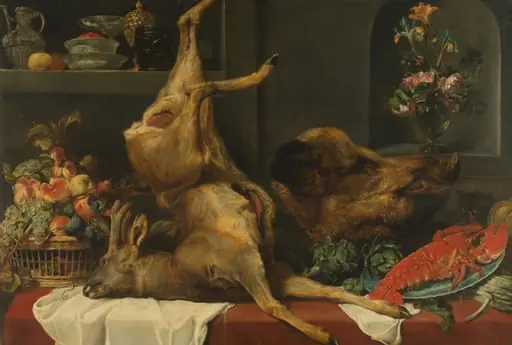 Larder Still life
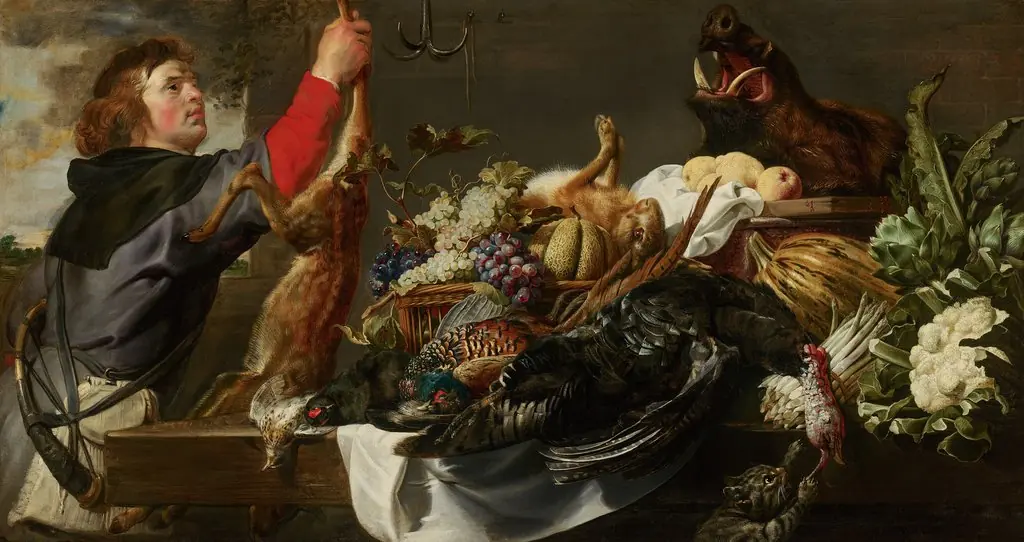 Still Life with Huntsman
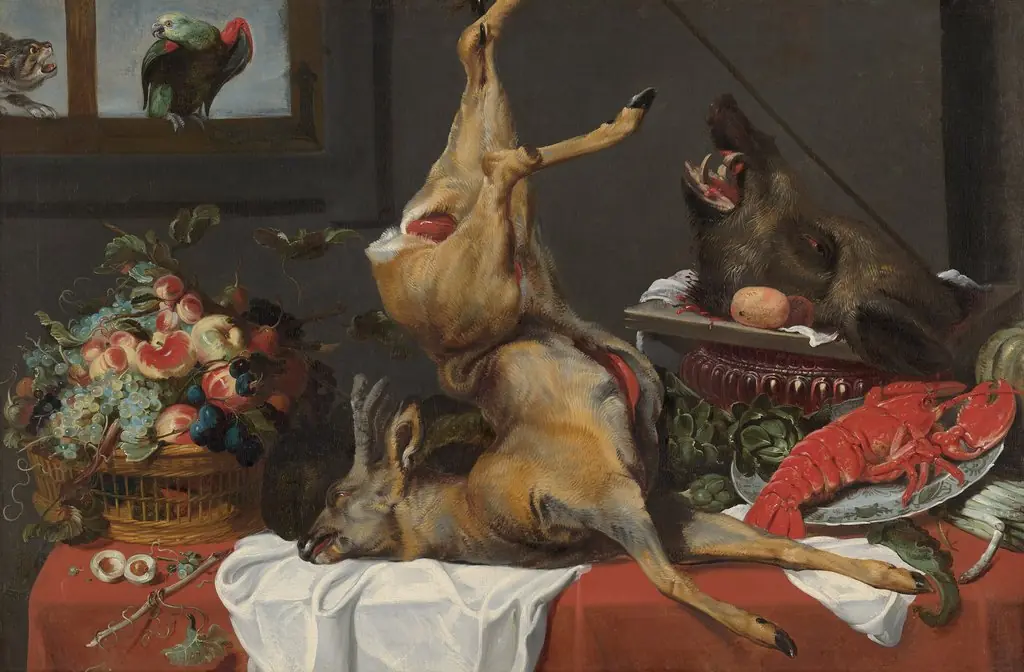 Still Life with a Dead Stag
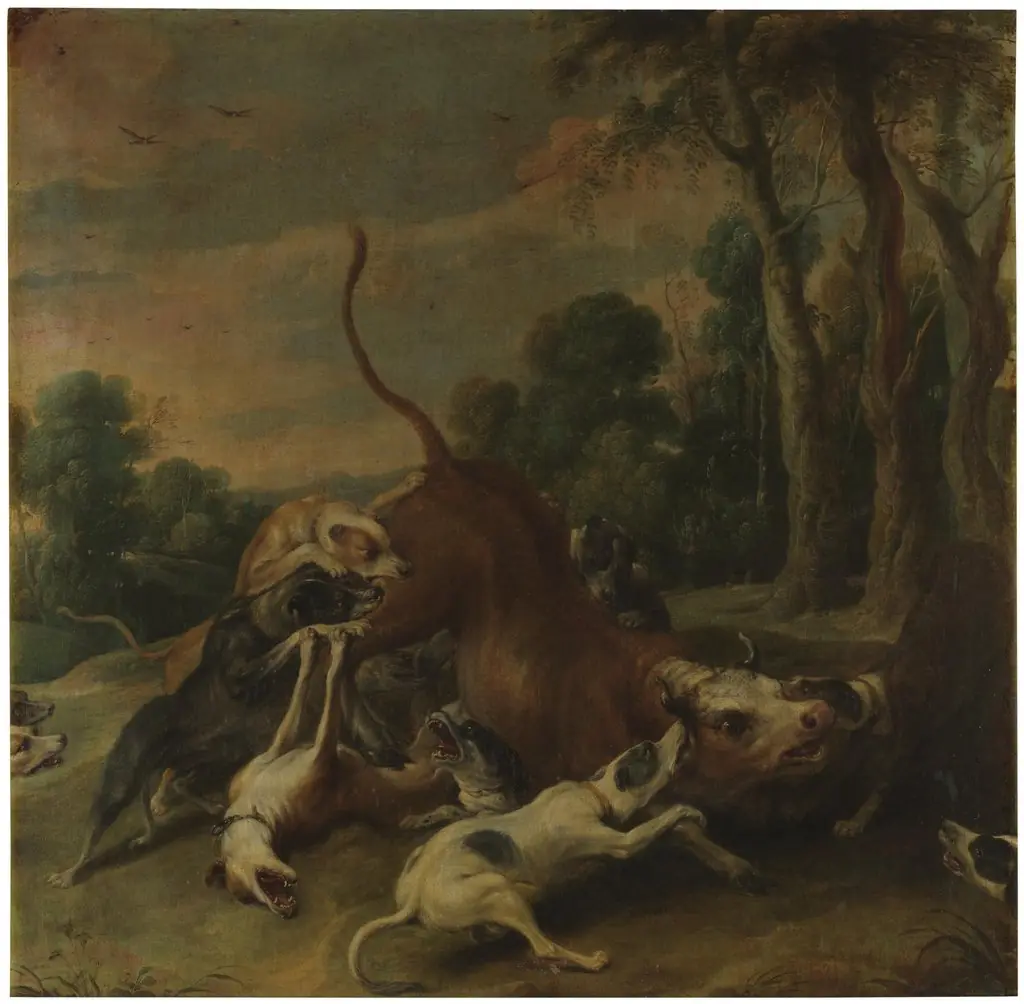 A bull overpowered by dogs
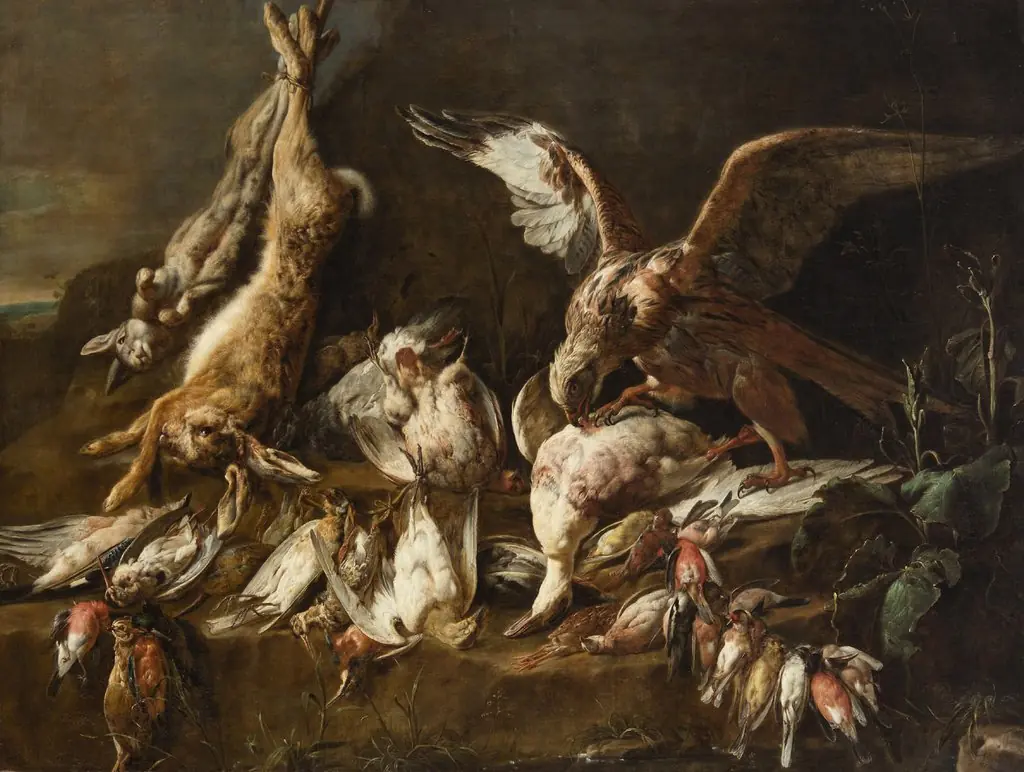 Still life of game
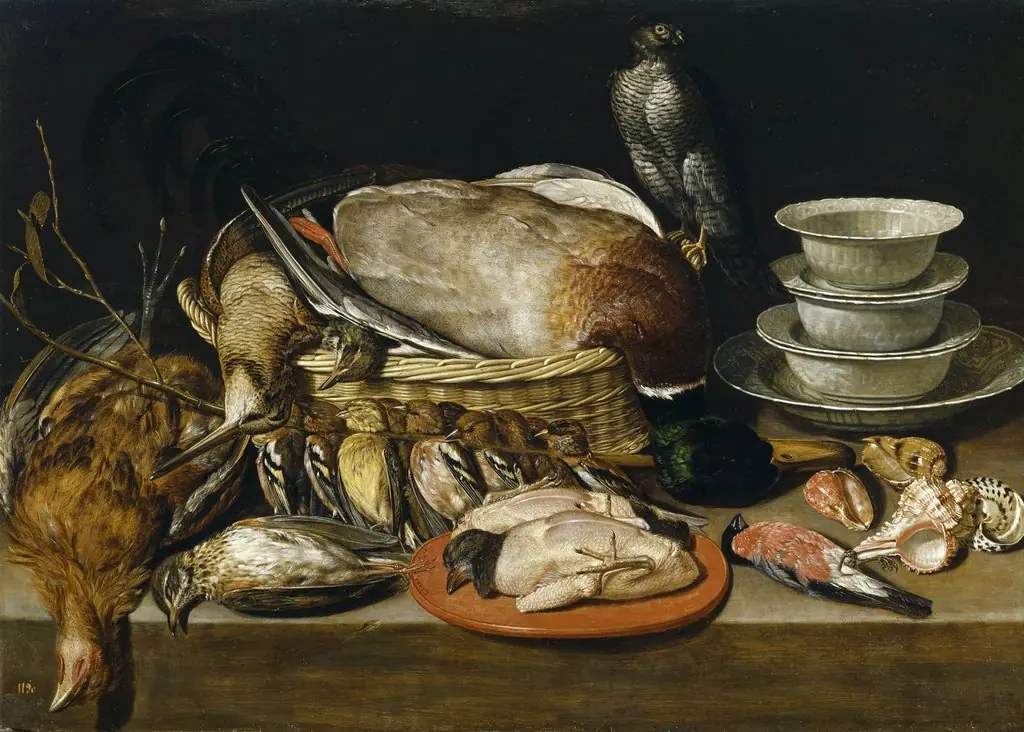 Game piece with poultry
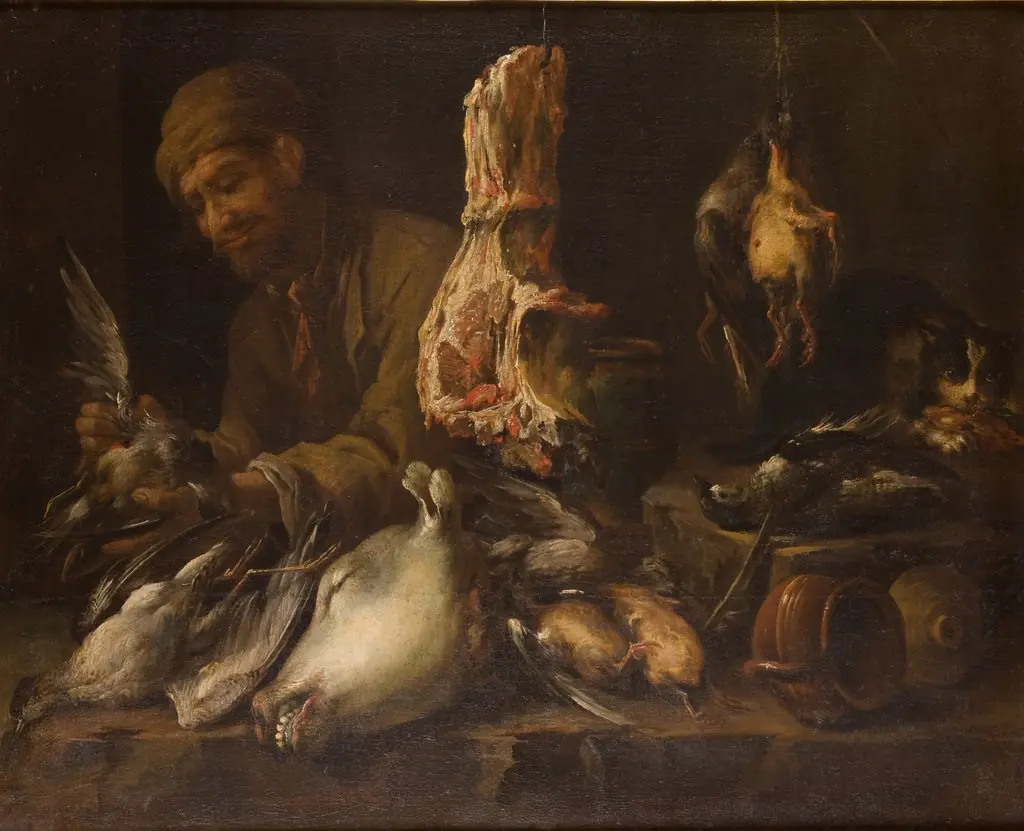 Cook in a Pantry
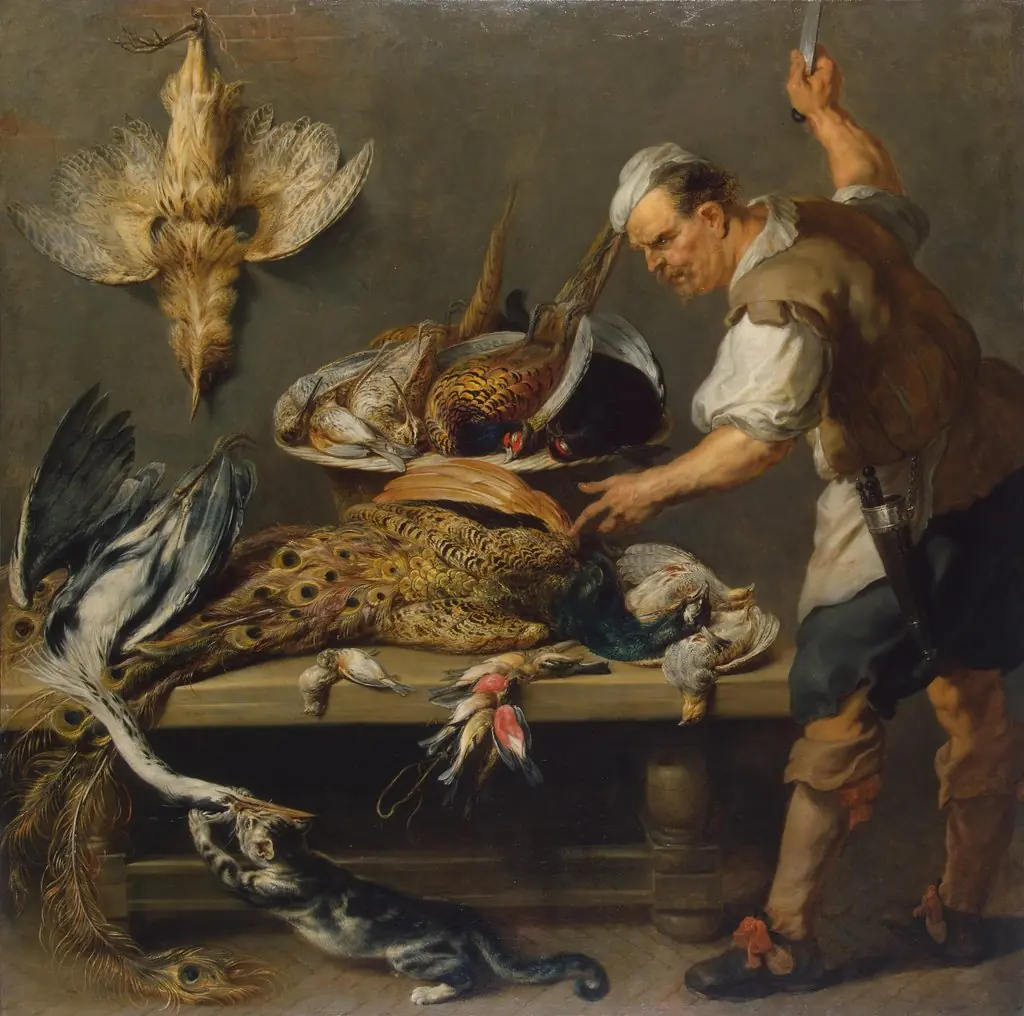 Cook at a Kitchen Table with Dead Game on it
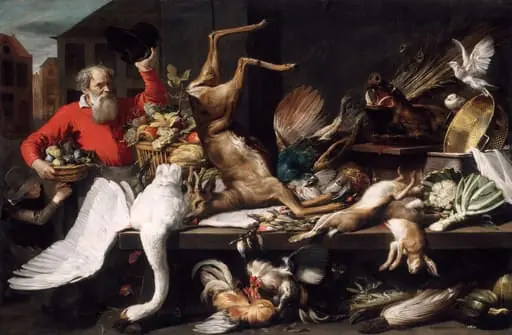 Still Life with Dead Game, Fruits, and Vegetables in a Market
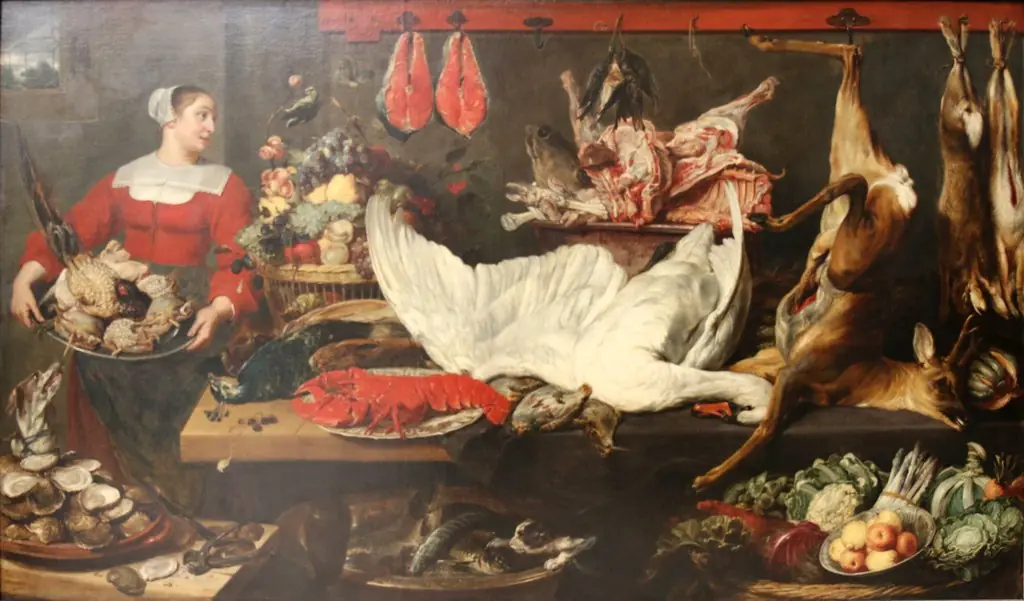 Kitchen interior with a servant girl holding a plate with poultry and a table with an abundance of game, fish, fruit and vegetables
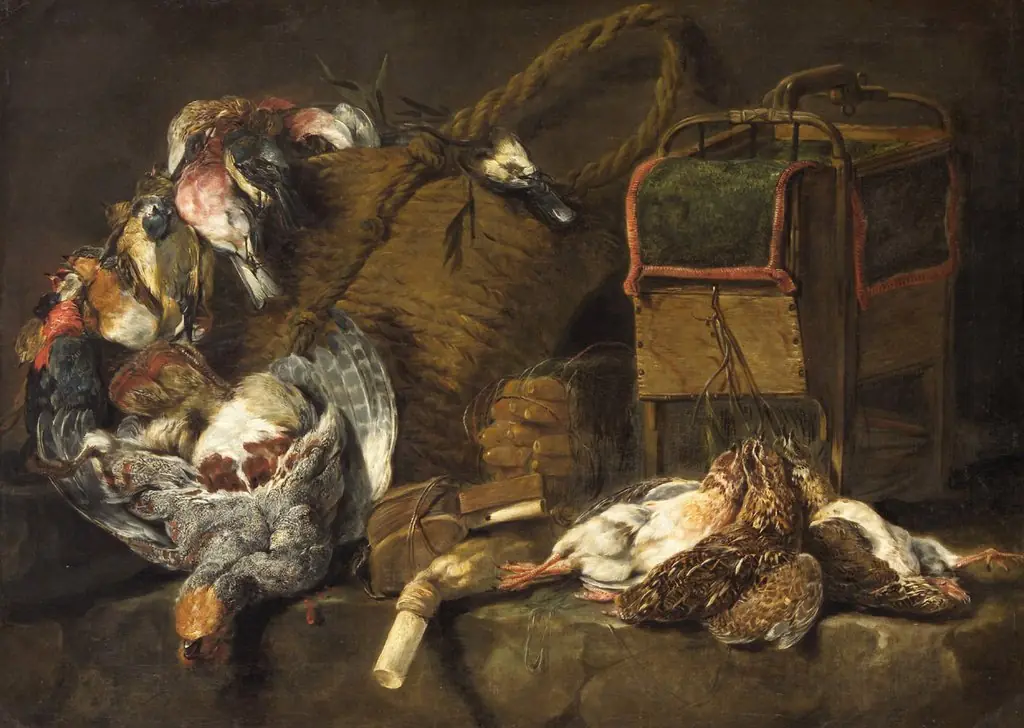 Dead game birds
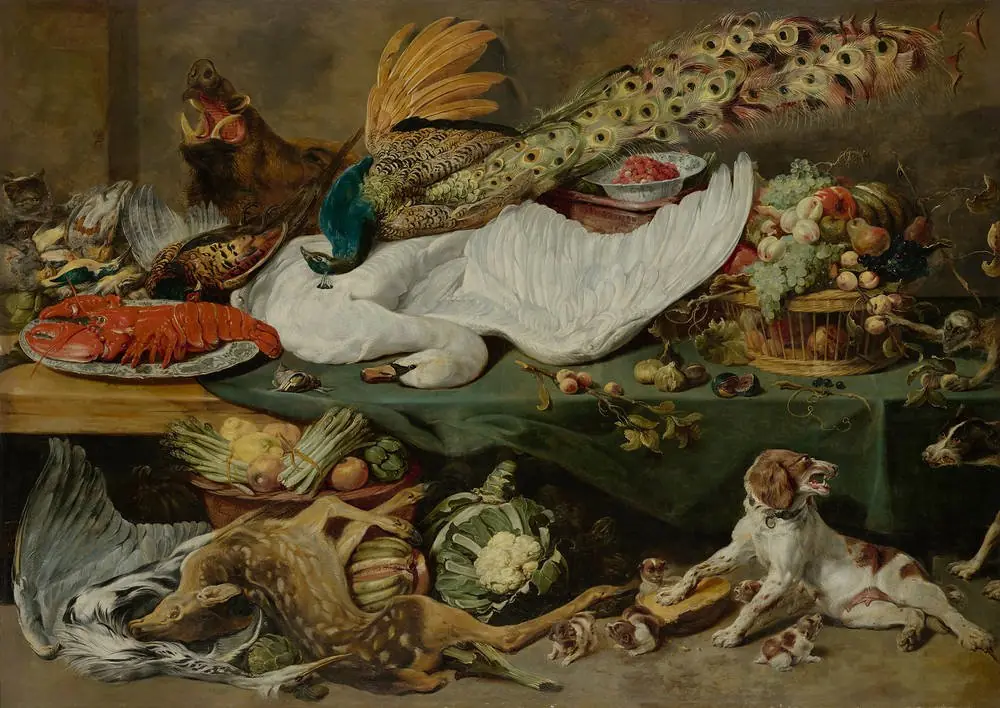 Still-life with a Spaniel and her Pups
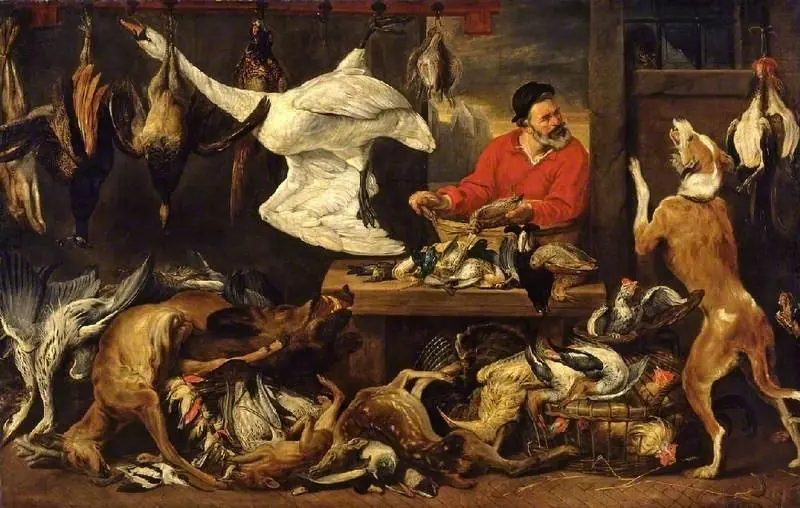 The Fowl Market
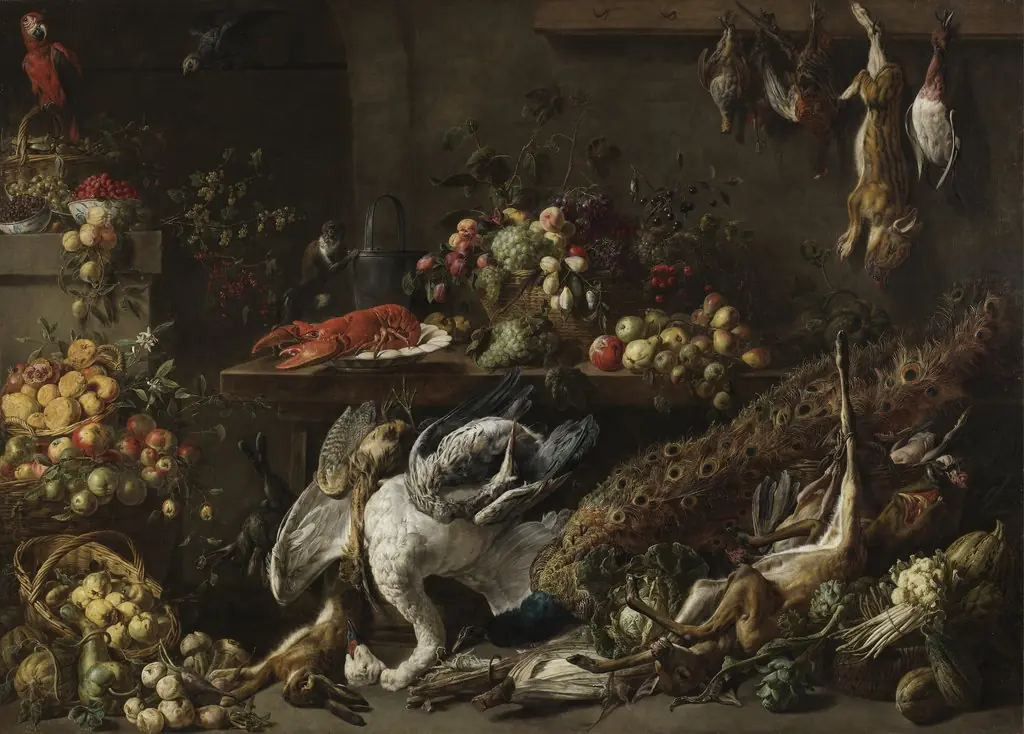 A Larder
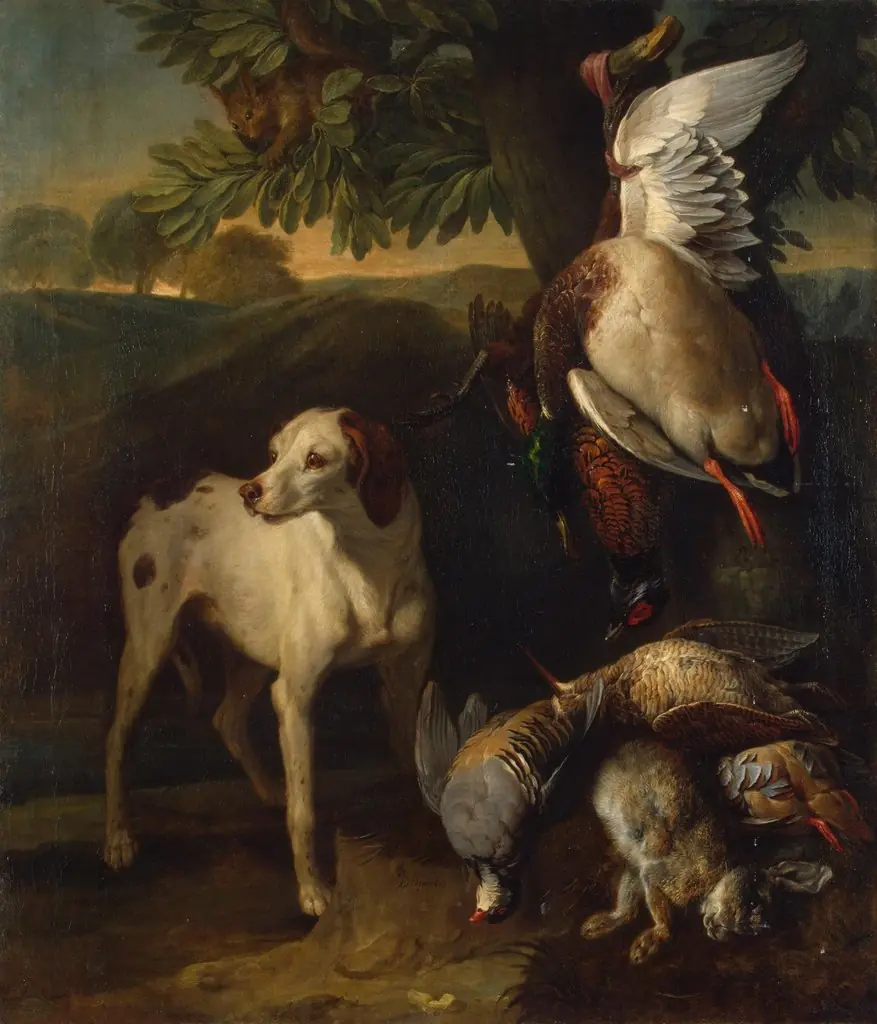 Dog and Game