Artwork
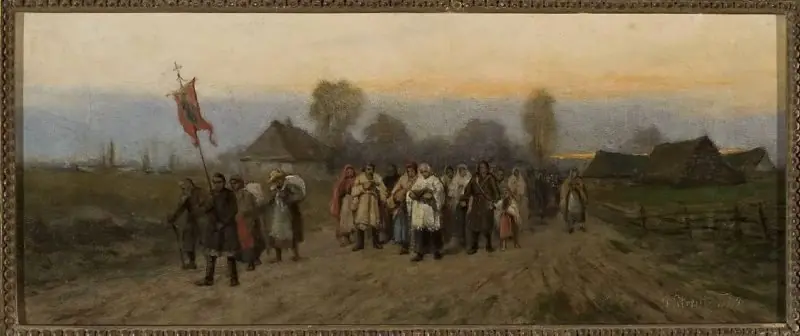
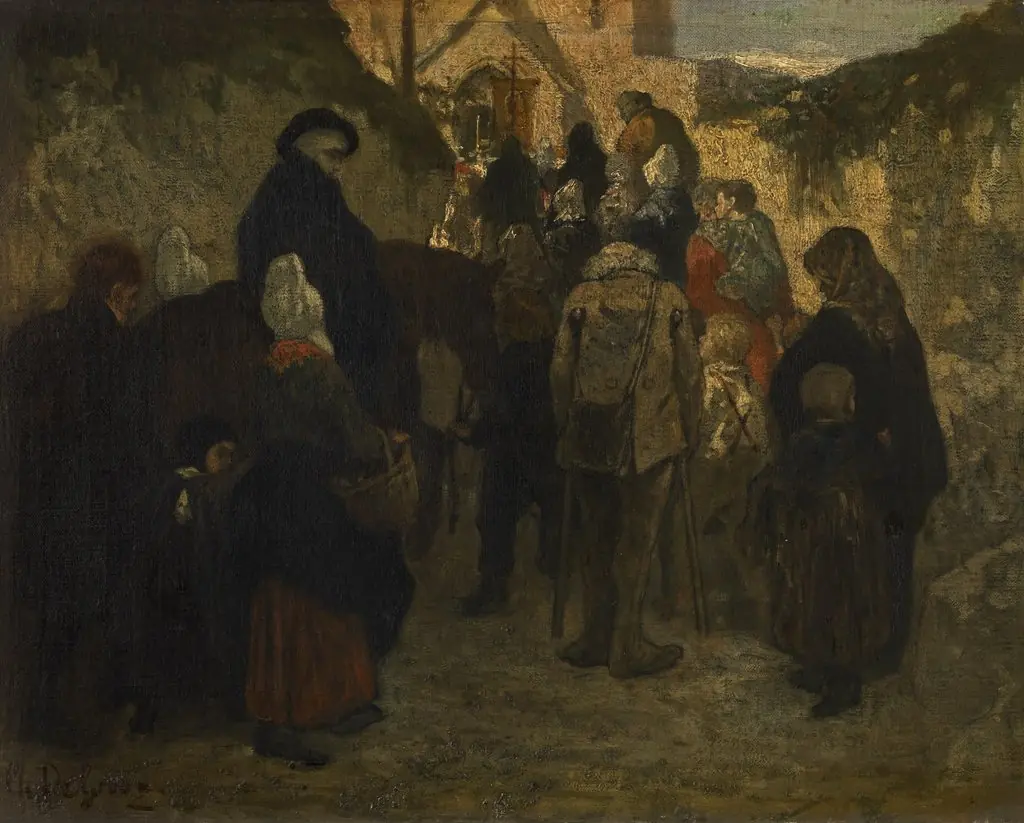
Funeral of a Pauper in Germany
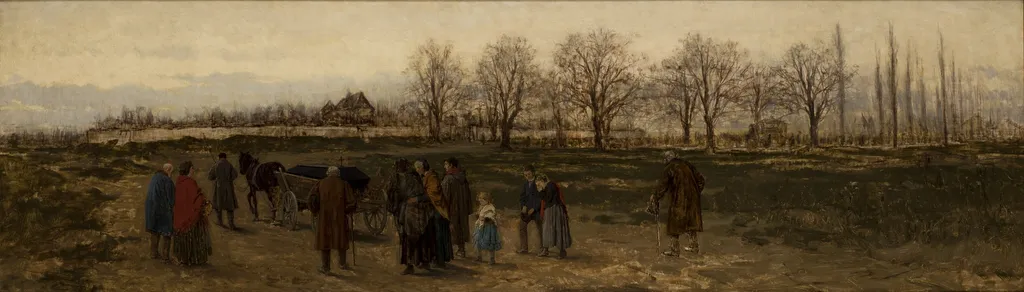
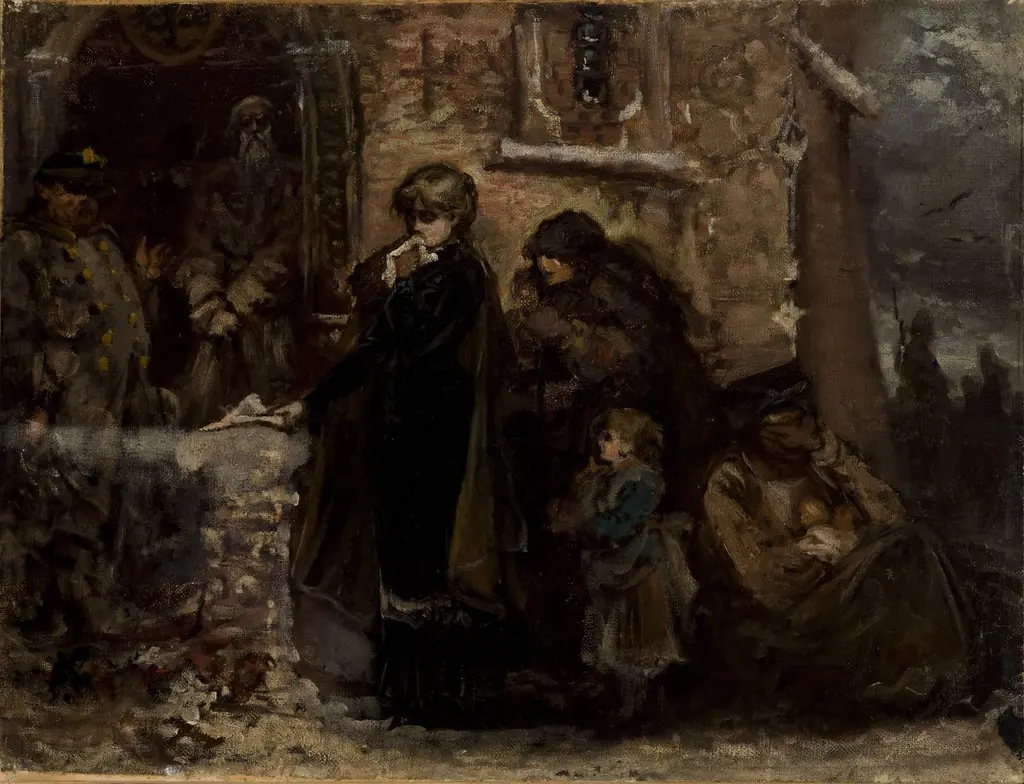
Funeral of a Pauper in Germany is an oil painting by Franz Streitt. It dates from 1874 and is held in the collection of the National Museum in Kraków.
About this work
Overview
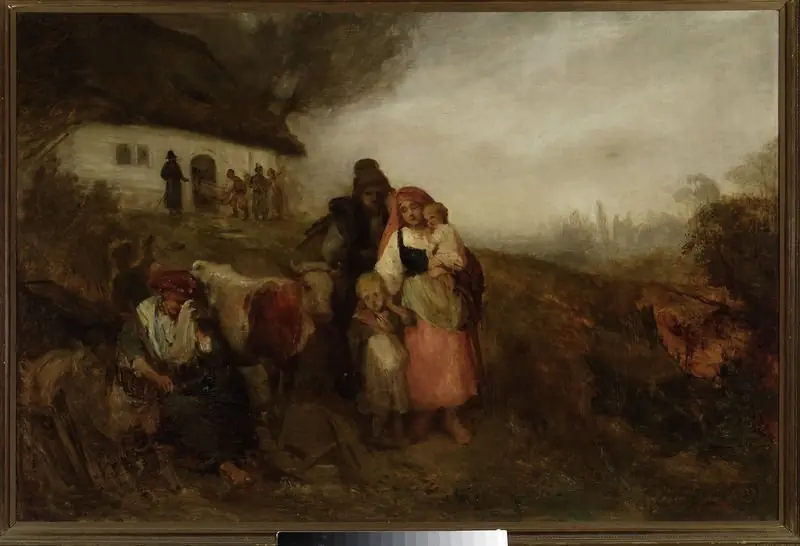
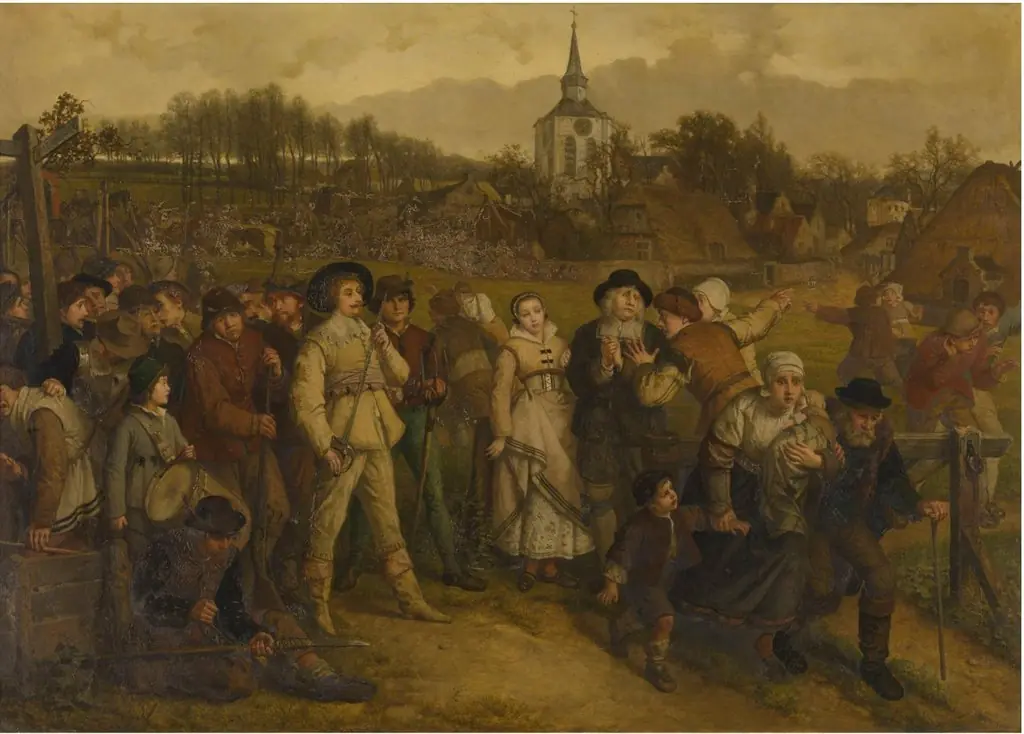
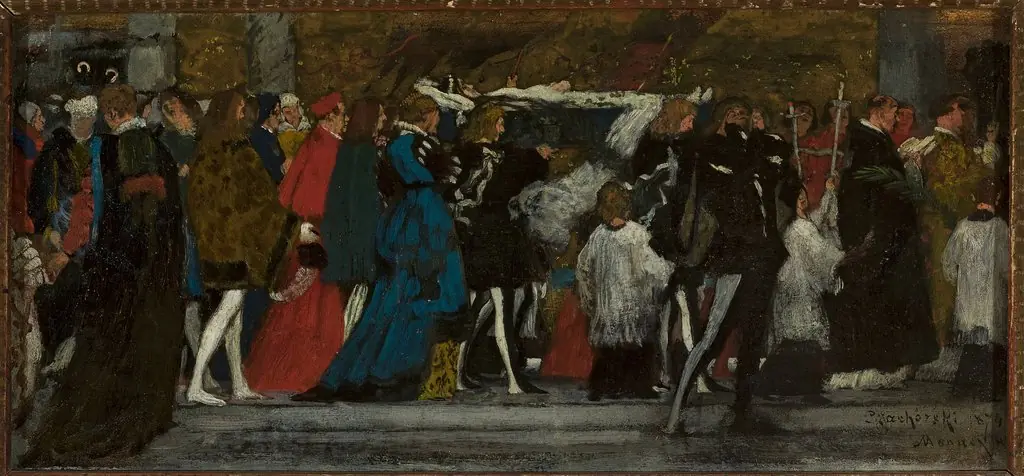
Created circa 1874, *Funeral of a Pauper in Germany* is an oil painting by Franz Streitt, a German artist born within the Austrian Empire. The work is part of the National Museum in Kraków’s collection. It presents a bleak, rural funeral scene, emphasizing the modest circumstances of the deceased and the communal response to poverty.
Subject & Meaning
The composition centers on a horse‑drawn cart surrounded by mourners clad in dark attire, set against a stark, leaf‑less landscape. The gathering conveys a quiet reverence for an anonymous, impoverished individual, highlighting the social reality of 19th‑century rural life and the dignity afforded to even the most destitute in death.
Technique & Style
Streitt employs a muted palette dominated by earth tones, with pronounced chiaroscuro that models the figures and gives the scene a three‑dimensional presence. Visible, textured brushwork adds a tactile quality, while the contrast of deep shadows and limited light focuses attention on the central procession, reinforcing the somber atmosphere.
History & Provenance
After its completion in the mid‑1870s, the painting entered the holdings of the National Museum in Kraków, where it remains on display. Its acquisition reflects the museum’s interest in representing Central European realist works that address everyday social conditions.
Context
The work aligns with the realist movement prevalent across Europe in the latter half of the 19th century, which sought to depict ordinary people and social issues without idealization. Streitt’s focus on genre scenes and the plight of the poor situates the painting within broader artistic efforts to document and critique contemporary societal structures.
Artist & collection
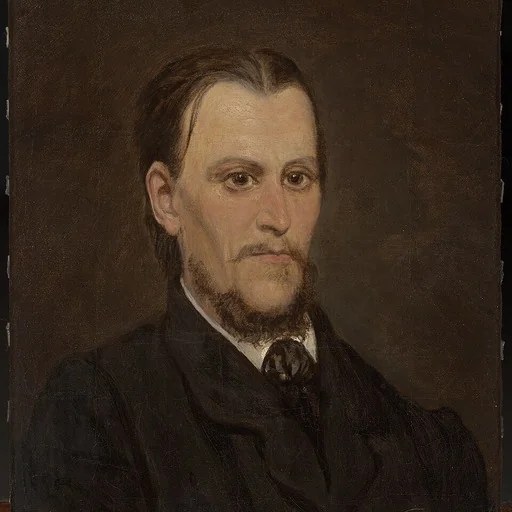
Artist
Franz Streitt, or Franciszek Streitt (24 November 1839 – 29 December 1890) was a German painter. He was born in the Austrian Empire