Artwork
Bookplate: Lillian Durham Jones, Ex Libris inscribed
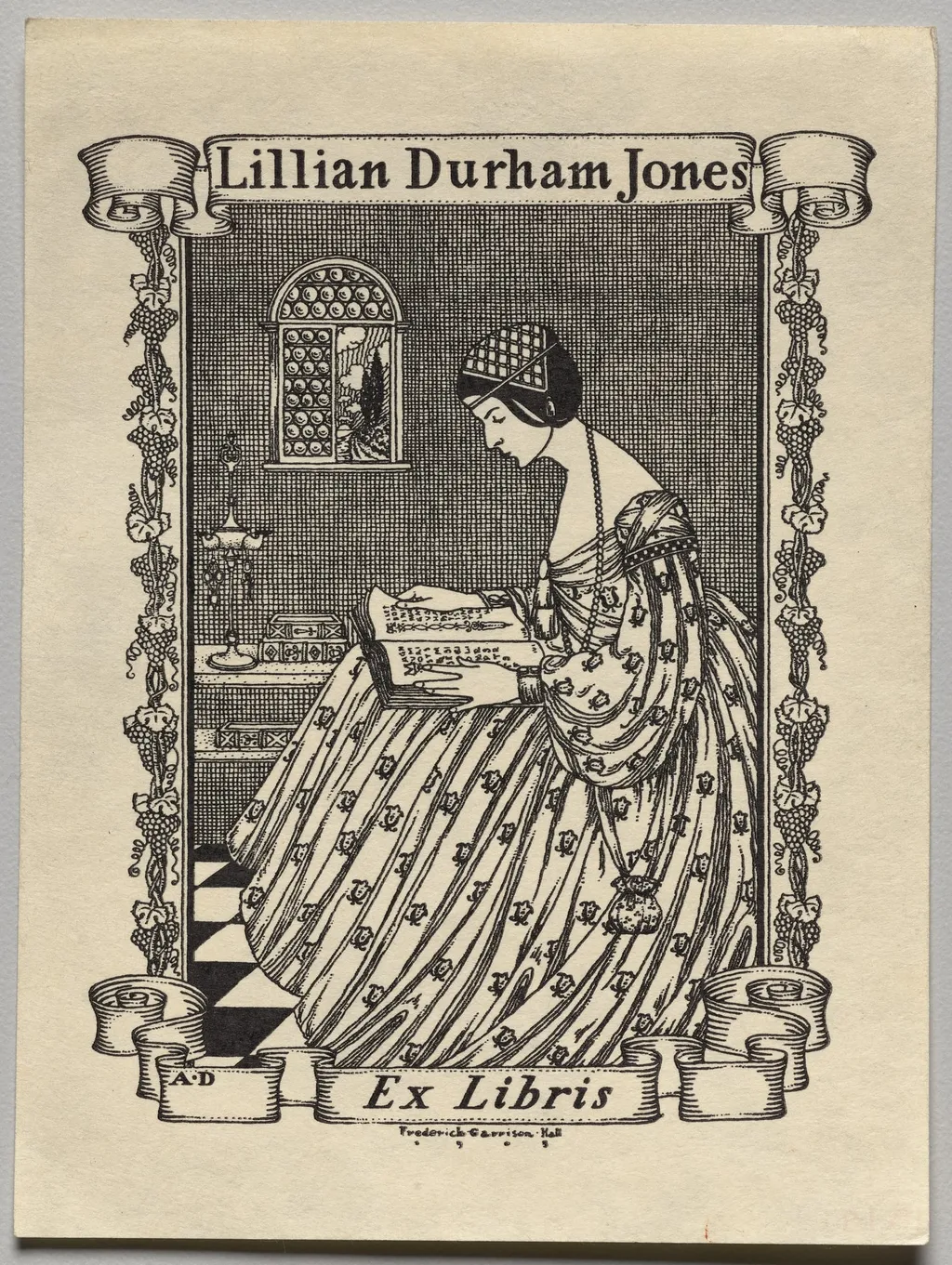
Bookplate: Lillian Durham Jones, Ex Libris inscribed is a print by Frederick Garrison Hall. It dates from 1922 and is held in the collection of the Cleveland Museum of Art.
About this work
Overview
Created around 1922 by Frederick Garrison Hall, this print functions as a personal bookplate for Lillian Durham Jones. Executed in a decorative, illustrative style, it combines portraiture with ornamental design to signify ownership and intellectual identity. The work resides in the collection of The Cleveland Museum of Art, where it represents early 20th-century American bookplate artistry.
Subject & Meaning
The central figure is a woman, depicted in quiet contemplation at a desk littered with books and papers. Her bowed head and elaborate attire suggest reverence for scholarship and private study. The floral border and窗外 vegetation frame her as part of a cultivated, introspective world, reinforcing the bookplate’s role as a symbol of personal library and intellectual devotion.
Technique & Style
The use of negative space and linear precision creates a sense of calm order, aligning with the bookplate’s function as both identifier and aesthetic object.
Hall employed fine-line engraving and intricate detailing to render the woman’s dress, hairpiece, and surrounding flora. The composition balances realism in the figure with stylized natural elements, typical of Arts and Crafts-inspired design. The use of negative space and linear precision creates a sense of calm order, aligning with the bookplate’s function as both identifier and aesthetic object.
History & Provenance
Commissioned for Lillian Durham Jones, the plate was likely used to mark volumes in her personal collection. It entered The Cleveland Museum of Art’s holdings as part of a broader collection of American bookplates, reflecting institutional interest in domestic graphic arts of the early 1900s. Its preservation underscores its value as a cultural artifact of private intellectual life.
Context
In the early 20th century, bookplates were common among educated middle- and upper-class Americans as markers of literary ownership and taste. Hall’s design reflects the era’s revival of handcrafted aesthetics, blending Art Nouveau influences with traditional heraldic forms. This piece situates its owner within a broader cultural movement that elevated the domestic library as a site of refinement.
Legacy
Though not widely known outside specialized collections, this work exemplifies the quiet dignity of personal bookplates in American domestic culture. It preserves a specific individual’s intellectual identity through art, offering insight into how private libraries were curated and celebrated in an era before mass-produced publishing.
Artist & collection
Artist
Frederick Garrison Hall (1879–1946) was an American artist, born in Baltimore.

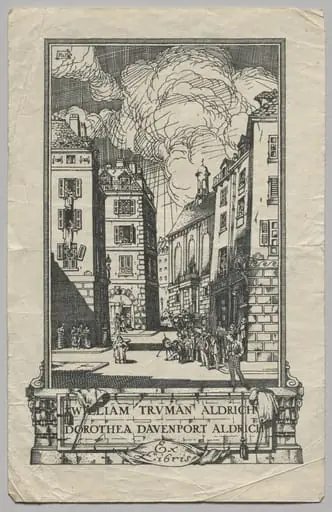 Bookplate: William Truman Aldrich and Dorthea Davenport Aldrich, Ex Libris inscribed
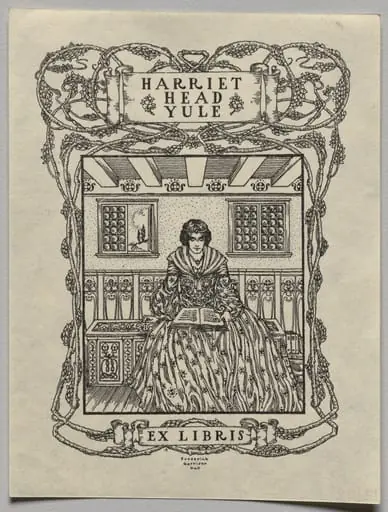 Bookplate: Harriet Head Yule, Ex Libris inscribed
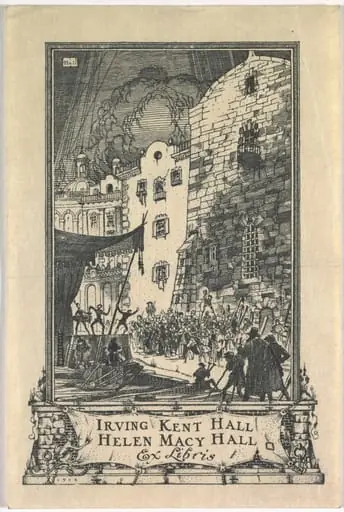 Bookplate: Irving Kent Hall and Mary Kent Hall, Ex Libris inscribed
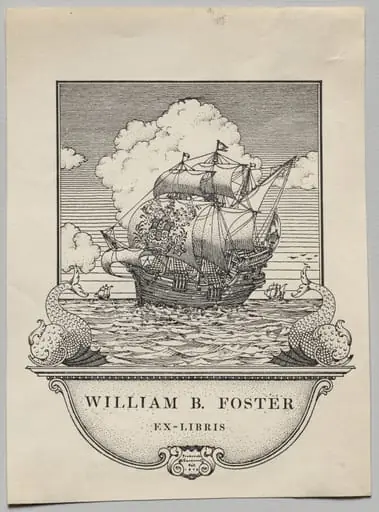 Bookplate: William B. Foster
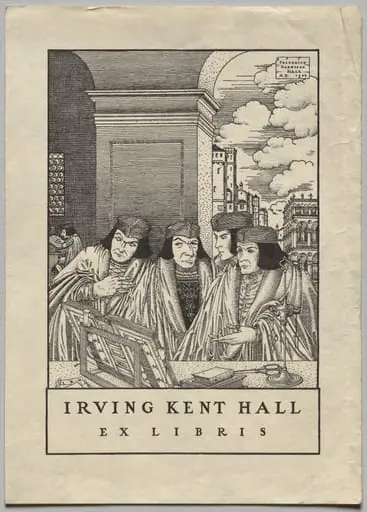 Bookplate: Irving Kent Hall, Ex Libris inscribed
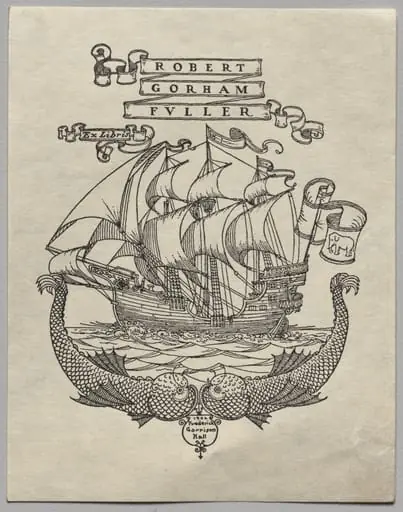 Bookplate: Robert Gorham Fuller, Ex Libris inscribed
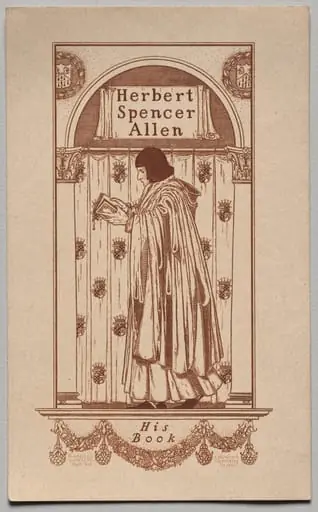 Bookplate: Herbert Spencer Allen, His Book inscribed
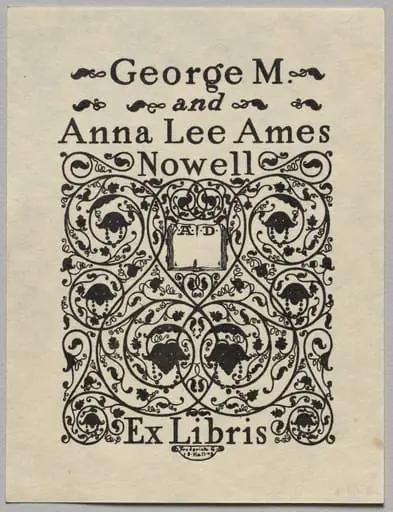 Bookplate: George M. and Anna Lee Ames Nowell, Ex Libris inscribed