Artwork
Bookplate for Ambrose Isted
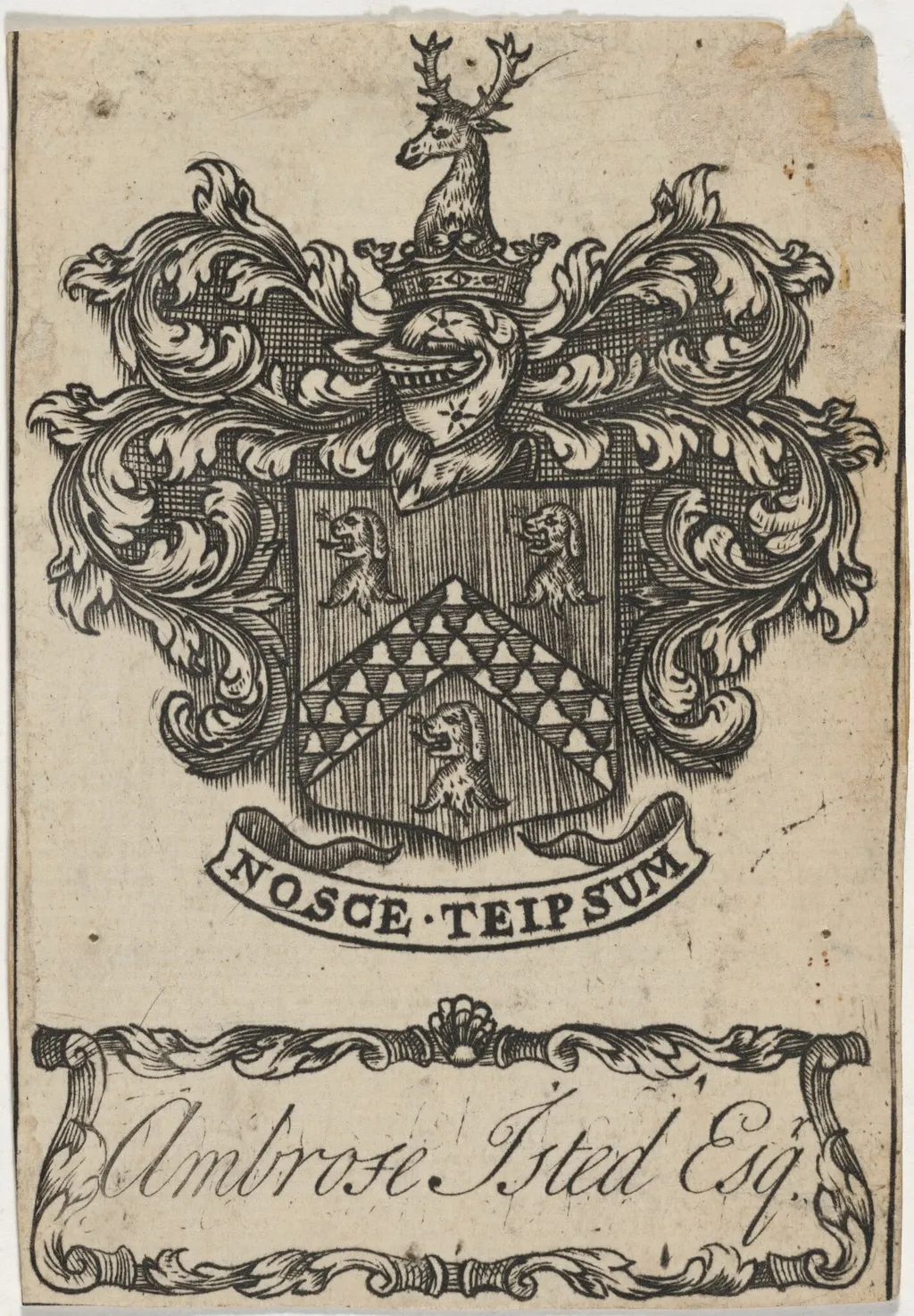
Bookplate for Ambrose Isted is an ink print by the Romanticist artist Unknown 19th Century. It dates from 1850 and is held in the collection of the National Gallery of Art. This engraved bookplate, created for Ambrose Isted, Esq.
About this work
Overview
This engraved bookplate, created for Ambrose Isted, Esq., presents a heraldic composition in black and white. Central to the design is a shield framed by ornamental scrollwork, topped by a crowned stag with prominent antlers. A Latin motto, Nosce Teipsum, appears on a lower banner, while the patron’s name is rendered in a flowing cursive script.
Subject & Meaning
The shield’s field is divided into a pattern of small triangles and includes a figure holding an object, elements typical of personal or familial symbolism.
The stag perched upon a crown traditionally signifies authority and noble lineage, reinforcing the status of the plate’s owner. The shield’s field is divided into a pattern of small triangles and includes a figure holding an object, elements typical of personal or familial symbolism. The motto "Nosce Teipsum"—"Know Thyself"—reflects a classical exhortation to self‑knowledge, often adopted by educated elites.
Technique & Style
Executed as an intaglio engraving, the work relies on incised lines to produce fine detail and tonal contrast. The artist employed cross‑hatching and stippling to render the intricate scrollwork and the texture of the stag’s antlers, while the cursive lettering demonstrates precise hand‑cut lettering typical of early modern bookplates.
History & Provenance
Commissioned for the private library of Ambrose Isted, the plate functioned as a personalized imprint for his books. Though the engraver’s identity remains unknown, the piece reflects the early nineteenth‑century practice of using heraldic bookplates to denote ownership among the gentry. It has survived as a representative example of period ephemera, now held in a museum collection.
Artist & collection

Artist



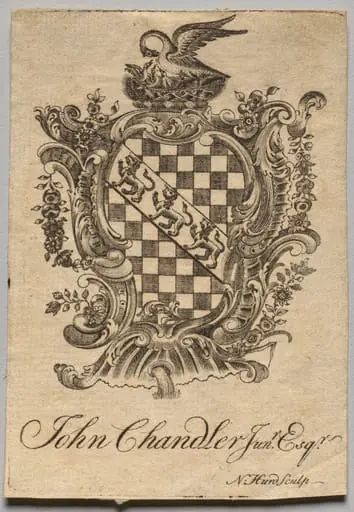 Bookplate: Coat of Arms with John Chandler Jun.r, Esq. inscribed
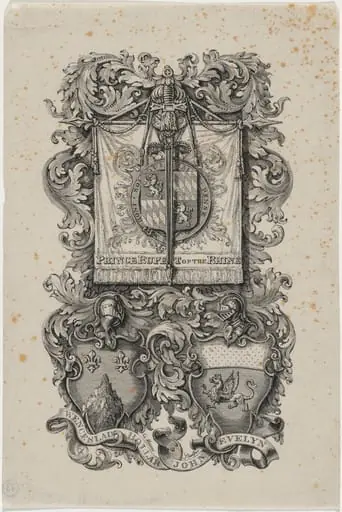 Coat of Arms of Prince Rupert, Hollar and Evelyn
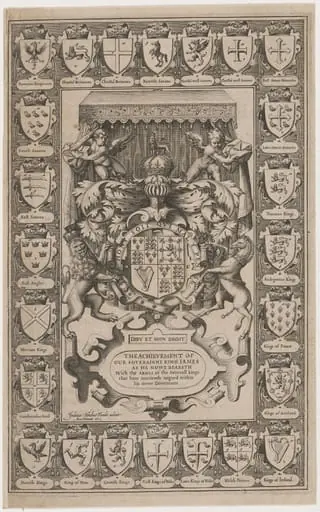 Title Page for the Achievement of our Soveraigne King James
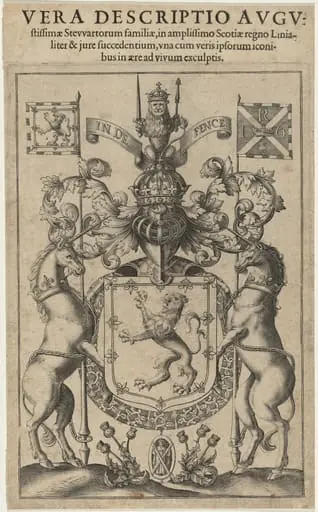 Stuart Coat of Arms from Vera Descriptio by John Jonston
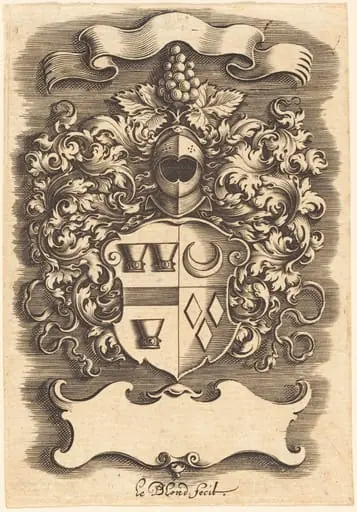 Crest
Crest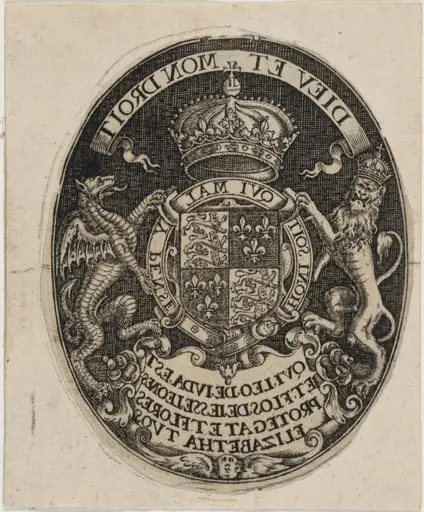 Shield of Queen Elizabeth
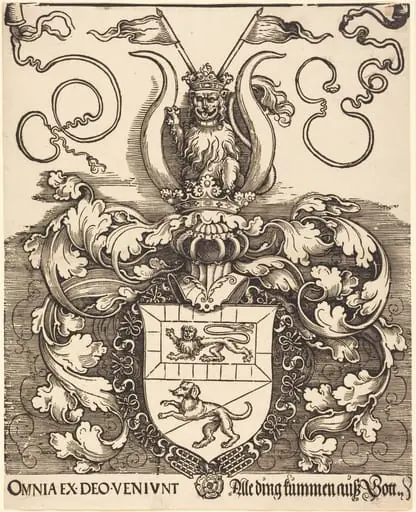 Coat of Arms of Lorenz Staiber
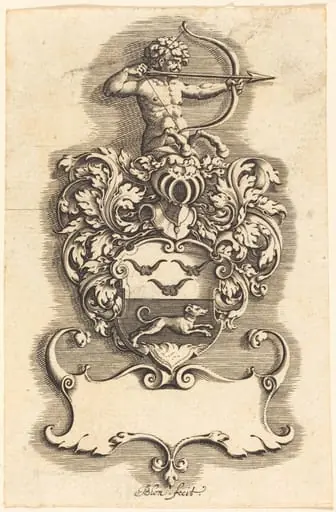 Crest
Crest![Shield of Queen Elizabeth [left half], by Simon van de Passe](https://artifactworldgallery.com/img/simon-van-de-passe--shield-of-queen-elizabeth-left-half--f4b61579dbc6b41d-w320.webp) Shield of Queen Elizabeth [left half]
Shield of Queen Elizabeth [left half]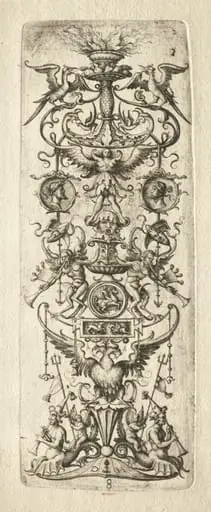 Ornament Fillet