Artwork
Bookplate: William B. Foster
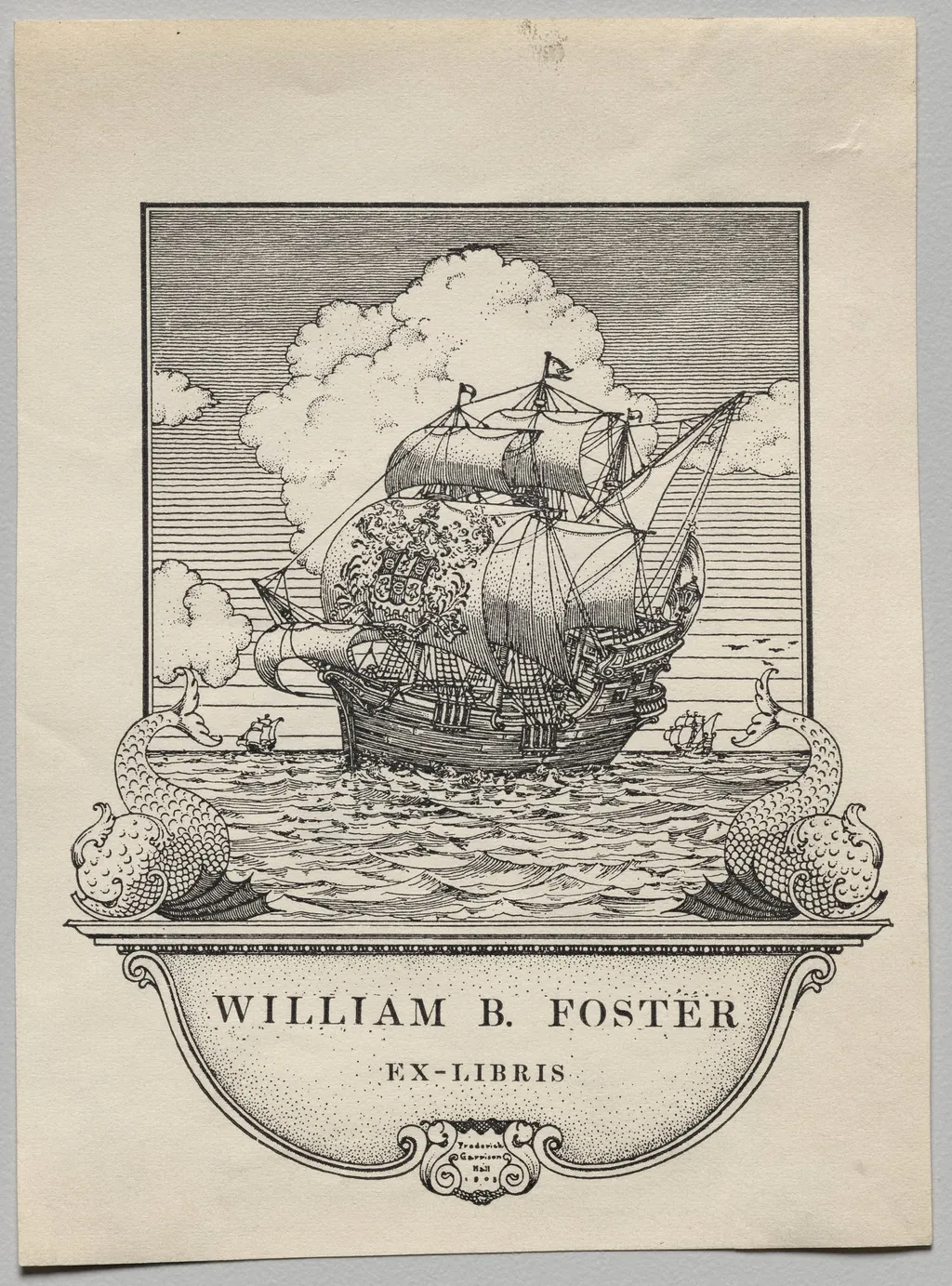
Bookplate: William B. Foster is a print by Frederick Garrison Hall. It dates from 1905 and is held in the collection of the Cleveland Museum of Art.
About this work
Overview
The composition centers on a vessel overwhelmed by turbulent seas, framed by ornamental borders typical of early 20th-century private ownership marks.
Created in 1905 by Frederick Garrison Hall, this black-and-white print functions as a bookplate for William B. Foster. Designed for adhesive use inside books, it combines illustrative narrative with heraldic formality. The composition centers on a vessel overwhelmed by turbulent seas, framed by ornamental borders typical of early 20th-century private ownership marks. Its purpose was both identification and personal expression.
Subject & Meaning
The sinking ship evokes themes of peril and loss, possibly alluding to personal or familial trials. Two mythic sea creatures, with elongated necks and armored shells, emerge from the waves, suggesting symbolic guardians or omens. The dark, cloud-filled sky above intensifies the sense of impending doom. Together, these elements transform a simple ownership label into a metaphorical vignette, reflecting the owner’s taste for allegory or romanticized drama.
Technique & Style
Executed in fine-line pen and ink, the print demonstrates meticulous draftsmanship characteristic of revivalist traditions. Bold contours define the ship and waves, while delicate hatching renders texture in the water and sky. Decorative borders echo Victorian and Arts and Crafts aesthetics, emphasizing craftsmanship over mass production. The monochrome palette enhances the print’s archival quality and suits its function as a printed label.
History & Provenance
The work was produced in 1905 for William B. Foster, likely as a custom commission. It entered the collection of The Cleveland Museum of Art as part of a broader acquisition of American bookplates, reflecting institutional interest in domestic graphic arts of the period. Its survival suggests Foster valued the design as a personal emblem, preserving it through generations of book ownership.
Context
Bookplates flourished in the late 19th and early 20th centuries among the educated middle and upper classes as markers of private libraries. Hall’s design aligns with a trend toward narrative and symbolic imagery, moving beyond simple initials or coats of arms. This shift mirrored broader cultural interests in storytelling, maritime lore, and the revival of handcrafted aesthetics amid industrialization.
Legacy
As a preserved example of early 20th-century American bookplate art, it offers insight into how personal identity was visually encoded in domestic objects. Though not widely known outside specialized collections, it represents a quiet but significant strand of print culture—where utility met artistry, and ownership became a canvas for quiet symbolism.
Artist & collection
Artist
Frederick Garrison Hall (1879–1946) was an American artist, born in Baltimore.

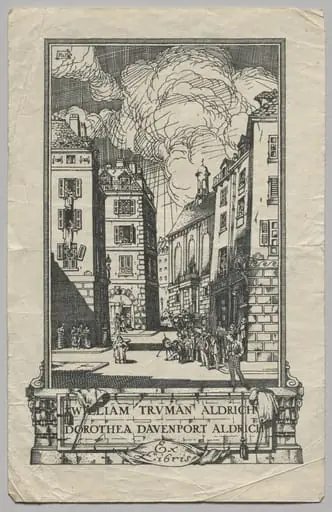 Bookplate: William Truman Aldrich and Dorthea Davenport Aldrich, Ex Libris inscribed
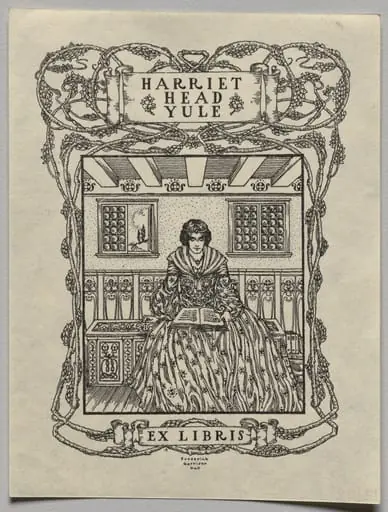 Bookplate: Harriet Head Yule, Ex Libris inscribed
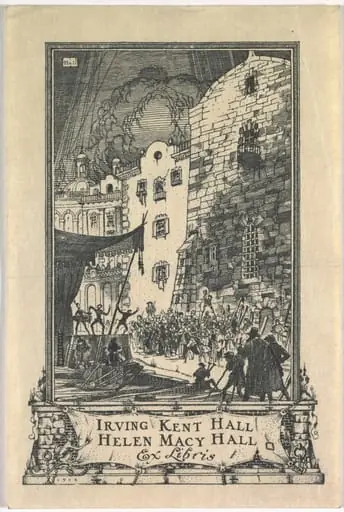 Bookplate: Irving Kent Hall and Mary Kent Hall, Ex Libris inscribed
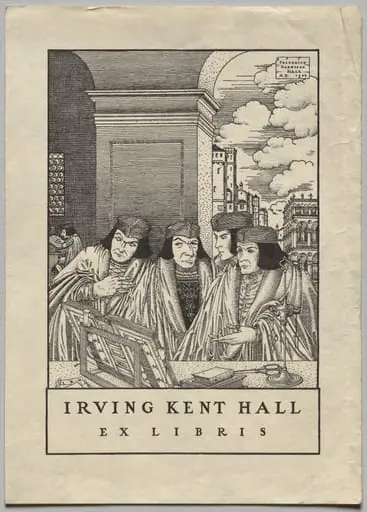 Bookplate: Irving Kent Hall, Ex Libris inscribed
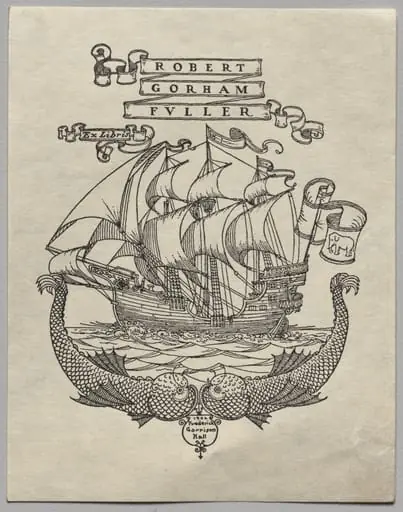 Bookplate: Robert Gorham Fuller, Ex Libris inscribed
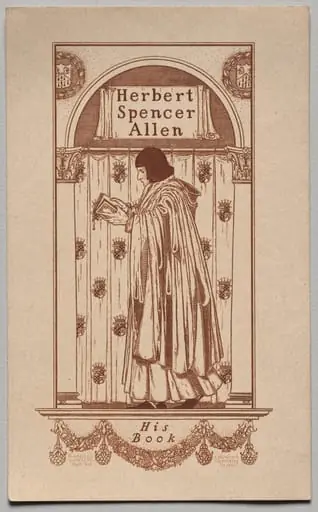 Bookplate: Herbert Spencer Allen, His Book inscribed
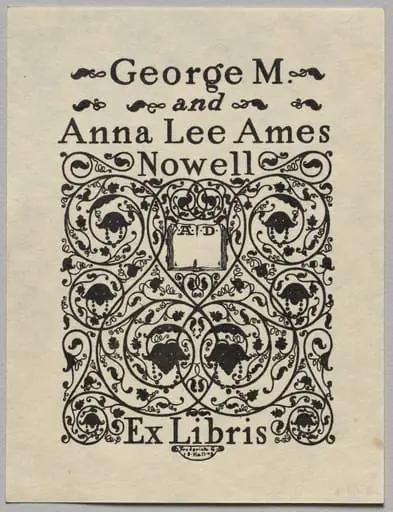 Bookplate: George M. and Anna Lee Ames Nowell, Ex Libris inscribed
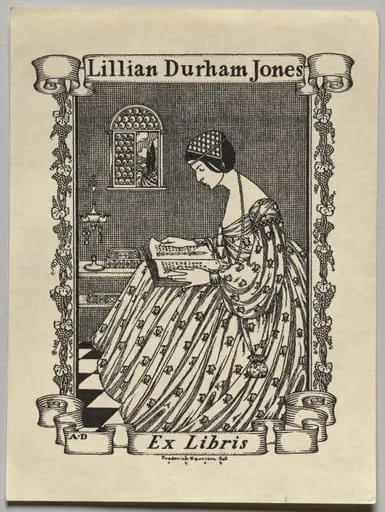 Bookplate: Lillian Durham Jones, Ex Libris inscribed