Artwork
Hilly wooded landscape
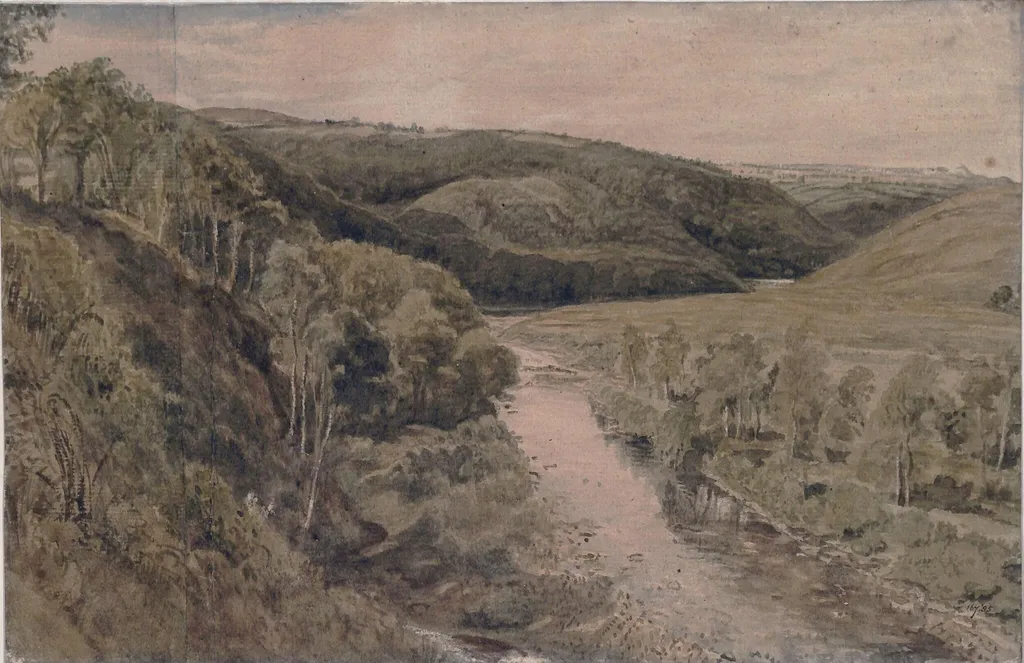
Hilly wooded landscape is a watercolor work on paper by the British Romanticist artist Frederick Lewis. It dates from 1800 and is held in the collection of the Victoria and Albert Museum.
About this work
Overview
Frederick Lewis’s watercolour, dated 1800, depicts a tranquil valley framed by gently undulating hills cloaked in dense, dark‑green woodland. A sinuous river bisects the composition, its surface mirroring the pale sky above, while slender trees line its banks. The distant elevations dissolve into a soft, hazy blue, suggesting atmospheric perspective and depth.
Subject & Meaning
The work presents an idealised rural scene, emphasizing the harmony between water, foliage, and sky. By foregrounding the river’s reflective quality and the muted palette of the hills, the painting invites contemplation of nature’s quiet grandeur, a theme common in late‑eighteenth‑century landscape art.
Technique & Style
Executed with loose, rapid brushstrokes, the watercolour conveys a sketch‑like spontaneity. Lewis manipulates washes of green and blue to model light and shadow, creating a sense of movement in the foliage and water. The fluid handling of pigment enhances atmospheric effects, while the limited detail reinforces the work’s overall impressionistic tone.
Context
Created at the turn of the nineteenth century, the piece aligns with the emerging Romantic sensibility that privileged emotional response to nature over strict topographical accuracy. Artists of this period increasingly sought to capture the sublime and the picturesque, using techniques that emphasized mood, light, and the fleeting qualities of the landscape.
Own this work as a print
Artist & collection
Artist
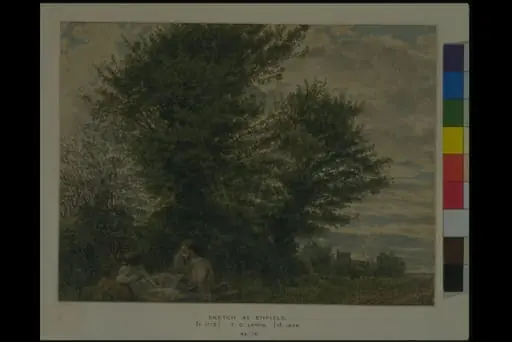
Frederick Lewis filled small sheets with quiet English scenery, painting Enfield’s riverbanks and Hertfordshire hills in soft watercolours around 1800–1815.

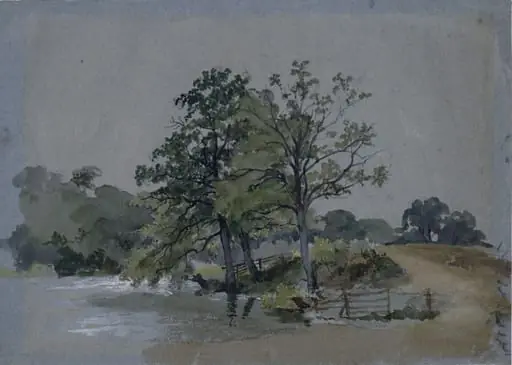 Trees by a River
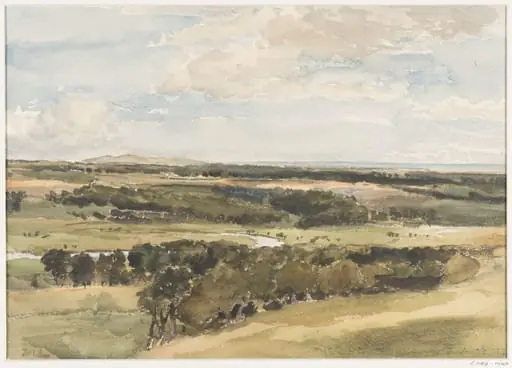 Arundel Park
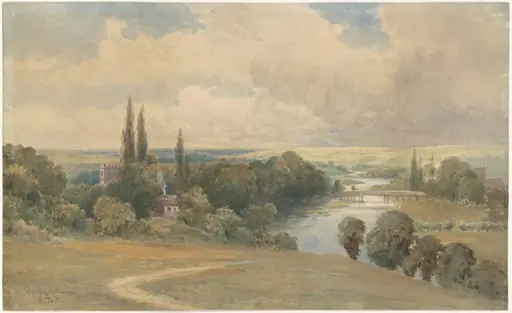 View of Streatley-on-Thames
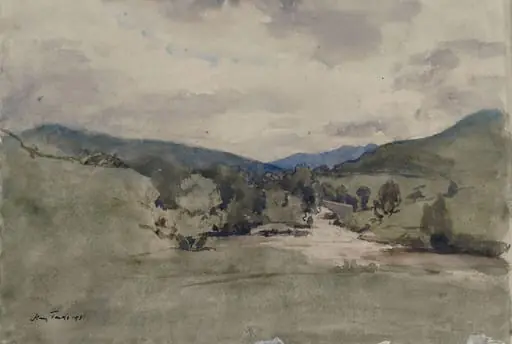 Morven
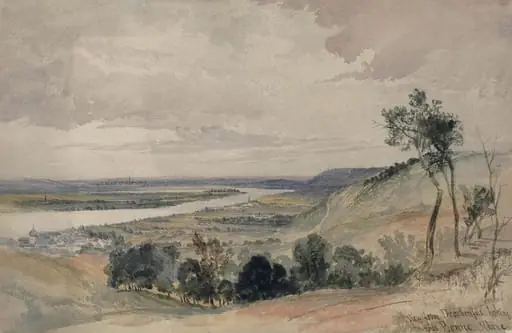 View from Drachenfels looking towards Bonne-Rhine
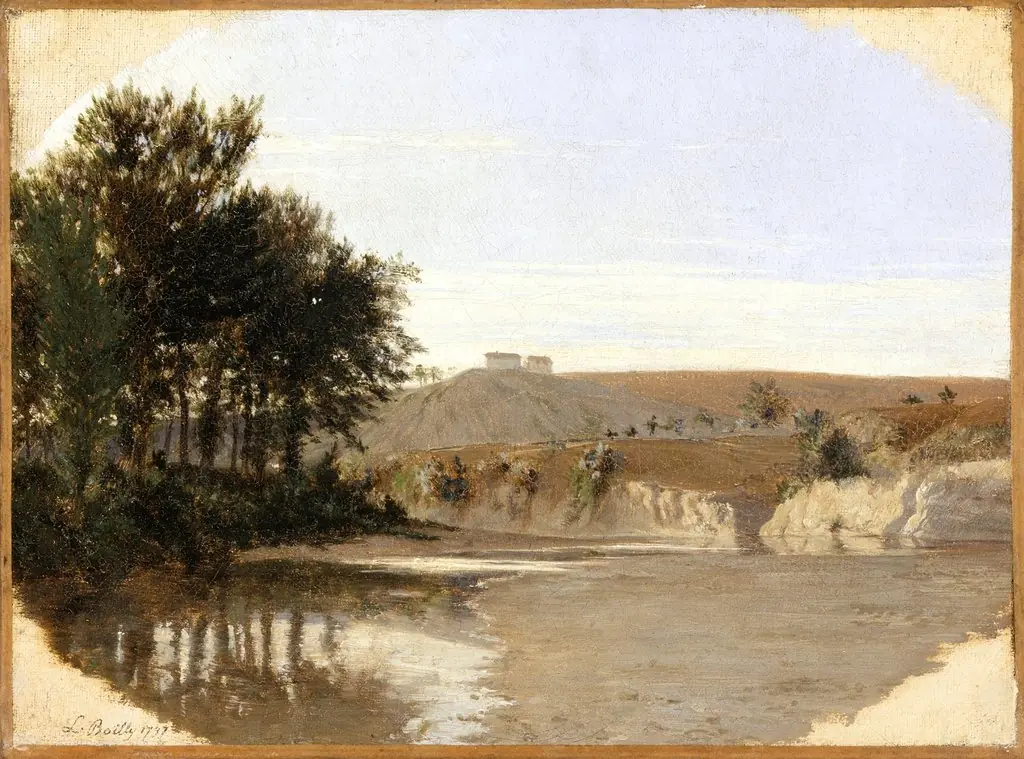 View of a Lake
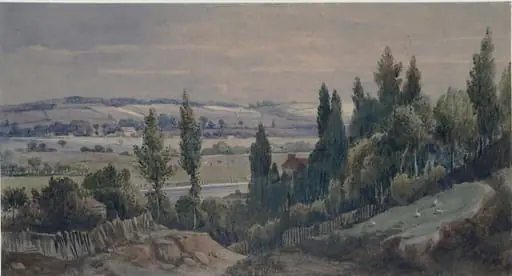 Hampstead Heath
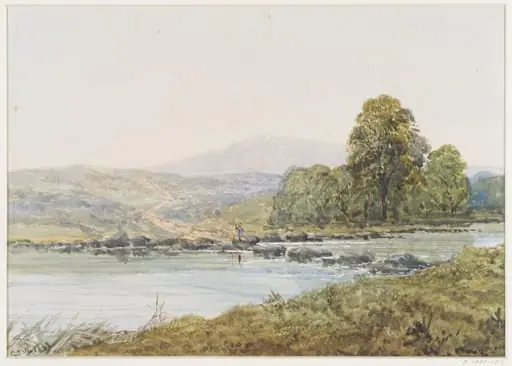 The Stepping-stones near Bettws-y-Coed, North Wales
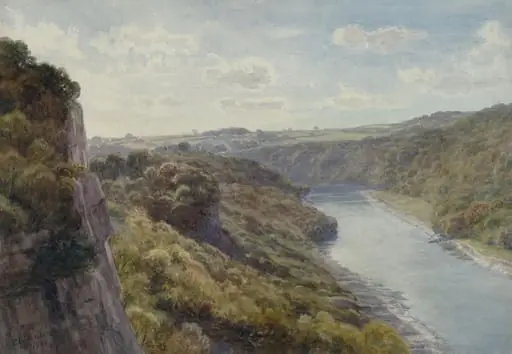 The Wye Valley above Chepstow
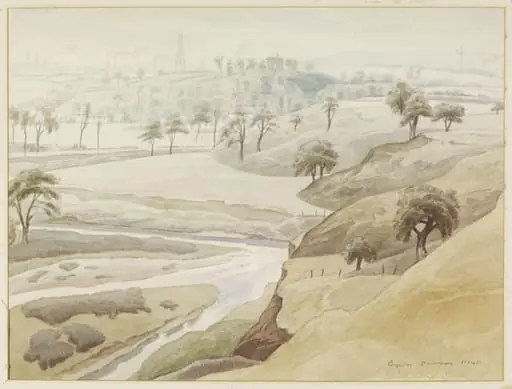 Medlock Valley, Daisy Nook, Oldham
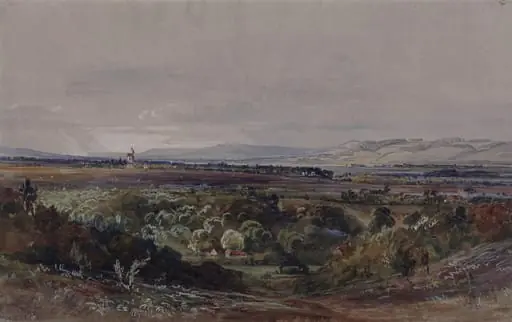 Landscape with Distant Windmill
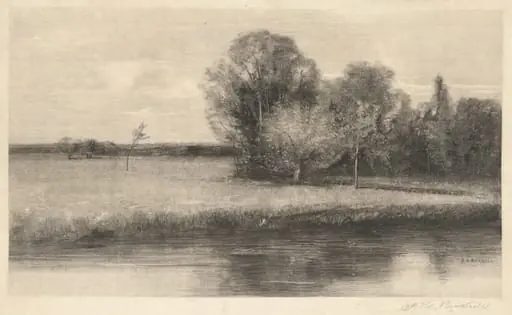 A Sun-dappled Meadow by a River