Artwork
View from Drachenfels looking towards Bonne-Rhine
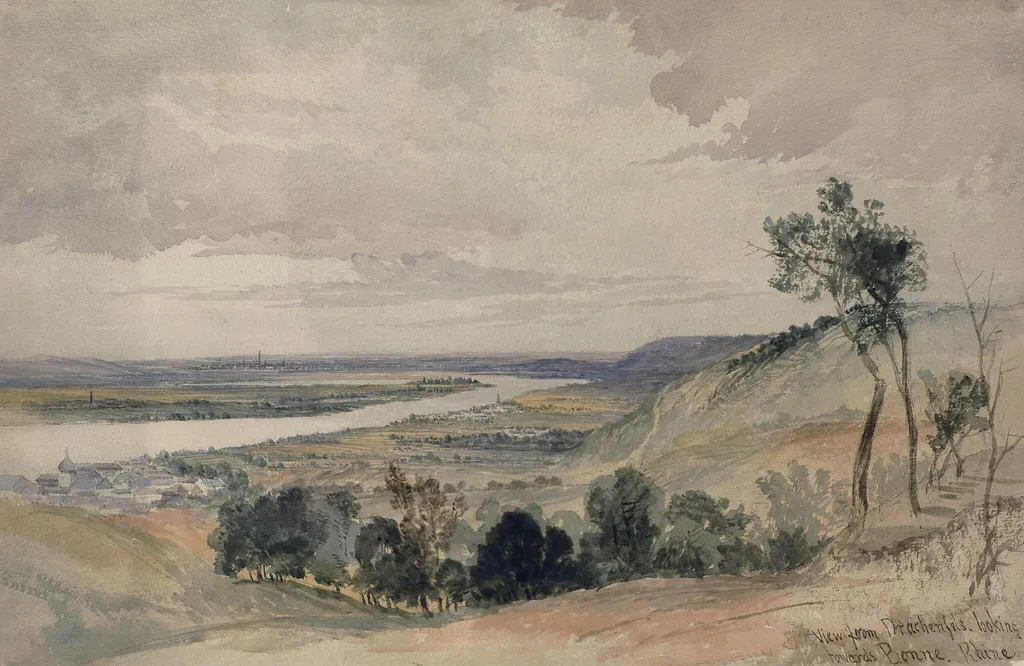
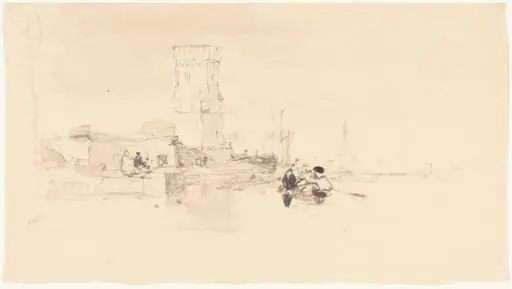
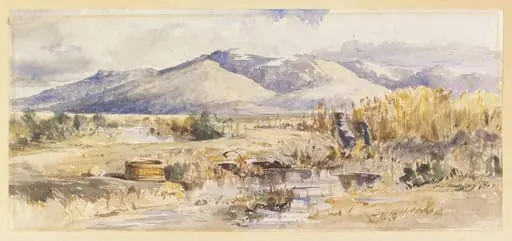
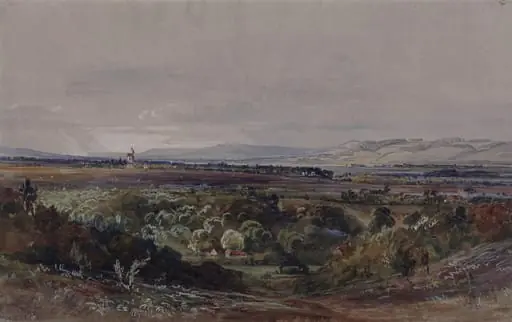
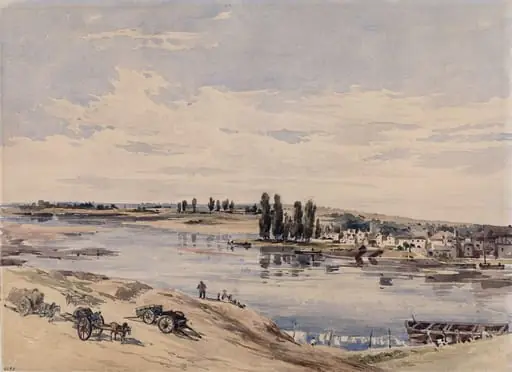
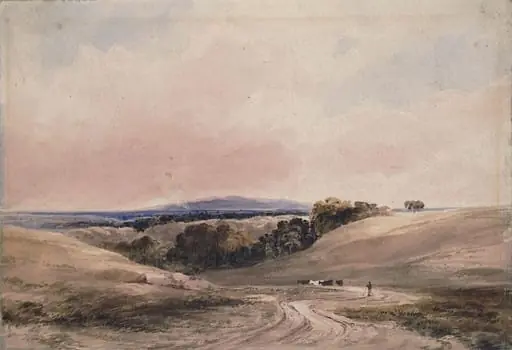
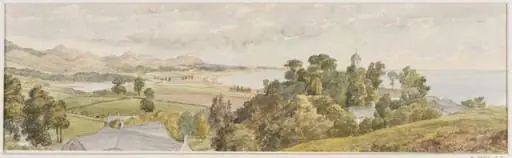
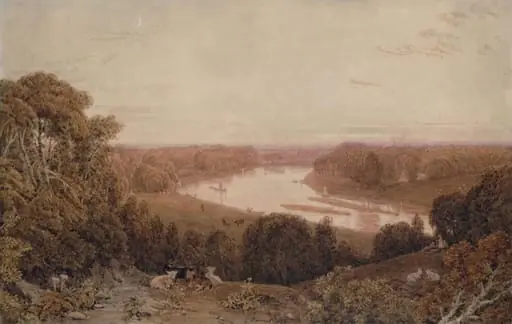
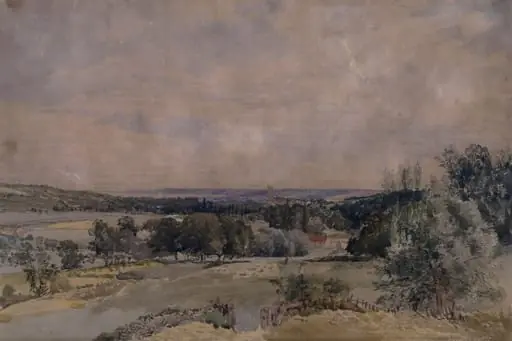
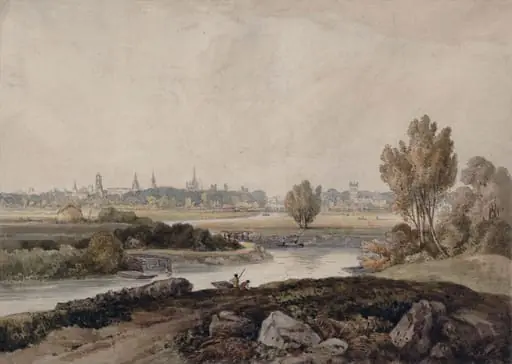
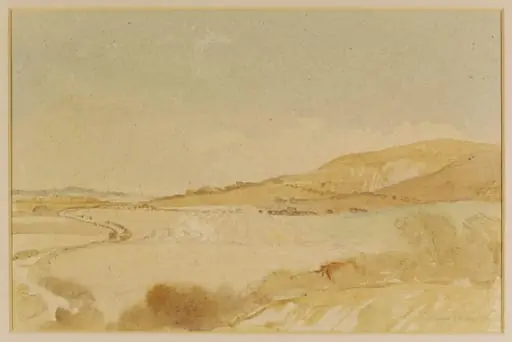
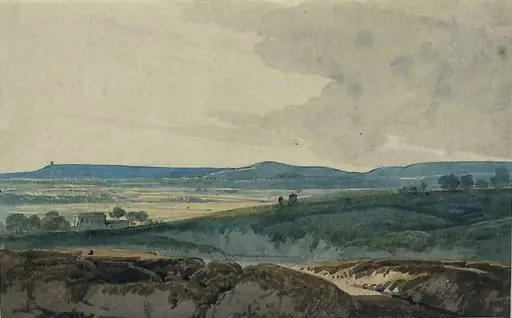
View from Drachenfels looking towards Bonne-Rhine is a watercolor work on paper by the Romanticist artist William James Müller. It dates from 1841 and is held in the collection of the Victoria and Albert Museum. This watercolour captures a distant view from Drachenfels overlooking the Rhine River, rendered in delicate transparent washes.
About this work
Overview
This watercolour captures a distant view from Drachenfels overlooking the Rhine River, rendered in delicate transparent washes. The composition emphasizes horizontal bands of land and water, with soft transitions between tones. Subtle shifts in hue suggest atmospheric depth, while minimal detail avoids overt narrative, focusing instead on mood and spatial quietude.
Subject & Meaning
The scene presents the Rhine as a calm, winding artery through rolling terrain, framed by distant hills and a muted sky. No human figures or structures interrupt the landscape, reinforcing a sense of solitude. The absence of dramatic action aligns with Romantic ideals of nature as a contemplative, restorative force, inviting quiet reflection rather than heroic awe.
Technique & Style
The artist employed layered watercolour washes to achieve luminous skies and reflective water surfaces. Fine brushwork defines distant tree lines and subtle topography, while wet-on-wet blending softens edges between land and atmosphere. The palette relies on muted blues, greens, and greys, avoiding bold contrasts to sustain a hushed, diffused light.
History & Provenance
Created during the early 19th century, the work reflects the growing interest in Rhine Valley scenery among German-speaking artists and travelers. Though the artist’s identity is not recorded here, such views were commonly produced for private collections, often as souvenirs of scenic journeys along the river.
Context
This piece emerged amid a broader European fascination with natural landscapes as vessels for emotional experience. In Germany, Romantic artists turned to the Rhine’s ruins and hills as symbols of cultural memory and sublime stillness, distancing themselves from industrial progress and urban life.
Legacy
Though not widely exhibited, such watercolours contributed to a visual language of quiet landscape that influenced later German and British watercolour traditions. Their emphasis on atmosphere over detail helped shift artistic priorities toward subjective perception, laying groundwork for 19th-century plein air practices.
Own this work as a print
Artist & collection