Artwork
St. Mary's, Oxford
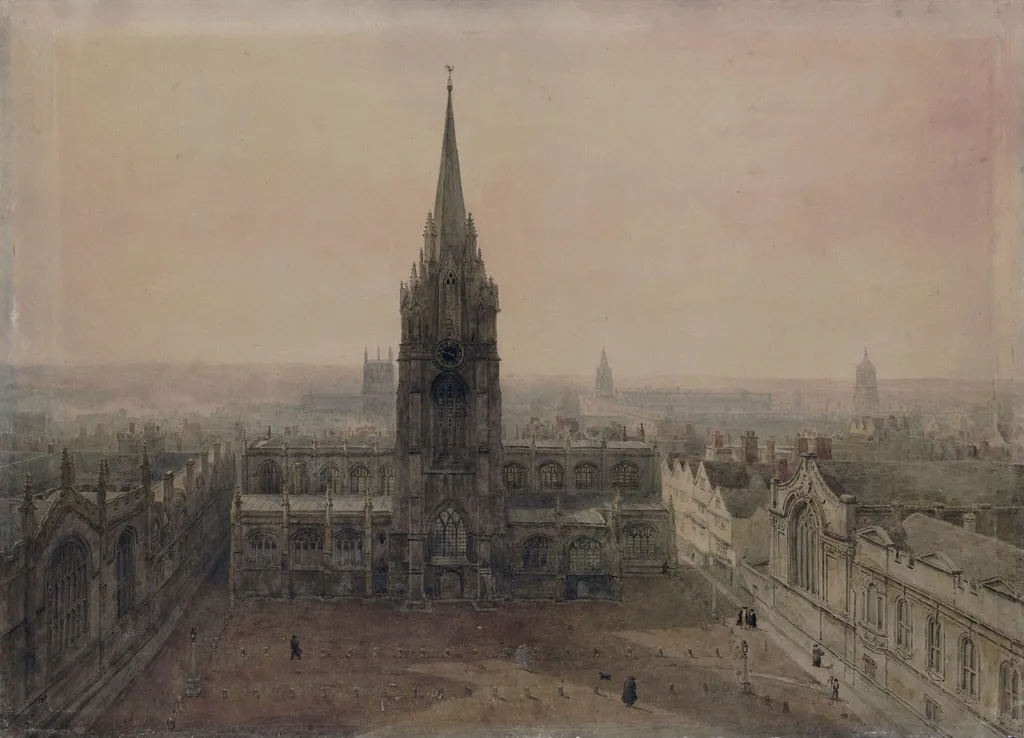
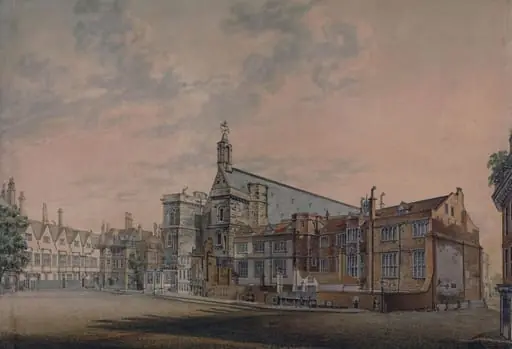
St. Mary's, Oxford is a watercolor work on paper by the British Romanticist artist Frederick Nash. It dates from 1800 and is held in the collection of the Victoria and Albert Museum. St.
About this work
Overview
St. Mary's, Oxford is a watercolour depicting St. Mary's Church in Oxford, attributed to Frederick Nash following reevaluation from an initial attribution to Augustus Charles Pugin.
Subject & Meaning
The subject is St. Mary's Church, showcased with its prominent stone structure, tall spire, and numerous windows, set amidst surrounding buildings and everyday activity, conveying a sense of tranquility within a bustling environment.
Technique & Style
Executed in watercolour, the piece features muted color palette and soft, dreamy textures, evoking a calm and serene atmosphere, characteristic of Nash's stylistic approach.
History & Provenance
Reattributed to Nash based on stylistic alignment with his known works, notably a signed plate in Ackermann's *A History of Oxford* (1814), correcting the initial attribution to Augustus Charles Pugin.
Context
Created during a period influenced by Romanticism, the work reflects the era's emphasis on capturing the beauty of everyday scenes and architectural subjects with emotional depth.
Legacy
While not individually renowned, it contributes to the broader legacy of watercolour artists of its time, offering a glimpse into Oxford's early 19th-century landscape and the artistic preferences of the era.
Artist & collection

Artist
Frederick Nash was an American lawyer and jurist from Hillsborough, North Carolina. He served on the North Carolina Supreme Court and was its chief justice from 1852 until his death.