Artwork
Untitled
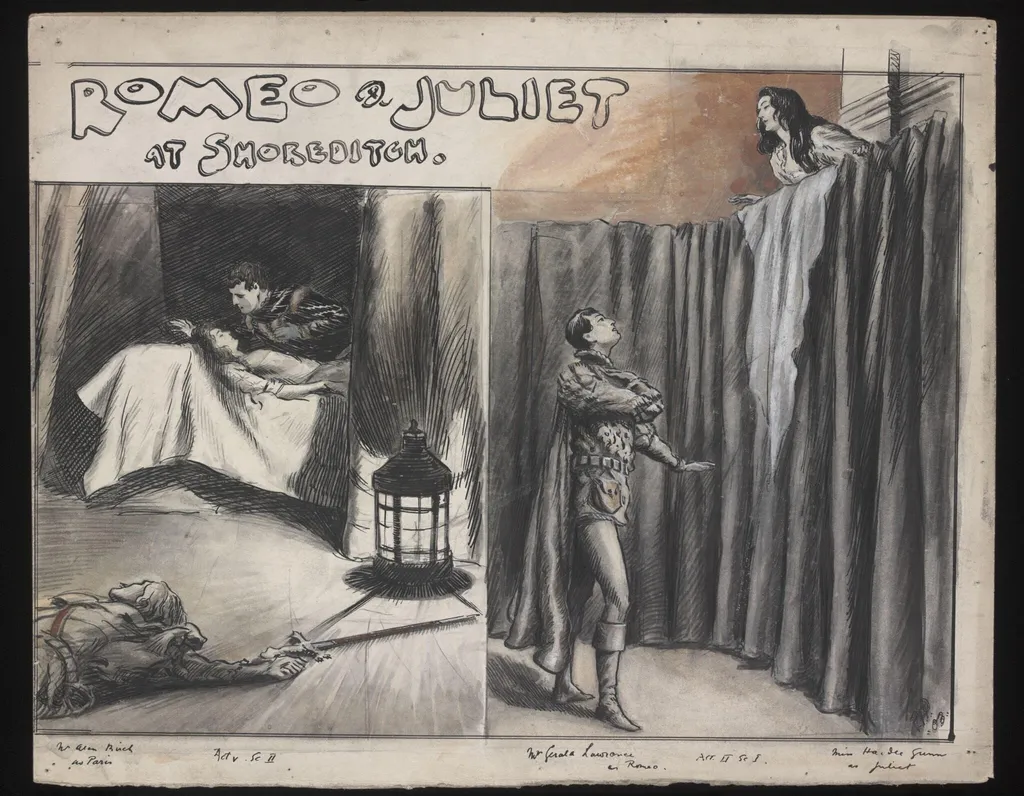
Untitled is a drawing by Frederick Victor Poole. It dates from 1903 and is held in the collection of the Victoria and Albert Museum.
About this work
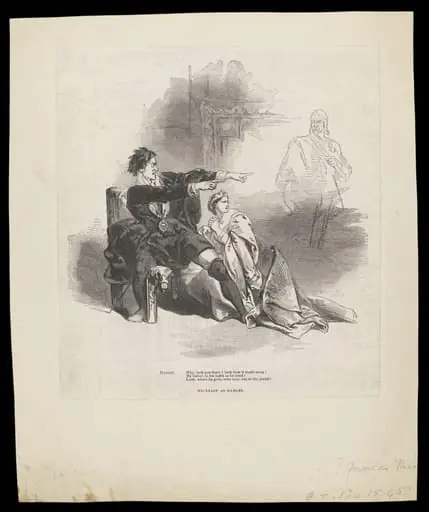
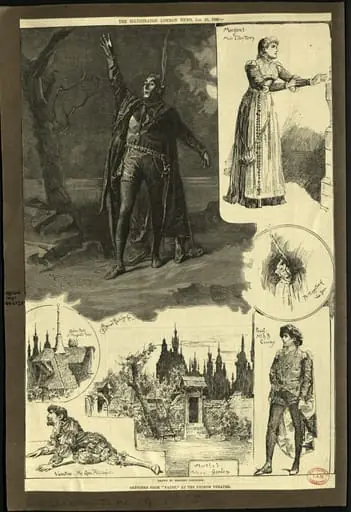
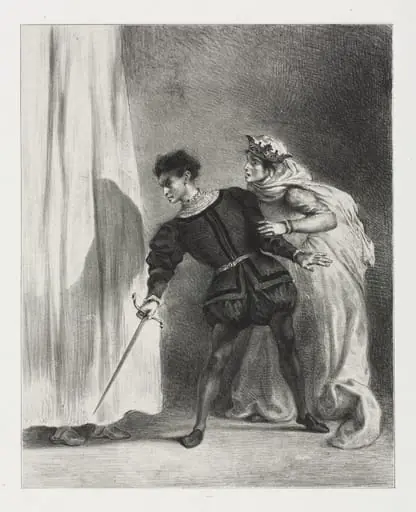
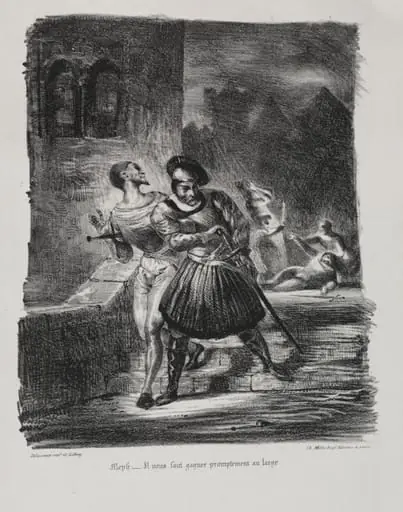
It’s a scene from Shakespeare’s Romeo and Juliet, printed in a Penny Illustrated Press magazine.
Frederick Victor Poole made this sepia drawing in 1903. It’s a scene from Shakespeare’s Romeo and Juliet, printed in a Penny Illustrated Press magazine. The artist shows two key moments at once: Juliet’s potion scene and Romeo’s arrival.
The sketch was signed by Poole in the corner. It came later to the Victoria and Albert Museum, donated by Sir William James Ingram in 1914.
Look up Frederick Victor Poole.
Overview
A sepia watercolour drawing by Frederick Victor Poole, dated 1903, depicts two scenes from Shakespeare’s Romeo and Juliet as performed at the Shoreditch Theatre. Created for reproduction in an illustrated periodical, likely The Penny Illustrated Press, the work captures a theatrical moment through delicate ink washes. Signed in the lower right, it is one of several commissioned illustrations from a broader collection of stage sketches.
Subject & Meaning
The drawing merges Juliet’s preparation to take the sleeping potion in Act II, Scene I, with Romeo’s arrival in Act V, Scene II. By combining these pivotal moments, Poole condenses the tragedy’s emotional arc into a single frame, emphasizing fate’s inevitability. The juxtaposition invites viewers to anticipate the fatal convergence of the lovers’ paths, reflecting the narrative’s dramatic tension without literal narrative progression.
Technique & Style
Executed in sepia watercolour, the drawing employs soft tonal gradations to suggest depth and atmosphere. Linework is restrained, prioritizing mood over detail, typical of illustrations meant for mass printing. The composition is tightly framed, focusing on the two central figures—Romeo and Juliet—while background elements are minimized to preserve clarity for reproduction in print.
History & Provenance
The drawing was produced as part of a series commissioned for illustrated newspapers of the early 20th century. It entered the Victoria and Albert Museum’s collection in 1914 through a donation by Sir William James Ingram, a known collector of theatrical ephemera. Ingram’s bequest included multiple works by contemporary artists documenting stage performances of the period.
Context
In 1903, illustrated periodicals like The Penny Illustrated Press served as primary visual media for the public’s engagement with theatre. Drawings such as Poole’s bridged the gap between live performance and domestic consumption, offering audiences a tangible record of popular productions. The Shoreditch Theatre, then a hub for accessible drama, was a frequent subject of such commissions.
Legacy
Poole’s work survives as a record of early 20th-century theatrical illustration, reflecting how Shakespeare was visually interpreted for middle-class audiences. While not widely known today, such drawings contributed to the popularization of classical drama through accessible print media. The piece remains a quiet testament to the intersection of performance, publishing, and visual culture of its time.
Artist & collection
Artist
Frederick Victor Poole (1865–1936) was an artist, born in Southampton.

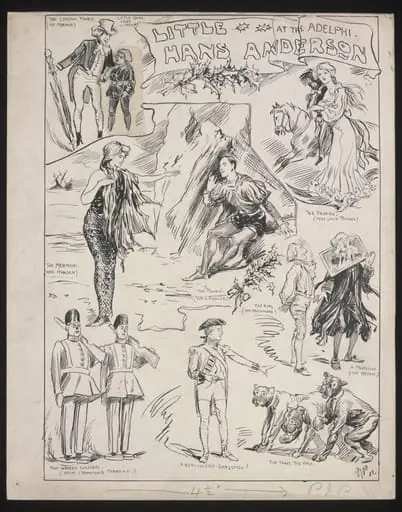 Untitled
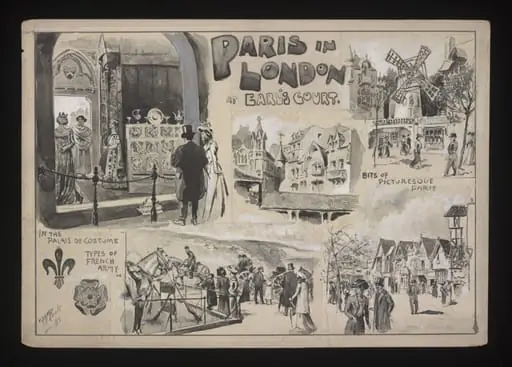 Untitled
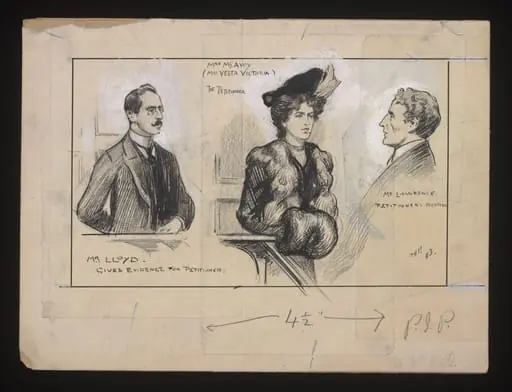 Divorce hearing in November 1903 of Vesta Victoria (1873-1951). Drawing by F.V. Poole for an illustrated newspaper.
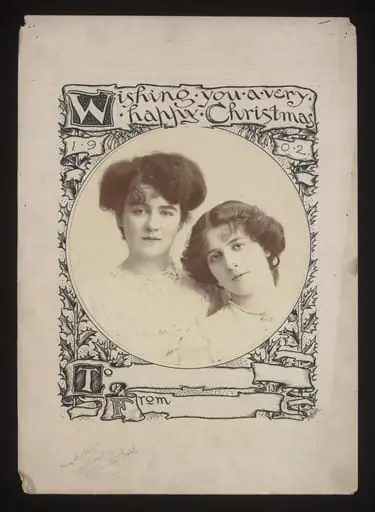 Manufacturer's proof of a souvenir Christmas card for 1902 featuring Mabel Hirst and Daisy Le Hay who were appearing in <i>A Country Girl</i>, Daly's Theatre, 1902. Photograph by Foulsham & Banfield; drawing by F.V. Poole
 Untitled