Artwork
Faust
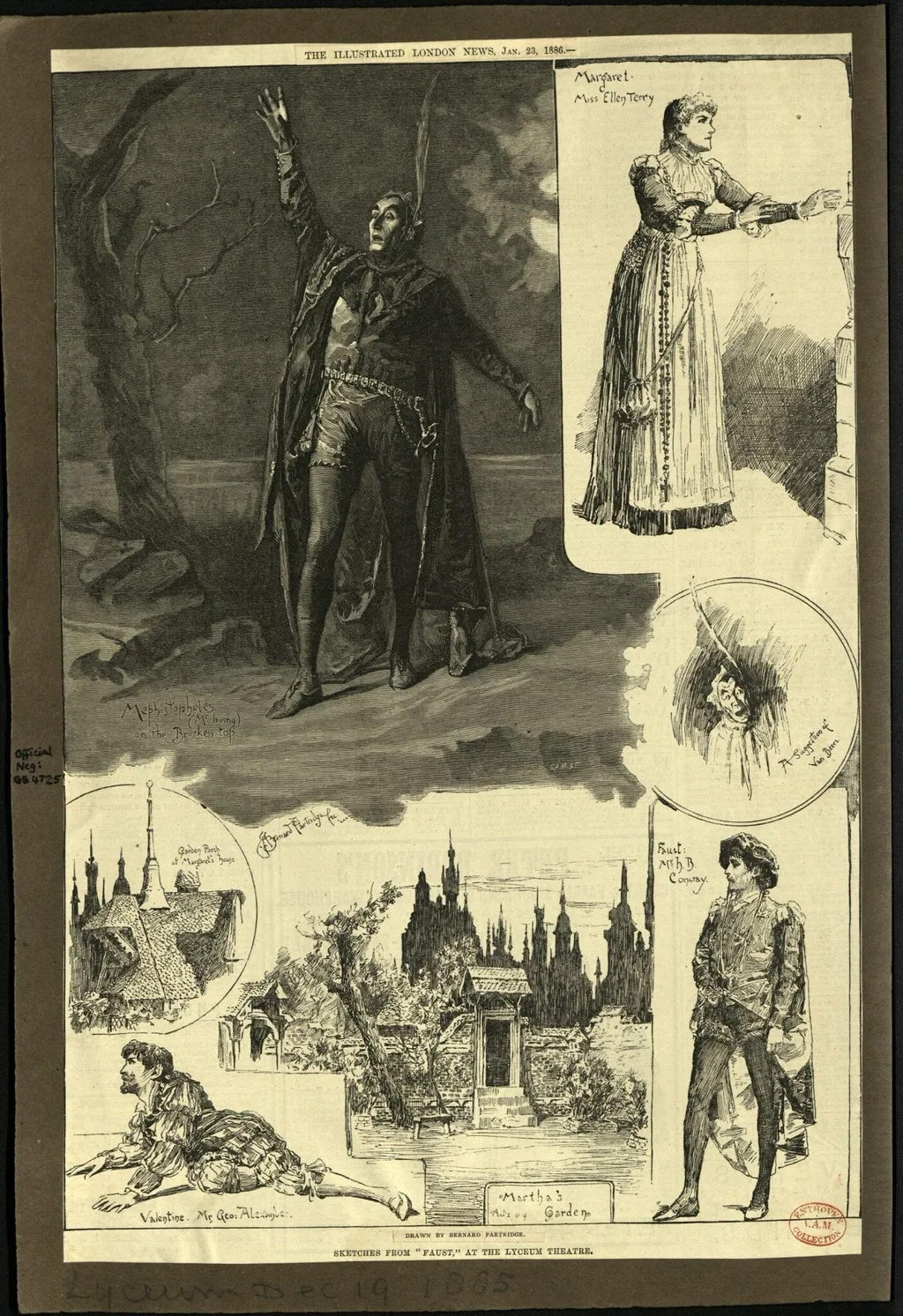
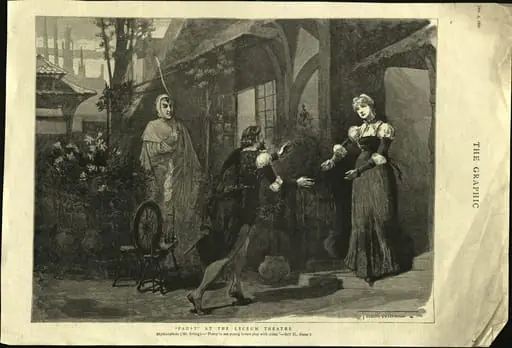
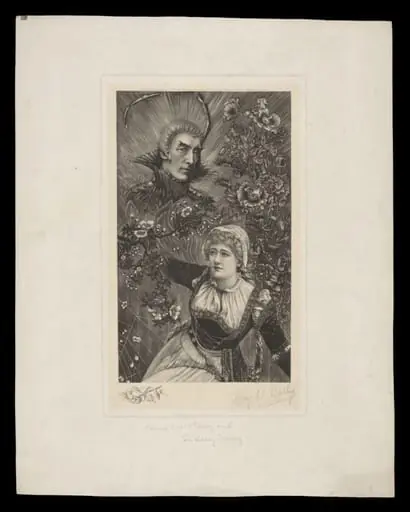
Faust is a print by the Impressionist artist Bernard Partridge. It dates from 1886 and is held in the collection of the Victoria and Albert Museum.
About this work
The cast list is packed with stars: Ellen Terry as Margaret, Henry Irving as Mephistopheles, and a young George Alexander as Faust.
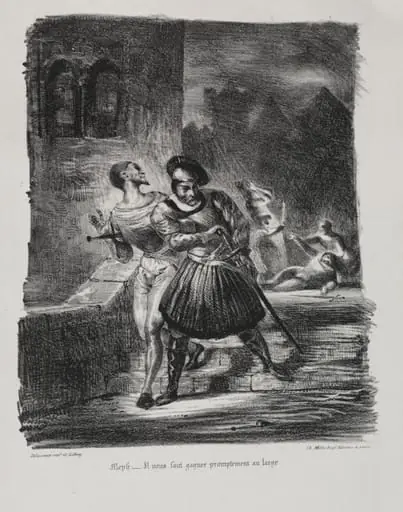
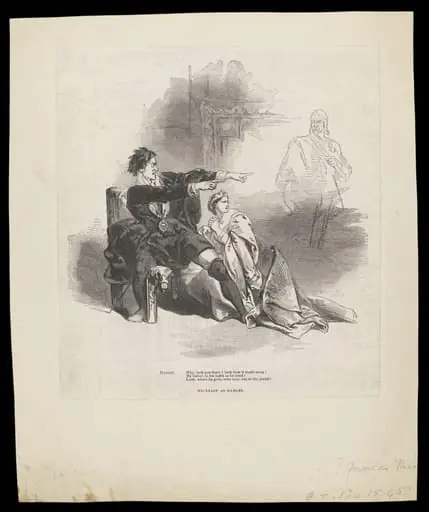
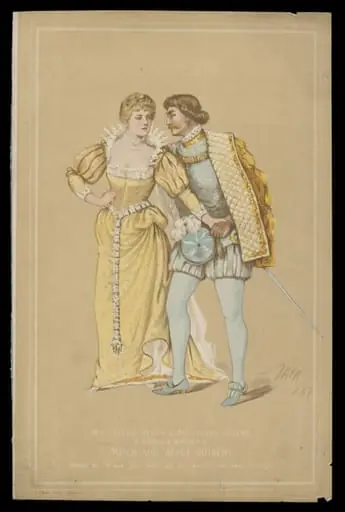
This print shows a scene from a big Victorian theater hit. Bernard Partridge carved the image for The Illustrated London News to promote the Lyceum’s famous 1885–1888 run of Faust.
The cast list is packed with stars: Ellen Terry as Margaret, Henry Irving as Mephistopheles, and a young George Alexander as Faust. The show ran for three straight years.
Next time you’re in London, swing by the Victoria and Albert Museum.
Overview
This print was created by Bernard Partridge for The Illustrated London News as part of a promotional series for the Lyceum Theatre’s 1885–1888 staging of Faust. Originally published in a periodical, it was later removed from its source and mounted on card for preservation. The image captures a key moment from the production, reflecting the visual culture of Victorian theatrical promotion and the growing role of illustrated journalism in documenting stage performances.
Subject & Meaning
The scene depicts a dramatic moment from Goethe’s Faust, adapted for the Victorian stage. The focus on the central trio—Margaret, Mephistopheles, and Faust—highlights the moral and emotional tensions of the story. By emphasizing these roles, the print underscores the production’s narrative core: the struggle between human desire and spiritual consequence, framed through the lens of contemporary theatrical sensibilities.
Technique & Style
Partridge employed wood engraving, a dominant print medium of the era, to achieve fine detail and tonal contrast. The composition is tightly framed, with expressive figures and theatrical lighting that mimic stage design. The style aligns with the illustrative conventions of The Illustrated London News, prioritizing clarity and narrative immediacy over artistic experimentation, suited to mass reproduction and public consumption.
History & Provenance
The print originated as a promotional item for the Lyceum’s three-year run of Faust, one of the most enduring theatrical successes of its time. After its initial publication, it was detached from the periodical and mounted on card, likely for private collection or archival purposes. Its survival reflects the cultural value placed on documenting prominent theatrical events of the late Victorian period.
Context
Henry Irving’s tenure as actor-manager at the Lyceum Theatre defined late 19th-century British drama. His production of Faust, with Ellen Terry and George Alexander in leading roles, exemplified the era’s fusion of literary ambition and spectacle. The print’s creation coincided with the rise of illustrated newspapers as key mediators between stage and public, shaping audience perception beyond the theater walls.
Legacy
The production cemented George Alexander’s status as a leading actor and reinforced Irving’s dominance in Victorian theatre. Partridge’s image remains a visual record of a landmark staging, illustrating how theatrical success was communicated to the public through print media. Today, such prints serve as historical artifacts, offering insight into the intersection of performance, journalism, and popular culture in the late 1800s.
Artist & collection

Artist
Sir John Bernard Partridge was an English illustrator. Born in London, he was the son of Professor Richard Partridge, F.R.S., president of the Royal College of Surgeons, and nephew of John Partridge, portrait-painter…