Artwork
Landscape
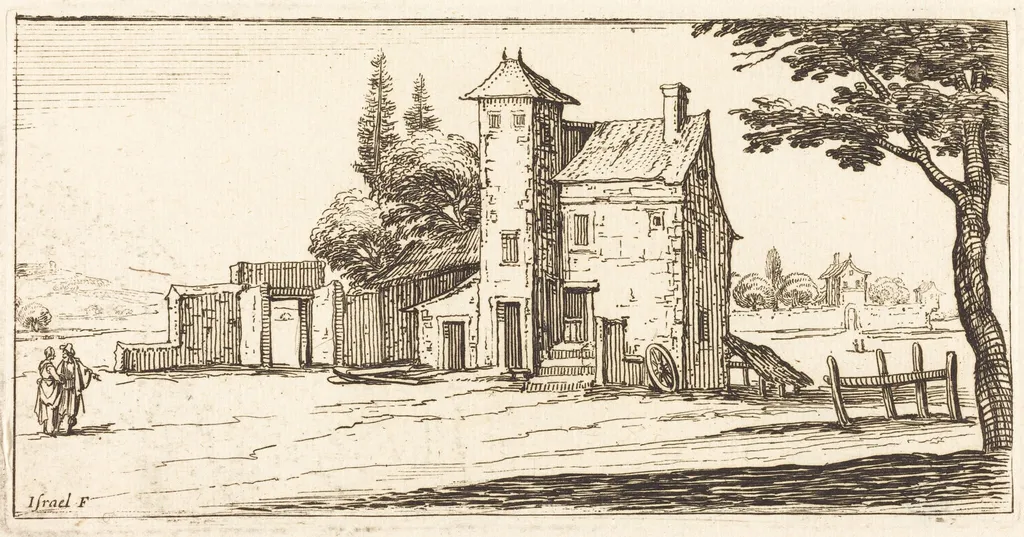
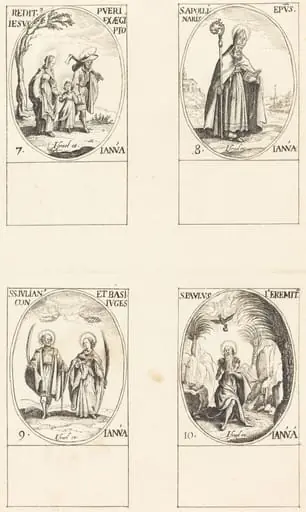
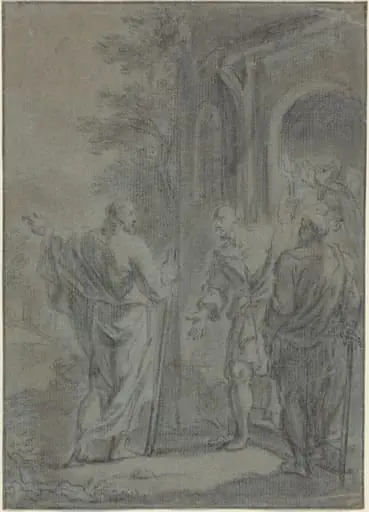
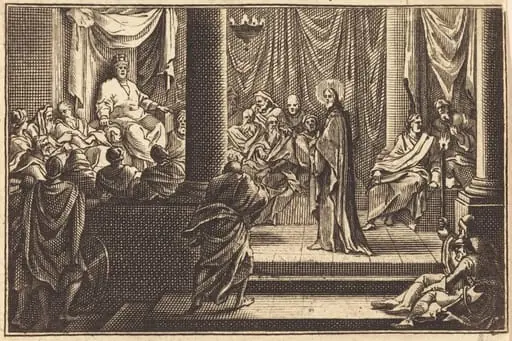
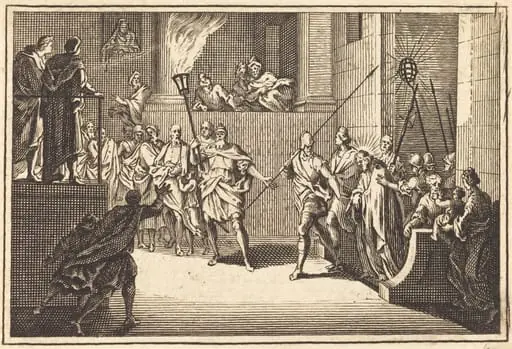
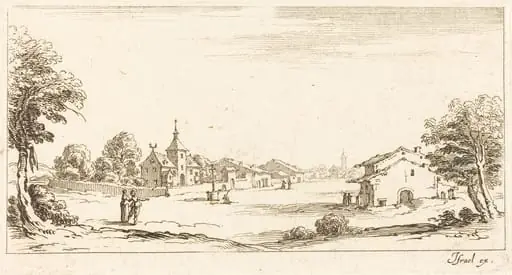
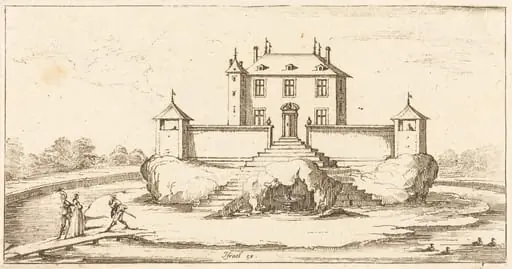
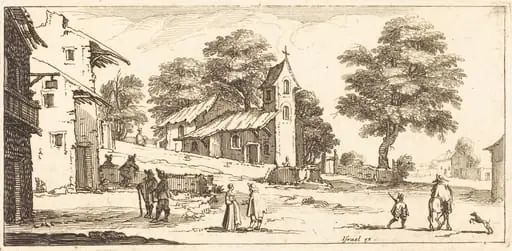
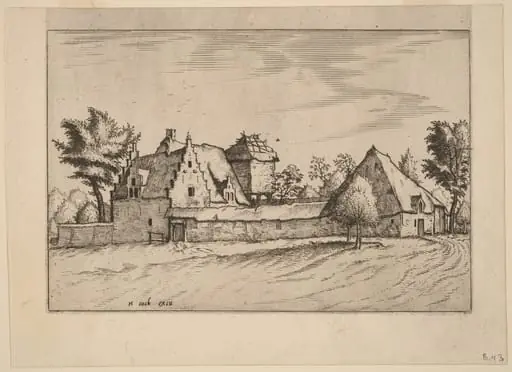
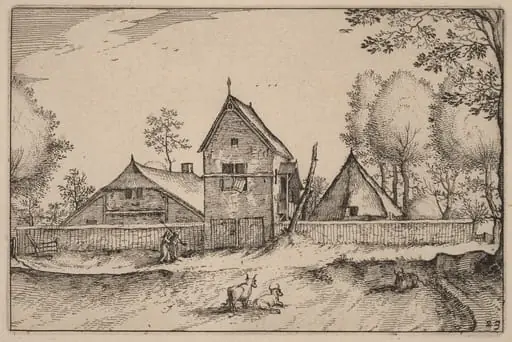
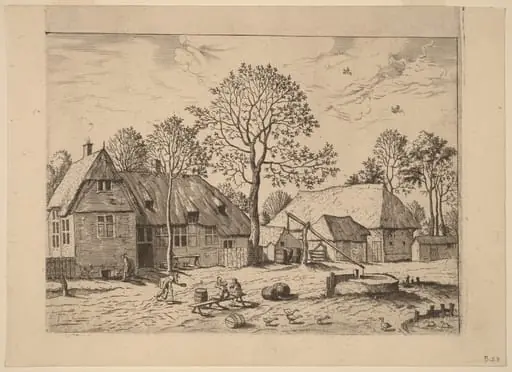
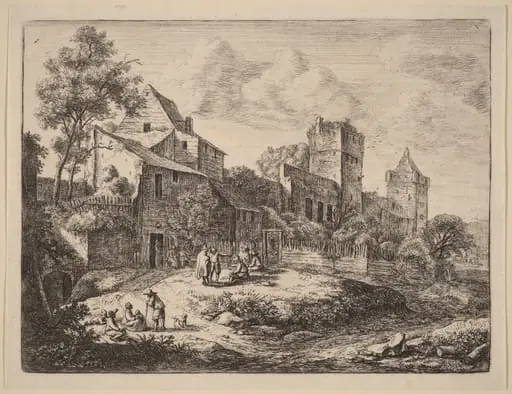
Landscape is an ink print by the Baroque artist French 17th Century. It dates from 1635 and is held in the collection of the National Gallery of Art. The work is an etching on laid paper depicting a tranquil village scene.
About this work
Overview
The work is an etching on laid paper depicting a tranquil village scene. Central to the composition are two modest structures: a low‑lying house capped with a prominent chimney and a simple wooden shed. A figure in period attire stands beside the shed, while a cart rests near the house. Additional elements such as trees and a bench contribute to the calm, everyday atmosphere.
Subject & Meaning
The image presents a slice of rural life, emphasizing ordinary architecture and daily activity.
The image presents a slice of rural life, emphasizing ordinary architecture and daily activity. The solitary figure, dressed in historical costume, suggests a timeless presence within the setting, while the cart and bench hint at routine tasks and communal rest. The composition invites contemplation of the simplicity and stability of village existence, foregrounding the relationship between people, their dwellings, and the surrounding landscape.
Technique & Style
Created through the traditional etching process, the artist incised lines into a metal plate, allowing ink to settle in the recessed grooves. When pressed onto laid paper, these inked lines emerge with crisp definition, rendering fine details such as the chimney’s outline and the texture of the trees. The overall style is marked by precise linear work and a restrained tonal range, characteristic of early modern printmaking.
Artist & collection

Artist
Seventeenth-century French printmakers turned ink into story. Their tools were burin and acid, paper their stage. Look at the Beggar Woman with Rosary (1622), etched on laid paper, her hands folded around faith, or The…