Artwork
Large Walled Farm
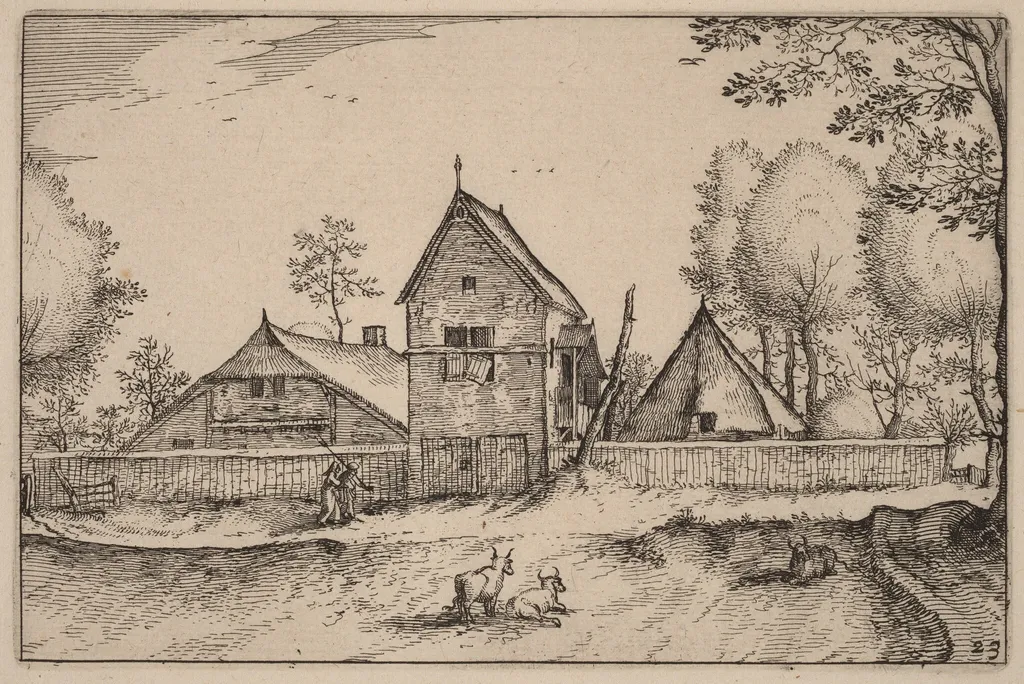
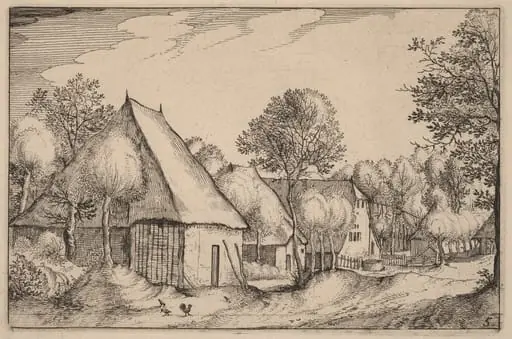
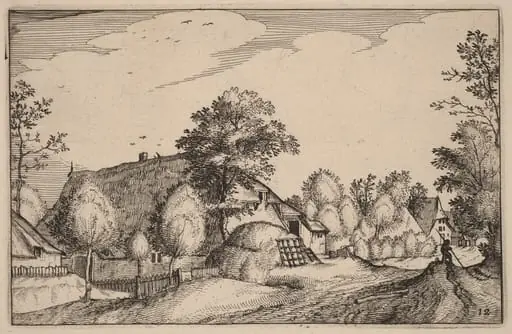
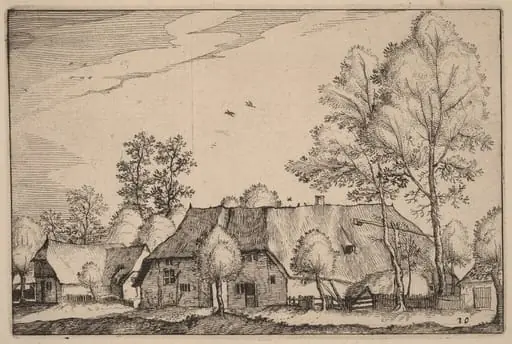
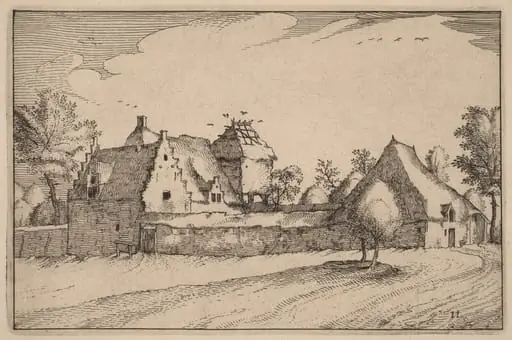
Large Walled Farm is an ink print by the Renaissance artist Claes Jansz Visscher. It dates from 1619 and is held in the collection of the National Gallery of Art.
About this work
Overview
Visscher, known for his cartographic work and printmaking enterprise in Amsterdam, applied his technical skill to this intimate landscape scene.
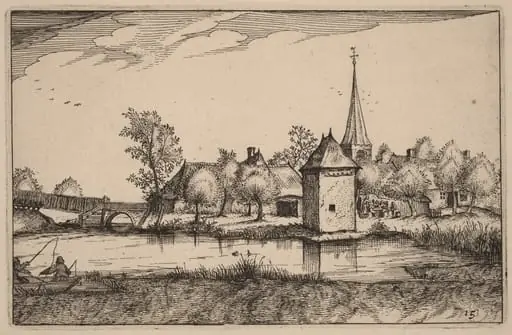
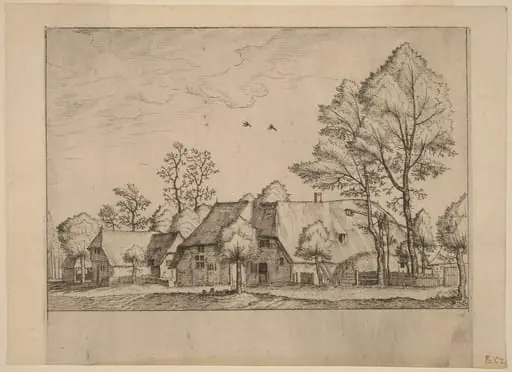
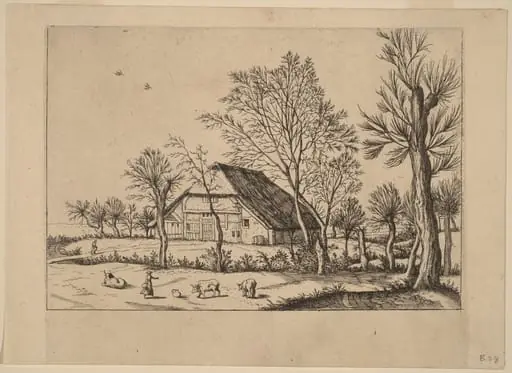
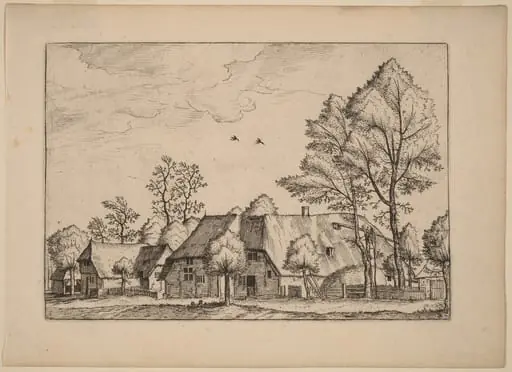
Created in 1619 by Claes Janszoon Visscher, *Large Walled Farm* is an etching that reflects the Dutch Golden Age’s fascination with rural life and precise topographical representation. Visscher, known for his cartographic work and printmaking enterprise in Amsterdam, applied his technical skill to this intimate landscape scene. The image captures a fortified farmstead with careful attention to architectural and environmental detail, characteristic of his broader practice in documenting the Dutch countryside.
Subject & Meaning
The scene portrays a secluded agricultural compound enclosed by a high stone wall, suggesting both protection and self-sufficiency. At its center stands a substantial farmhouse with a steep roof and evenly spaced windows, indicating wealth or status. Two small figures in the foreground, one holding a tool, imply daily labor without dramatizing it. The composition avoids narrative drama, instead emphasizing quiet routine and the harmony between human habitation and the natural landscape.
Technique & Style
Visscher employed fine, controlled etching lines to render texture and depth, using delicate hatching and cross-contouring to suggest the solidity of stone walls, the roughness of earth, and the softness of foliage. The subtle gradations of tone create a sense of atmospheric space without heavy chiaroscuro. The precision of the draftsmanship reflects his training as a mapmaker, where clarity and accuracy were paramount, translating cartographic discipline into a lyrical rural scene.
History & Provenance
The print was produced during the height of Visscher’s career, when his family’s publishing house in Amsterdam was among the most influential in Northern Europe. While the specific early ownership of this impression is undocumented, it aligns with the broader circulation of his landscape prints, which were collected by merchants and scholars interested in regional topography. The work remained within the tradition of Dutch print culture, passed down through generations of Visscher’s descendants.
Context
In early 17th-century Holland, agricultural estates were symbols of economic stability and social order. Etchings like this one catered to a growing urban audience seeking visual connections to the countryside, even as urbanization accelerated. Visscher’s work contributed to a genre that valued observation over idealization, reflecting broader cultural interests in geography, property, and the daily rhythms of rural life during the Dutch Golden Age.
Legacy
Though not as widely recognized as his maps, Visscher’s landscape etchings influenced later generations of Dutch printmakers who sought to document the land with similar precision. His integration of cartographic clarity into pictorial scenes helped shape a visual language for rural topography that endured beyond his lifetime. *Large Walled Farm* stands as a quiet example of how printmaking served both artistic and documentary purposes in early modern Europe.
Artist & collection

Artist
Claes Janszoon Visscher (1587 – 19 June 1652) was a Dutch Golden Age draughtsman, engraver, mapmaker, and publisher.