Artwork
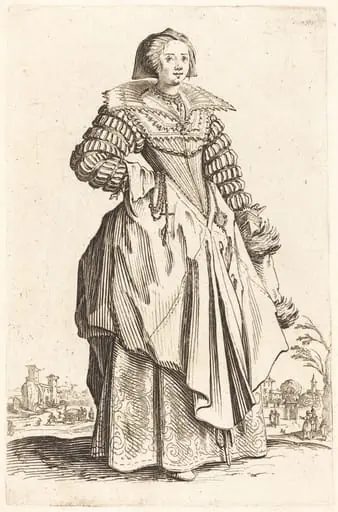
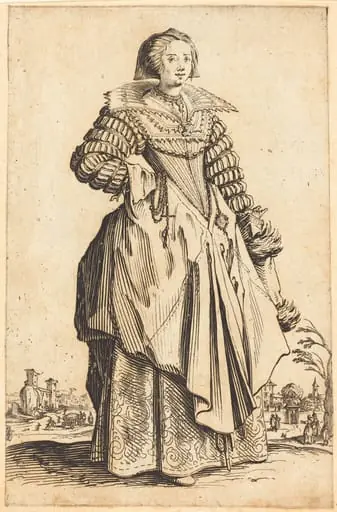
Noble Woman in Profile with her Hands in a Muff
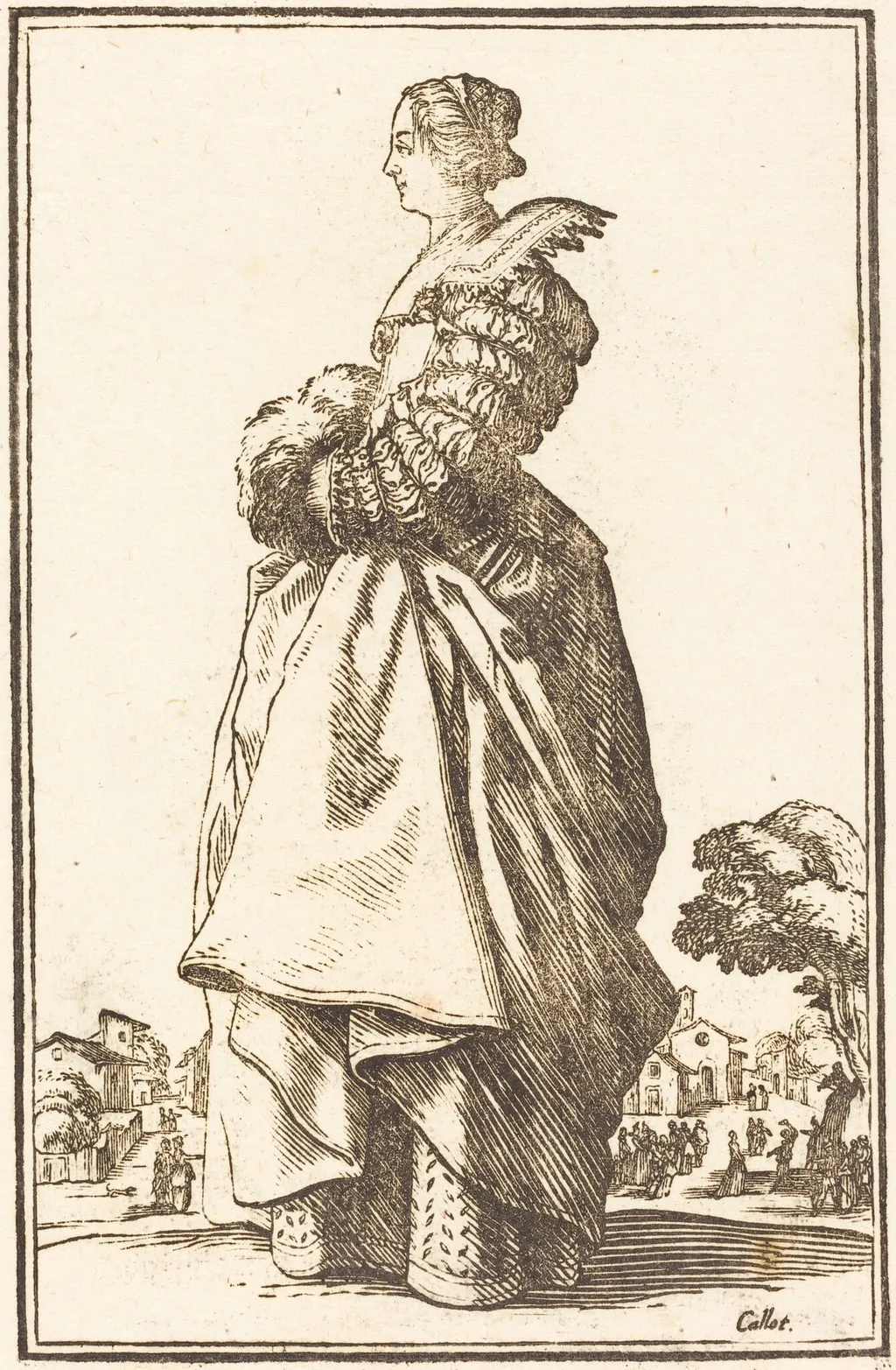
Noble Woman in Profile with her Hands in a Muff is an ink print by the Baroque artist French 17th Century. It dates from 1623 and is held in the collection of the National Gallery of Art.
About this work
Overview
This woodcut on laid paper portrays a noblewoman in profile, facing left, rendered with fine linear detail characteristic of 17th-century printmaking.
This woodcut on laid paper portrays a noblewoman in profile, facing left, rendered with fine linear detail characteristic of 17th-century printmaking. Dressed in a dark, flowing cloak and holding a muff, she is framed by a dark border against a pale background. The composition emphasizes stillness and poise, with no overt narrative or action, focusing instead on quiet dignity and refined presence.
Subject & Meaning
The subject is a woman of elevated social standing, identified by her attire and composed demeanor. The muff, a fashionable accessory of the period, suggests both practicality and status. Her serene expression and upright posture convey composure and self-possession, reflecting ideals of aristocratic femininity rather than emotional display. The image functions as a portrait of quiet elegance, not a specific individual.
Technique & Style
Executed as a woodcut, the image relies on precise, incised lines to define form and texture. The artist uses fine hatching and cross-contouring to suggest the weight of fabric, the softness of the muff, and the structure of the hairstyle. The contrast between the dark border and the pale background enhances the figure’s presence, while the restrained tonal range reflects the medium’s limitations and the artist’s control over them.
History & Provenance
The print originates from the 17th century, likely produced in Northern Europe where woodcut portraiture remained in use alongside engravings. Its survival in good condition suggests it was carefully preserved, possibly as part of a private collection of portraits or fashion studies. No documented owner or publisher is known, and its origin remains anonymous, typical of many small-scale prints of the era.
Context
In the Baroque period, portraiture extended beyond oil paintings to include prints, which circulated more widely among the educated middle class. While grander portraits emphasized drama and movement, this woodcut reflects a quieter, more intimate mode of representation. It aligns with contemporary interest in personal dignity and refined manners, values promoted in courtly and urban circles.
Legacy
This print contributes to the broader archive of early modern portraiture, illustrating how printmaking democratized access to images of social status. Though not attributed to a known master, its craftsmanship reflects the skill of anonymous artisans who shaped visual culture. It remains a quiet testament to the aesthetic values of dignity and restraint in 17th-century society.
Artist & collection

Artist
Seventeenth-century French printmakers turned ink into story. Their tools were burin and acid, paper their stage. Look at the Beggar Woman with Rosary (1622), etched on laid paper, her hands folded around faith, or The…