Artwork
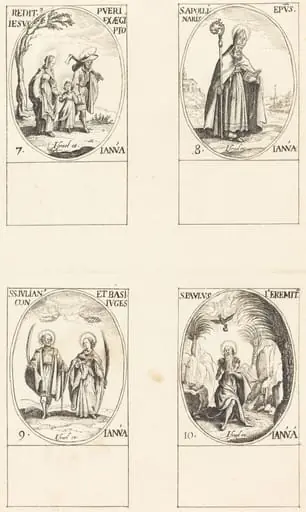
Sheet of Etchings
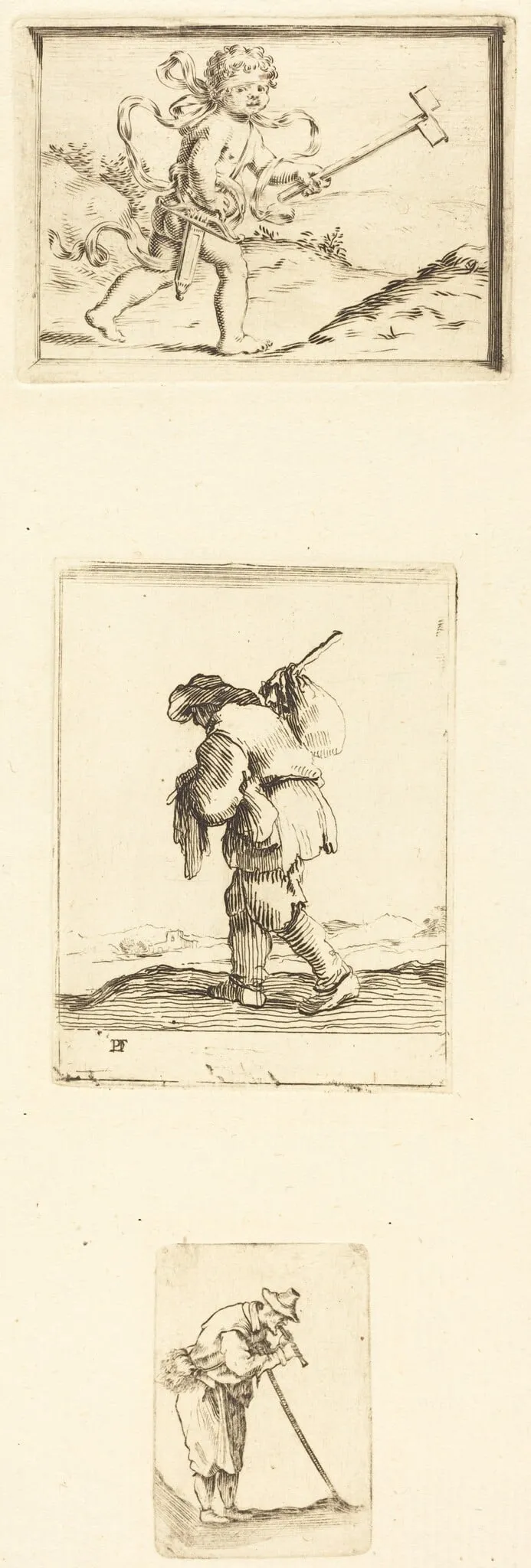
Sheet of Etchings is an ink print by the Baroque artist French 17th Century. It dates from 1601 and is held in the collection of the National Gallery of Art. The work consists of three small etchings arranged on a single sheet of laid paper.
About this work
Overview
The work consists of three small etchings arranged on a single sheet of laid paper. Each image occupies its own compartment, presenting a distinct scene rendered in bold, precise lines that suggest the incised marks of a needle on a metal plate. The prints are identified as restrikes, indicating they were produced after the original impressions.
Technique & Style
Etching, the method employed here, involved coating a metal plate with a wax ground, then drawing through the wax to expose the metal. The plate was submerged in acid, which ate away the exposed areas, creating grooves that retain ink. When pressed onto paper, these ink-filled channels produce the characteristic crisp, dark lines evident across the three images.
Context
During the period when this sheet was created, etching was a widely used printmaking technique, favored for its capacity to render fine detail and tonal variation. The presence of restrikes suggests the plates remained in use beyond the artist’s lifetime, a common practice for popular or commercially viable designs.
Artist & collection

Artist
Seventeenth-century French printmakers turned ink into story. Their tools were burin and acid, paper their stage. Look at the Beggar Woman with Rosary (1622), etched on laid paper, her hands folded around faith, or The…


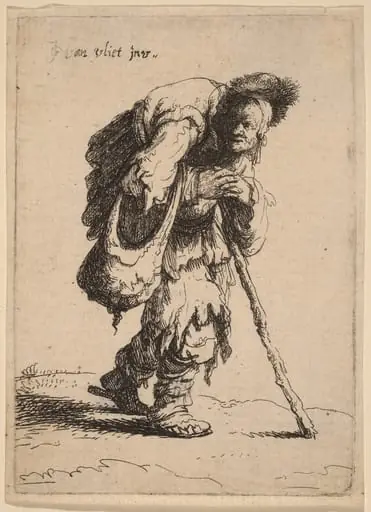 Beggar Carrying a Woman on His Back
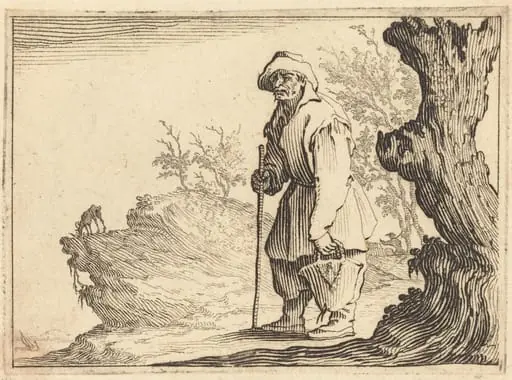 Peasant with Sack
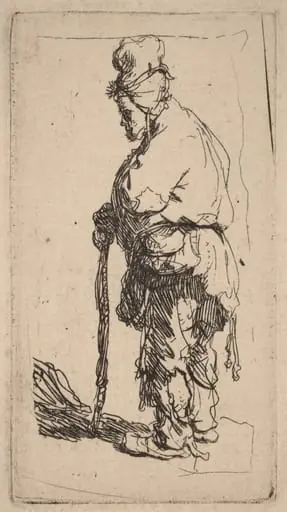 Beggar Leaning on a Stick, Facing Left
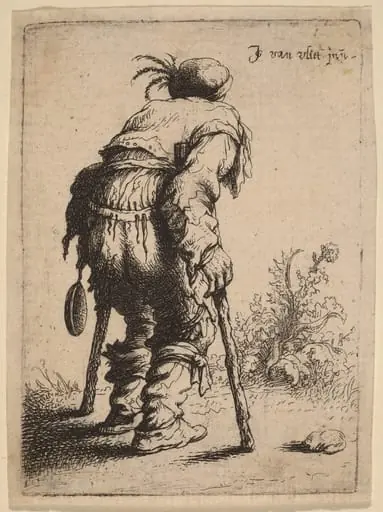 Beggar with Two Crutches
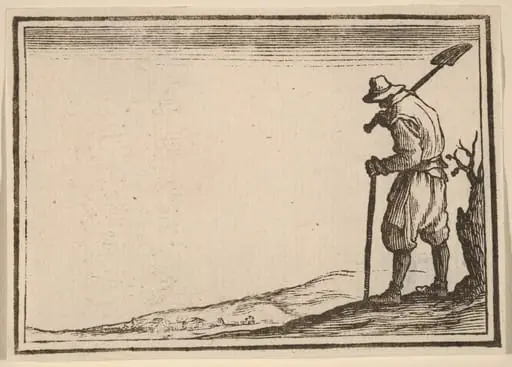 Peasant with Shovel on His Shoulder
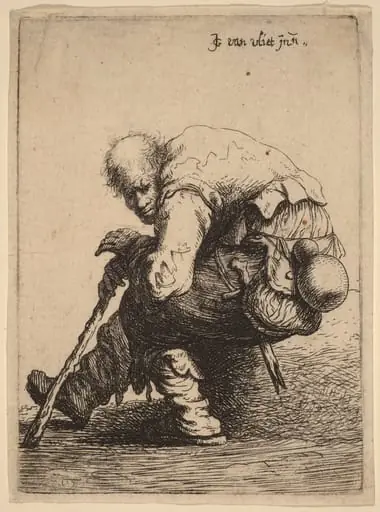 Seated Beggar
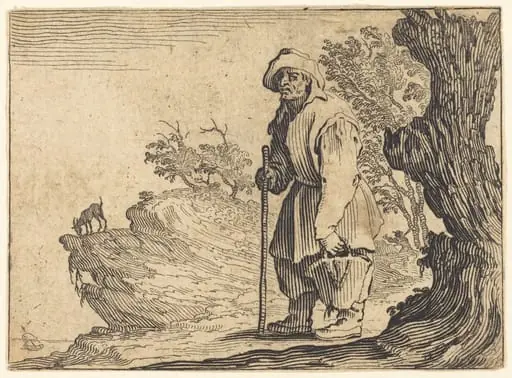 Peasant with Sack
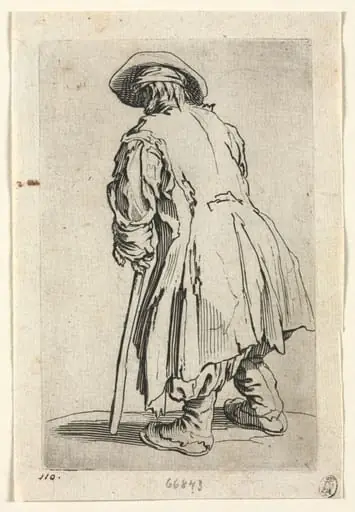 The Beggars: Old Beggar on One Single Crutch
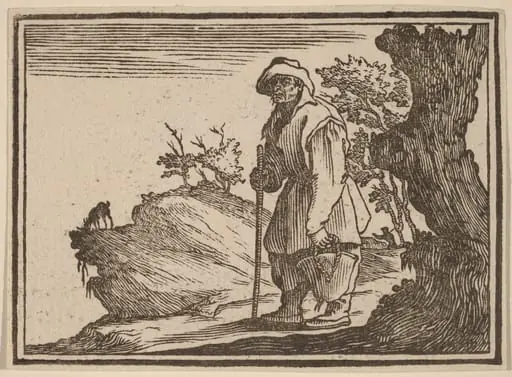 Peasant with Sack
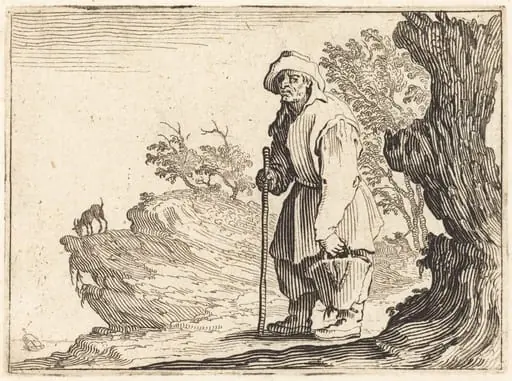 Peasant with Sack
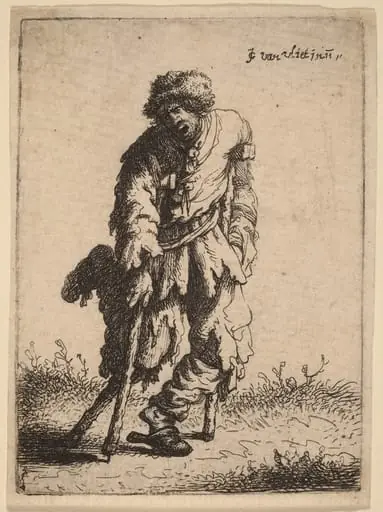 Beggar with a Wooden Leg
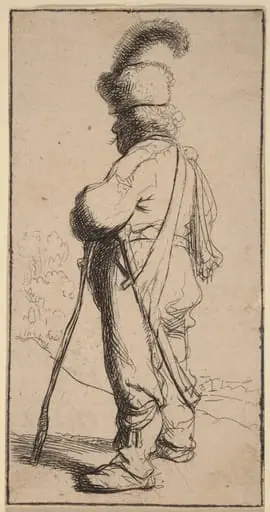 Polander Leaning on a Stick