Artwork
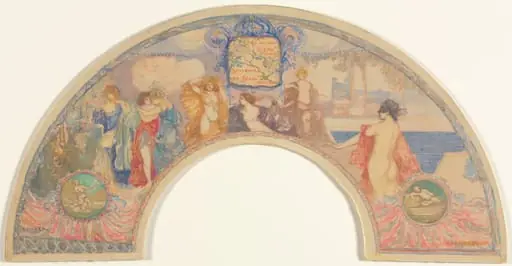
A Fan with Classical Figures Processing to Apollo
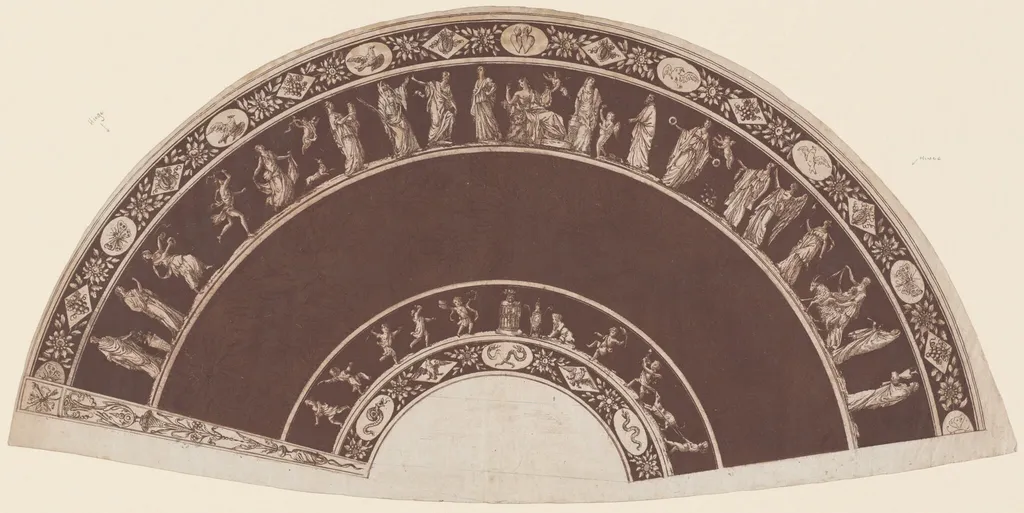
A Fan with Classical Figures Processing to Apollo is an ink print by the Romanticist artist French 18th Century. It dates from 1795 and is held in the collection of the National Gallery of Art. This print combines etching, aquatint, and roulette techniques to render a curved composition in brown ink on laid paper.
About this work
Overview
This print combines etching, aquatint, and roulette techniques to render a curved composition in brown ink on laid paper.
This print combines etching, aquatint, and roulette techniques to render a curved composition in brown ink on laid paper. It depicts a procession of robed figures against a dark ground, with delicate light lines defining forms. The design mimics the shape of a fan, suggesting it may have been intended as a decorative object. The precision of the lines and tonal gradations reflect skilled printmaking methods common in the late 18th century.
Subject & Meaning
The figures, dressed in classical robes, appear to be engaged in a ceremonial procession toward Apollo, the Greek god of music and light. Smaller scenes below include musicians and animals, reinforcing themes of divine order and harmony. The narrative suggests a mythological ritual, though no specific legend is identifiable. The composition invites contemplation of ancient ideals, possibly reflecting Enlightenment-era fascination with antiquity.
Technique & Style
The artist used etching for fine linear detail, aquatint for subtle tonal shifts, and roulette for textured backgrounds. The contrast between dark fields and lightly inked figures enhances the sculptural quality of the forms. Drapery is rendered with flowing, continuous lines, echoing classical sculpture. The style is meticulous and restrained, prioritizing clarity and elegance over dramatic expression.
History & Provenance
The work likely dates to the late 1700s, a period when classical themes were widely revived in European decorative arts. Though its origin and early ownership are undocumented, similar prints were produced for private collectors interested in antiquity. Its format suggests it may have been part of a set or designed as a functional object, blending art with domestic use.
Context
Created during a time when Neoclassicism dominated visual culture, this print reflects broader trends in art and design. Archaeological discoveries in Italy fueled interest in ancient Greece and Rome, influencing everything from architecture to printed ornament. Such prints were often circulated among educated elites as symbols of cultural refinement and intellectual taste.
Legacy
This print exemplifies how printmaking extended classical imagery beyond painting and sculpture into everyday objects. While not widely attributed to a major artist, it contributes to the understanding of how mythological themes were popularized in domestic settings. Its survival offers insight into the dissemination of classical ideals through accessible media in the 18th century.
Artist & collection

Artist
This artist worked in late 18th-century France, making portrait paintings and etched prints.

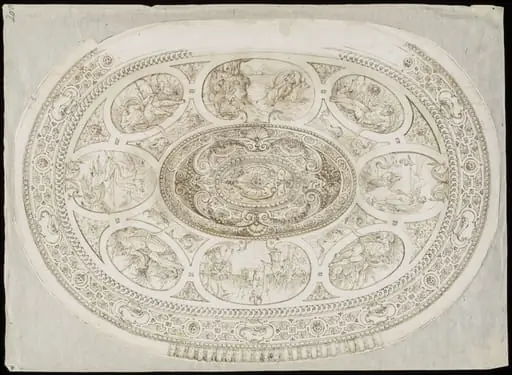 An oval with scenes of the Metamorphoses: The Rape of Europa, the peasants turned into frogs, The Fall of Icarus, Glaucus and Scylla
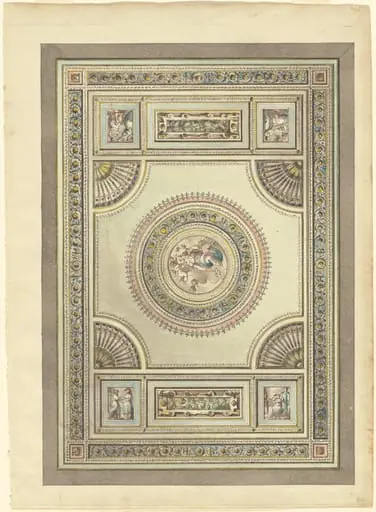 An Ornate Ceiling with an Allegory of Spring
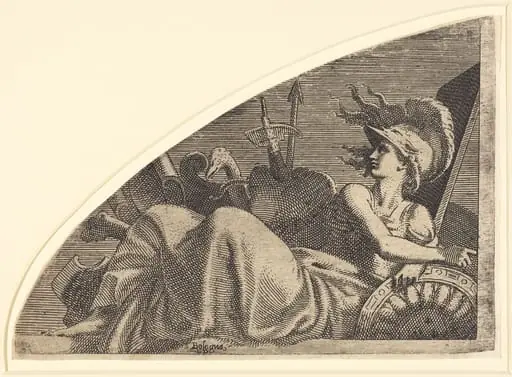 Bellona Seated on Her Trophies
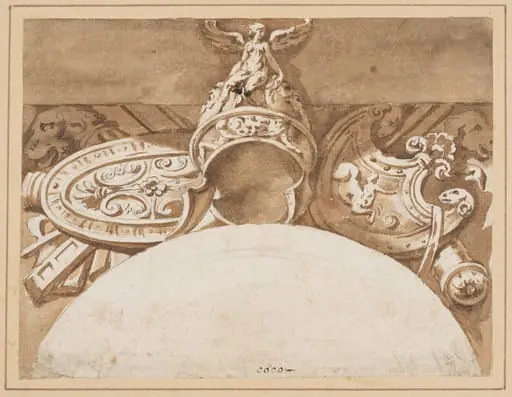 Trophy of arms
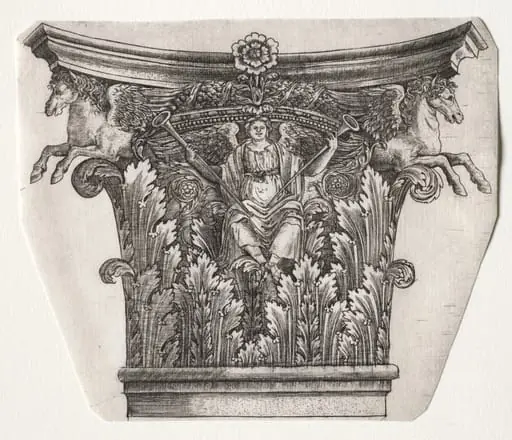 Base and Capital with Figure of Fame and Winged Horses (capital)
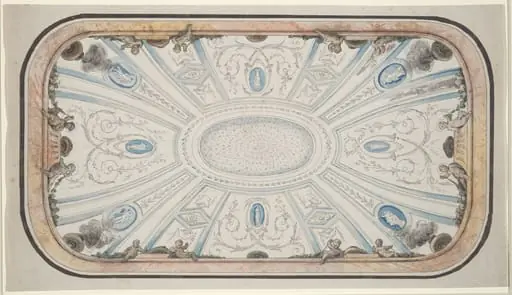 Design for a Ceiling
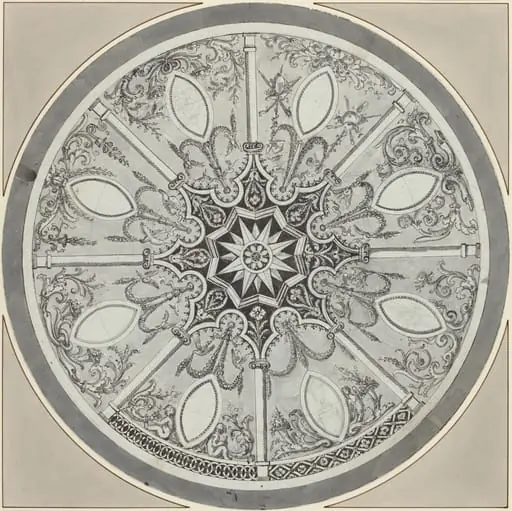 Design for an Inlaid Circular Table Top, with Alternatives
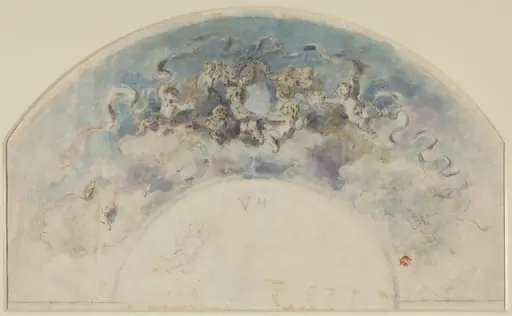 Drawing for a Fan
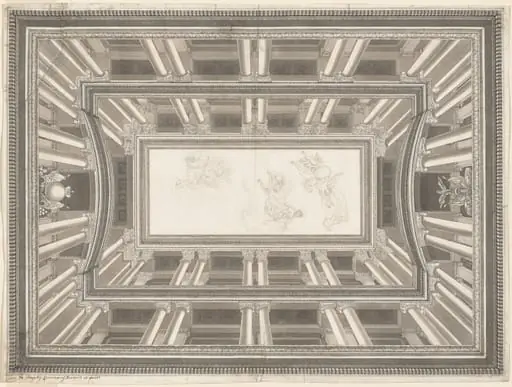 Design for a Trompe-l'oeil Ceiling Decoration
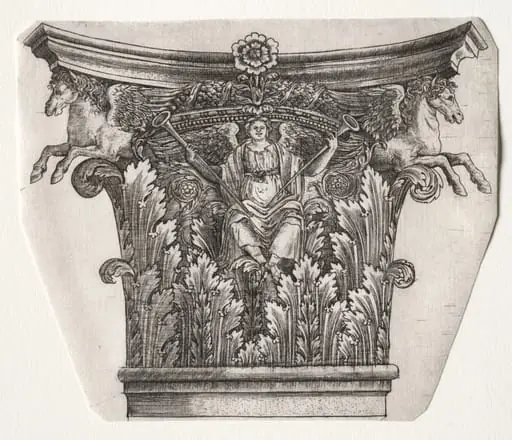 Base and Capital with Figure of Fame and Winged Horses
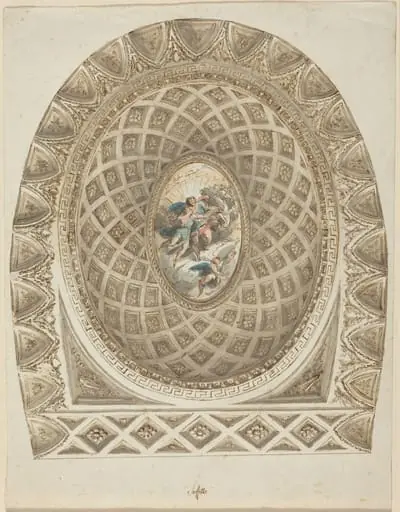 A Coffered Dome with Apollo and Phaeton
 Souvenir of Seville