Artwork
Cabaret of Ramponaux
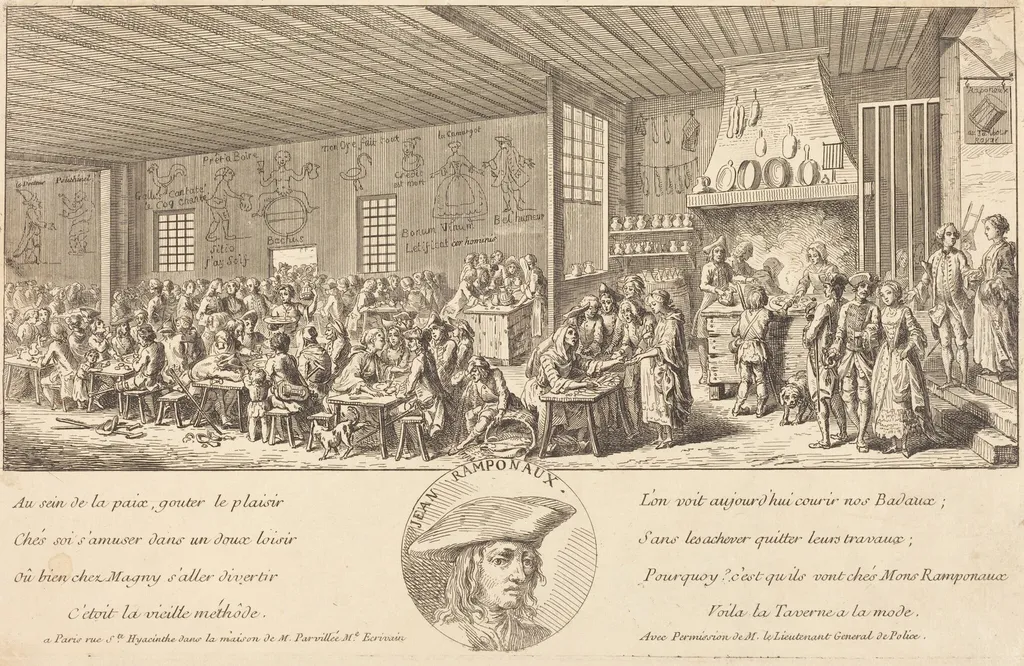
Cabaret of Ramponaux is an ink print by the Romanticist artist French 18th Century. It dates from 1760 and is held in the collection of the National Gallery of Art. This etching depicts a lively tavern interior, rendered with fine lines and dense detail.
About this work
Overview
The scene captures a bustling crowd engaged in eating, drinking, and conversation, centered around a heavily laden table.
This etching depicts a lively tavern interior, rendered with fine lines and dense detail. The scene captures a bustling crowd engaged in eating, drinking, and conversation, centered around a heavily laden table. Decorative wall markings and cluttered shelves suggest a place of informal gathering. A small portrait labeled 'Jean Ramponaux' in the corner implies the establishment’s proprietor, while text at the bottom humorously notes patrons neglecting their duties to be there.
Subject & Meaning
The scene portrays a common 18th-century social space where laborers and townspeople sought respite from daily toil. The inclusion of a dog, varied gestures, and casual attire underscores the informality of the setting. The accompanying text mocks the habit of skipping work for tavern leisure, reflecting contemporary social commentary. The portrait of Ramponaux personalizes the space, possibly asserting ownership or inviting recognition from local viewers.
Technique & Style
Executed in etching on laid paper, the work uses fine, incised lines to build texture and depth. The artist employs dense hatching to suggest shadow and movement, while maintaining clarity amid the crowded composition. The paper’s natural grain subtly enhances the rustic atmosphere. Details like the wall decorations and bottle shapes are rendered with precision, revealing a keen eye for observational detail rather than idealized form.
History & Provenance
The print likely originated in France during the late 1700s, tied to regional tavern culture and printmaking traditions. Its survival suggests it was circulated among middle-class collectors or displayed in domestic settings. The reference to Jean Ramponaux may indicate a real establishment, though no definitive records of the owner or venue have been confirmed. The work remains a rare example of everyday life captured in print form from this period.
Context
In late 18th-century France, taverns served as vital social hubs outside formal institutions. Prints like this reflected growing public interest in scenes of ordinary life, often tinged with satire. The depiction of leisure as a form of social rebellion aligns with broader cultural shifts, as urban populations expanded and print media became more accessible. Such images offered both entertainment and quiet critique of social norms.
Legacy
This etching contributes to a broader tradition of genre scenes in printmaking that documented working-class life with nuance and humor. While not widely known today, it represents a quiet but persistent interest in the mundane, influencing later artists who sought authenticity over grandeur. Its survival offers insight into how ordinary spaces were visually recorded before photography, preserving the rhythm of daily life in pre-industrial Europe.
Artist & collection

Artist
This artist worked in late 18th-century France, making portrait paintings and etched prints.

 L'Infirmerie de l'hospital de la Charite de Paris
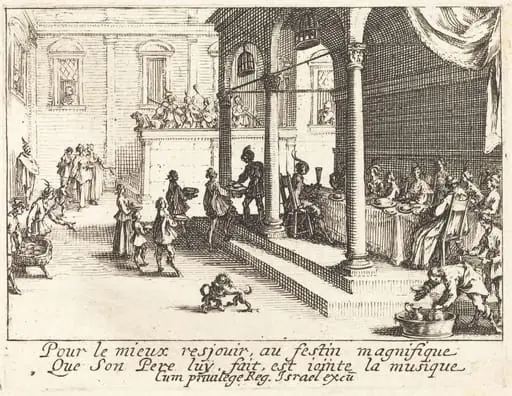
 The Prodigal Son: The Feast in Honor of the Prodigal's Return
 Graveurs en taille douce au burin et à l'eau forte (Copper Plate Engravers and Etchers)
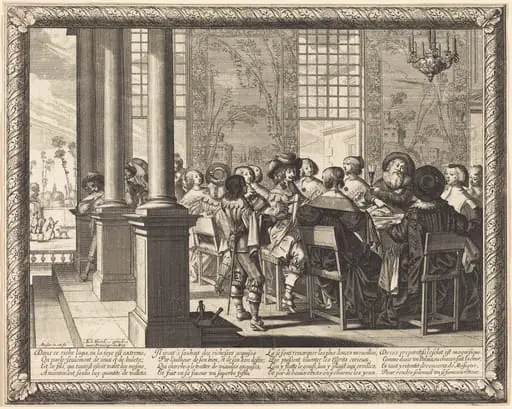 The Feast Celebrating the Return of the Prodigal Son
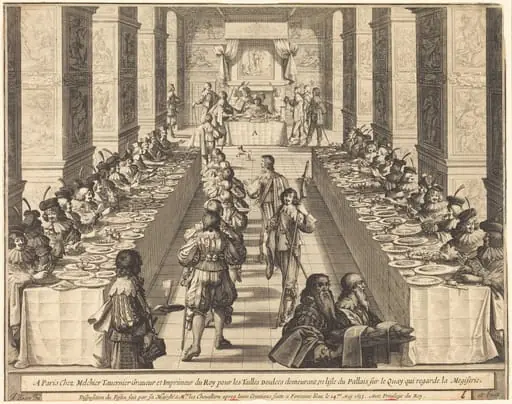 Banquet Given by the King to the New Knights
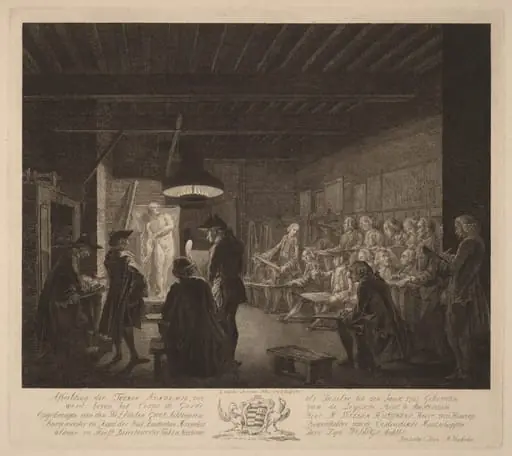 The Drawing Academy in Amsterdam
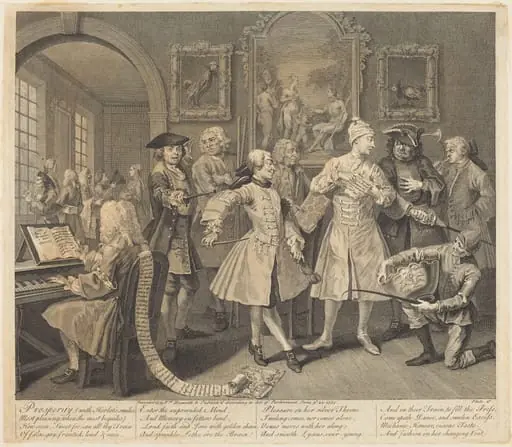 A Rake's Progress: pl.2
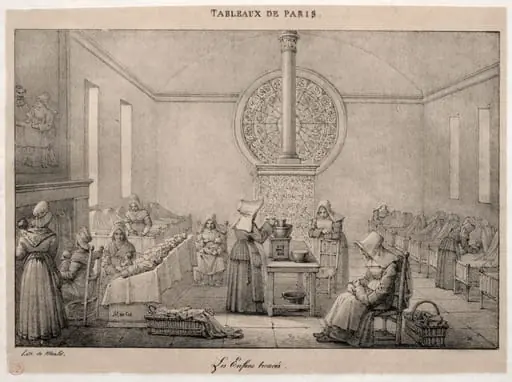 The Foundling Hospital
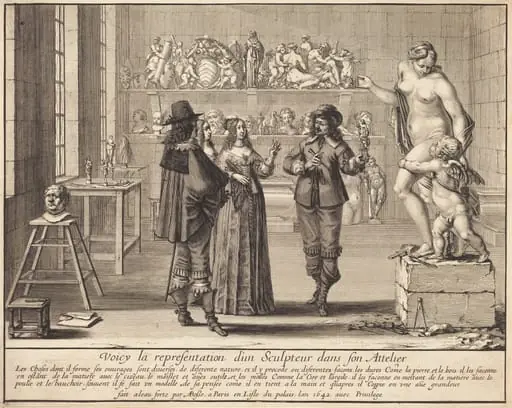 A Sculptor in His Atelier
 Musikgesellschaft
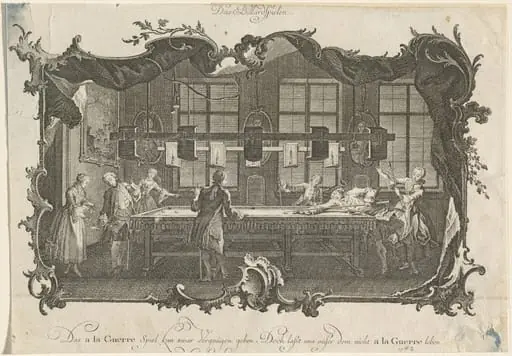 Das Billardspielen (Billiard Players)
 The Feast