Artwork
The Foundling Hospital
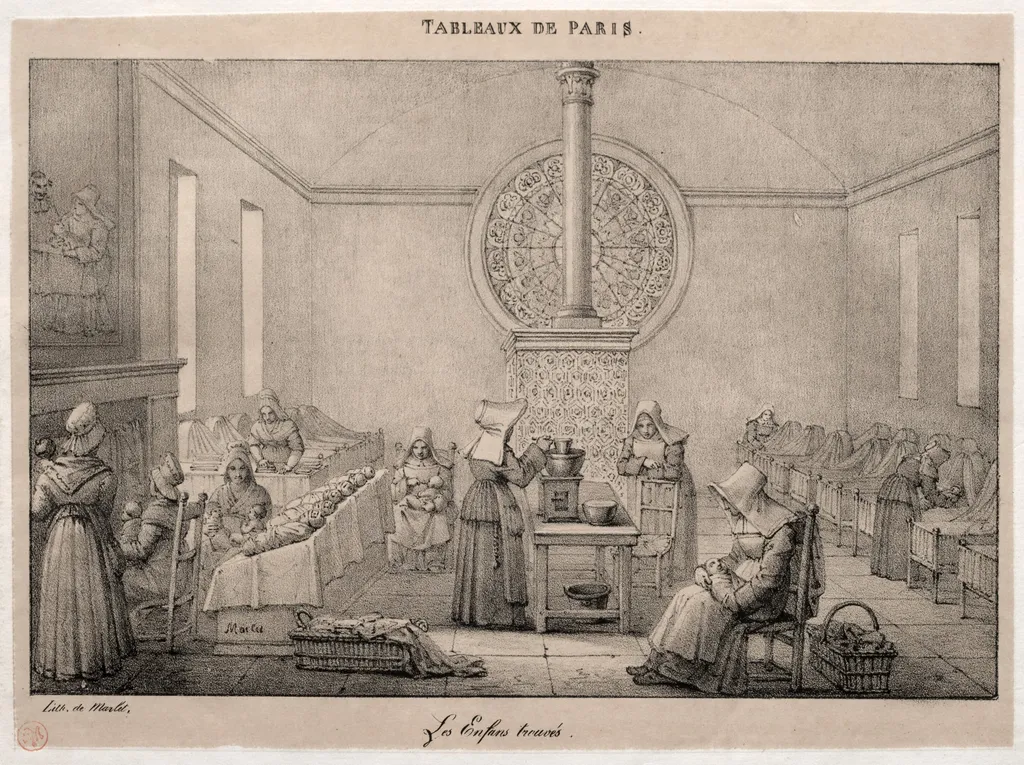
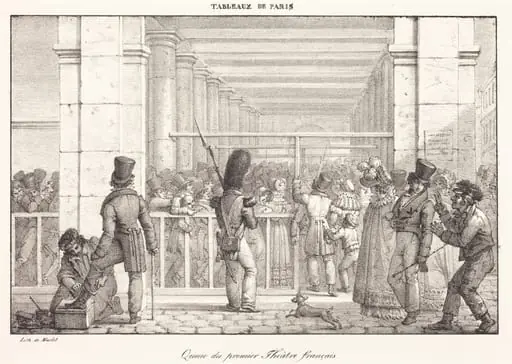
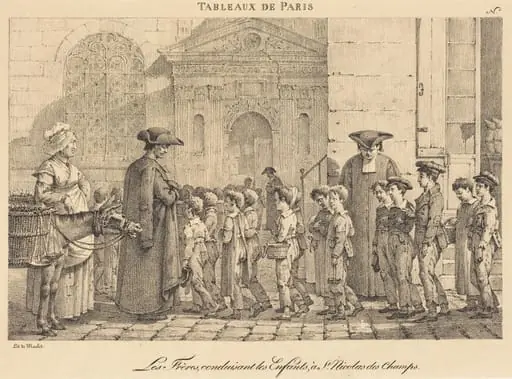
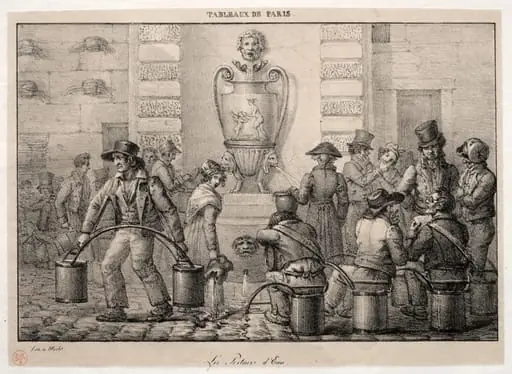
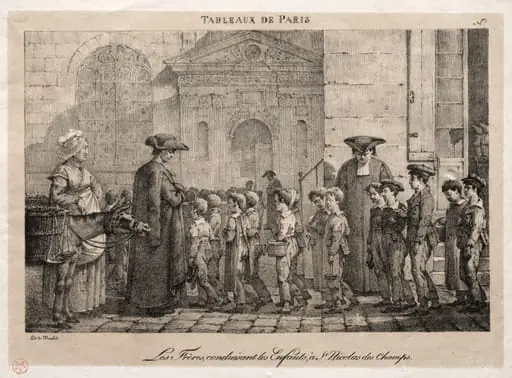
The Foundling Hospital is a print by the Romanticist artist Jean Henri Marlet. It dates from 1824 and is held in the collection of the Cleveland Museum of Art. Created around 1824 by French artist Jean-Henri Marlet, this lithograph portrays an interior scene of a foundling hospital.
About this work
Overview
Marlet, trained in Dijon and later in the studio of Jean-Baptiste Regnault, was among the first French artists to embrace lithography as a medium.
Created around 1824 by French artist Jean-Henri Marlet, this lithograph portrays an interior scene of a foundling hospital. Marlet, trained in Dijon and later in the studio of Jean-Baptiste Regnault, was among the first French artists to embrace lithography as a medium. The work reflects his interest in institutional life and aligns with the social themes favored during the Bourbon Restoration, when public welfare institutions were increasingly depicted in art.
Subject & Meaning
The scene captures the daily operations of a foundling hospital, where abandoned infants are cared for by women in modest attire. Figures are engaged in quiet, routine tasks—feeding, holding, and tending to children and supplies—conveying order amid necessity. The absence of emotional drama suggests a focus on institutional function rather than individual tragedy, reinforcing the hospital’s role as a civic space for communal responsibility.
Technique & Style
Marlet employed lithography to render fine detail and dense composition, arranging numerous figures within a single, high-ceilinged room. The use of line and subtle tonal variation defines the architecture and clothing without heavy shading. The balanced arrangement of figures around a central column creates visual rhythm, while the calm expressions and orderly movements reflect a restrained, documentary approach typical of early 19th-century social observation.
History & Provenance
The print was likely produced in collaboration with publishers such as Lasteyrie or Engelmann, who specialized in lithographic editions during the 1820s. It was part of a broader trend in France to document public institutions as expressions of national values. The work is now held by the Cleveland Museum of Art, where it remains a rare example of Marlet’s graphic work focused on social welfare.
Context
During the Bourbon Restoration, France saw renewed interest in charitable institutions as symbols of moral order after revolutionary upheaval. Foundling hospitals, long established but rarely depicted in art, became subjects of civic pride. Marlet’s image fits within this cultural shift, presenting such spaces not as sites of despair but as orderly, functional elements of the social fabric.
Legacy
Marlet’s lithograph contributes to the early documentation of social institutions through printmaking in France. While not widely known today, it represents a transitional moment in which artists began to treat everyday public life as worthy of artistic attention. The work remains a quiet record of institutional care, offering insight into how society chose to visualize its most vulnerable populations during the early 1800s.
Artist & collection

Artist
Jean-Henri Marlet, aka Jean Henry Marlet (18 November 1771 – 1847), was a French painter and engraver.