Artwork
Le Devin du Village (Colette Weeping)
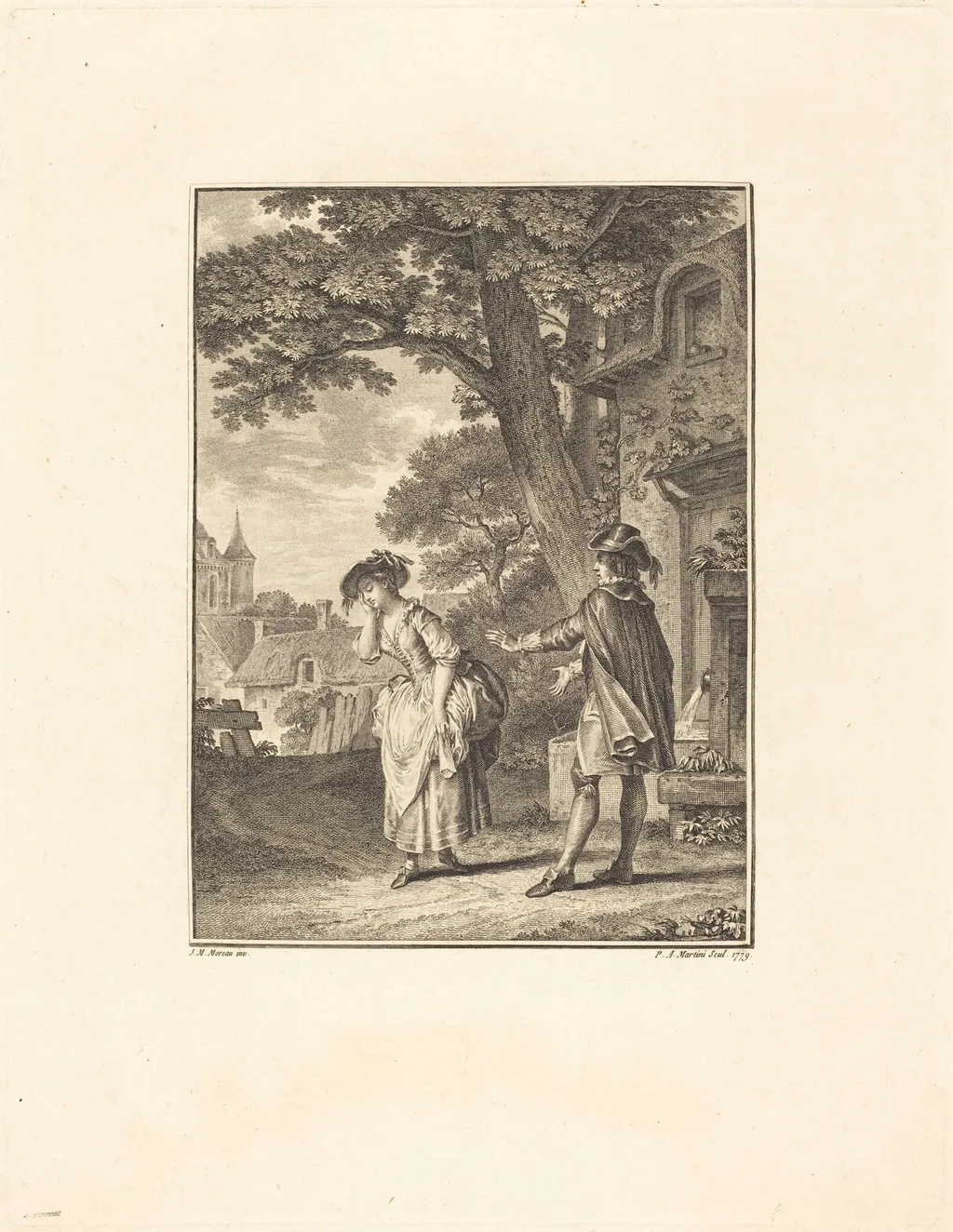
Le Devin du Village (Colette Weeping) is an ink print by the Romanticist artist Pietro Antonio Martini. It dates from 1779 and is held in the collection of the National Gallery of Art.
About this work
Overview
Pietro Antonio Martini’s 1779 print titled *Le Devin du Village (Colette Weeping)* is an engraving executed in black and white. The work depicts a small garden scene in which a formally dressed woman and a gentleman in a long coat share a moment of quiet interaction, framed by a distant house and a church steeple.
Subject & Meaning
The female figure, her hand placed over her chest and her gaze directed downward, conveys a sense of melancholy or contemplation. The male companion, gesturing toward a spot near a tree, appears to be offering an explanation or pointing out something of interest, suggesting a narrative of personal revelation or emotional exchange within an intimate, domestic setting.
Technique & Style
Created through engraving, Martini incised lines directly onto a metal plate, producing a range of delicate hatching and cross‑hatching that render tonal variations without the use of color. The composition balances precise detailing of clothing and architecture with softer, atmospheric treatment of the garden foliage, characteristic of late‑18th‑century printmaking that emphasizes clarity and narrative focus.
History & Provenance
The print was produced in 1779, a period when Martini was active in the Italian engraving market, supplying images for both private collectors and illustrated publications. While specific ownership records are scarce, the work has appeared in several catalogues of 18th‑century Italian prints, indicating its circulation among connoisseurs of the era.
Context
*Le Devin du Village* reflects the Enlightenment‑era interest in everyday scenes that combine genre subjects with subtle moral or emotional undertones. The inclusion of a village church and domestic architecture situates the encounter within a familiar rural environment, aligning the work with contemporary trends that favored accessible, narrative-driven imagery over grand historical subjects.
Artist & collection


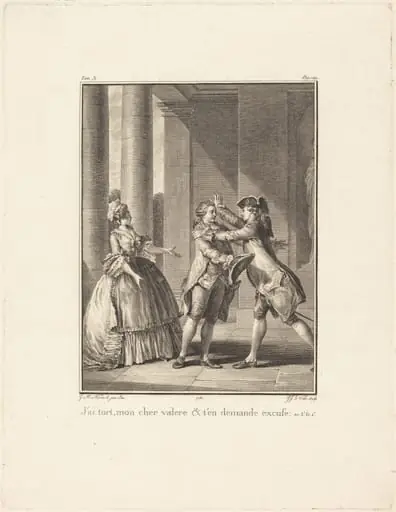 J'ai tort, mon cher Valère, et t'en demande excuse
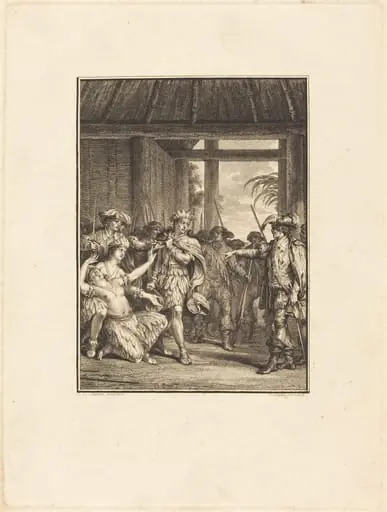
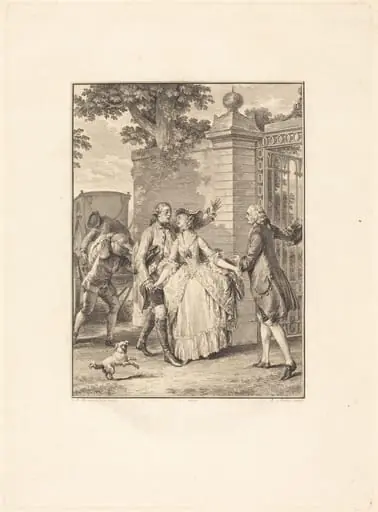 La confiance des belles âmes
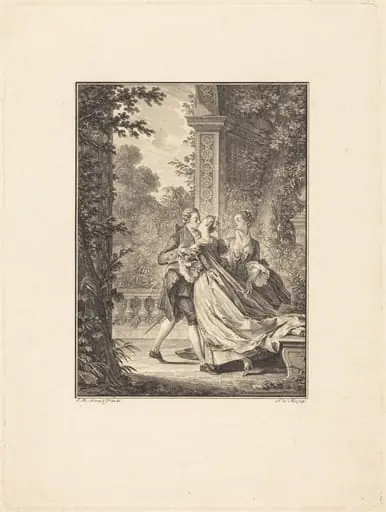 Sans rien comprendre à ce mystere
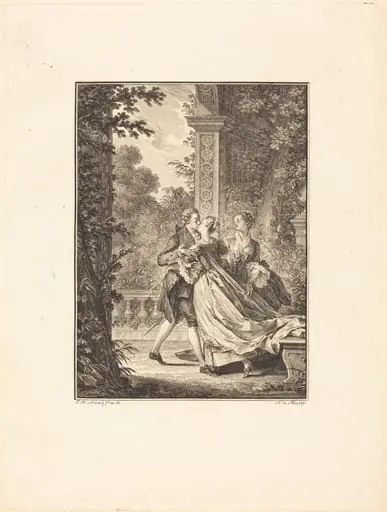 Sans rien comprendre à ce mystère
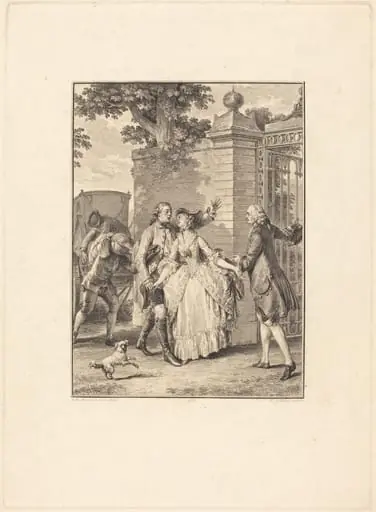 La confiance des belles âmes
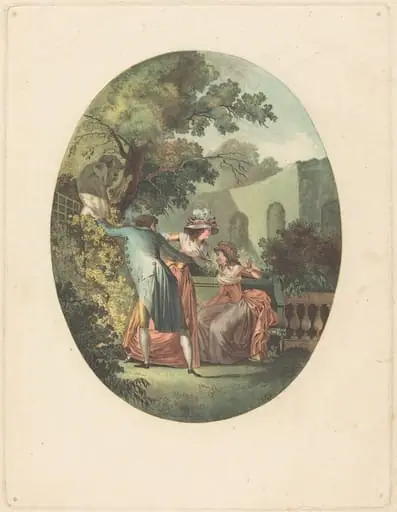 La statue du dieu Pan (Statue of the God Pan)
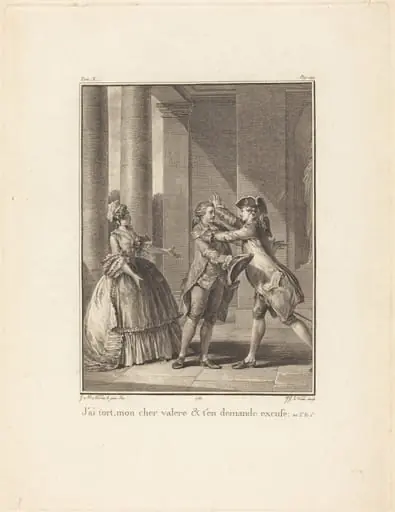 J'ai tort, mon cher Valère, et t'en demande excuse
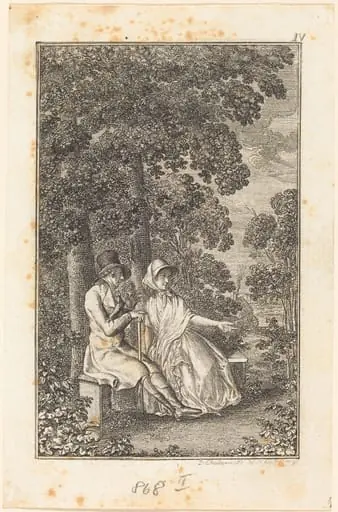 The Voyage to Paris
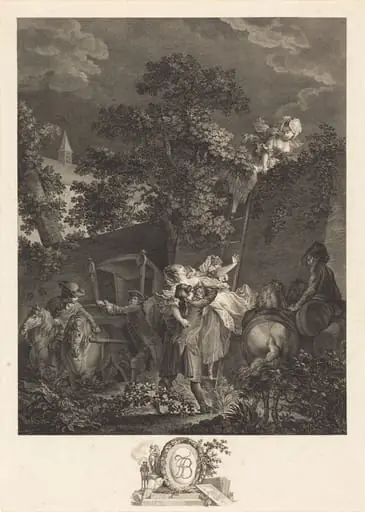 L'enlevement nocturne
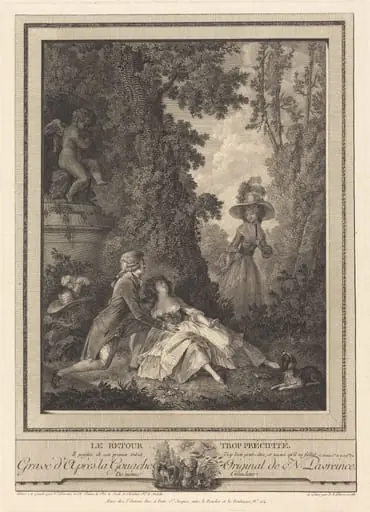 Le retour trop precipite
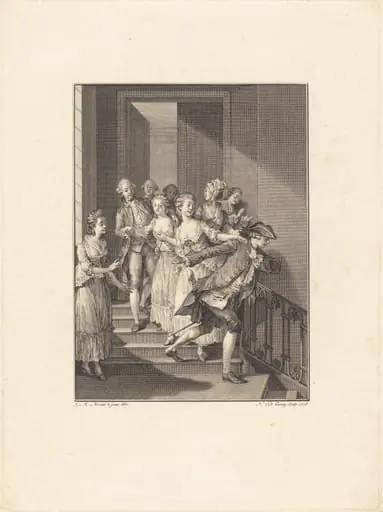 Saint-Preux sort de chez des femmes du monde