Artwork
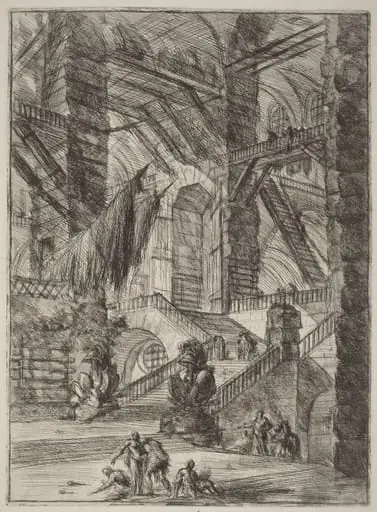
Roman Prison
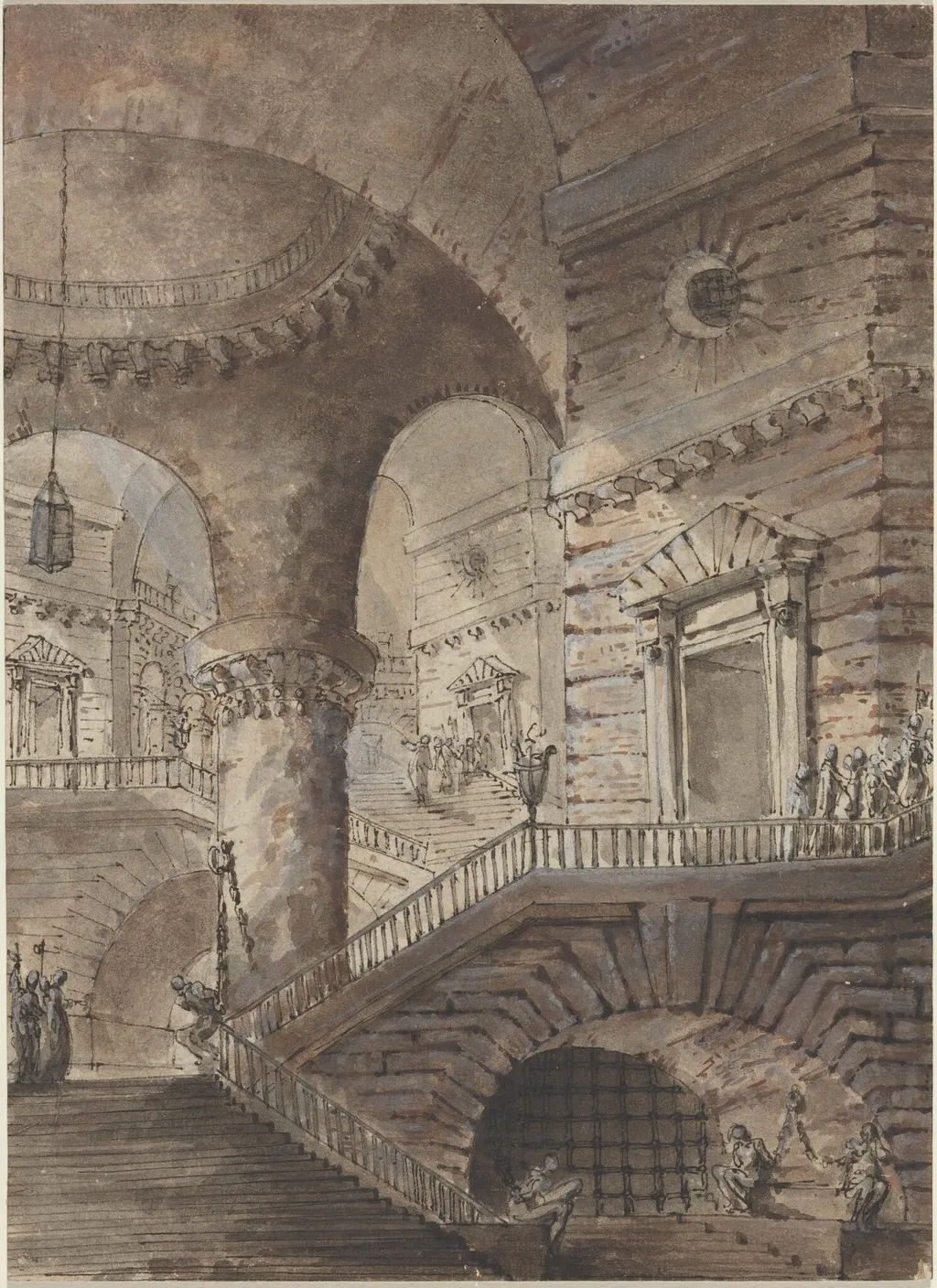
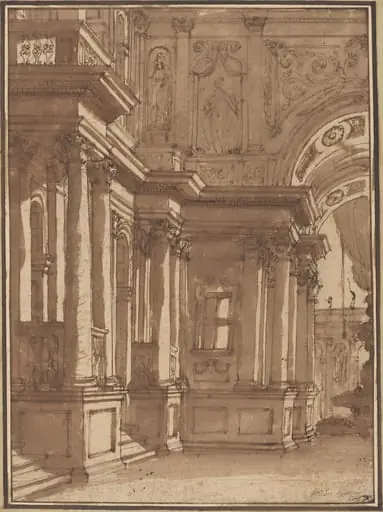
Roman Prison is an ink drawing by the Baroque artist French 18th Century. It dates from 1701 and is held in the collection of the National Gallery of Art.
About this work
Overview
Roman Prison is a drawing executed in pen and black ink, with brown and gray wash, heightened with white gouache, over faint graphite traces on laid paper. The work depicts a sprawling, deteriorating stone structure with dual staircases converging at the center.
Subject & Meaning
The subject is a grand, yet crumbling, ancient Roman architectural space, replete with arches, columns, and a balcony. Human figures are present but diminutive, emphasizing the dominance of the imposing, aged architecture over its occupants.
Technique & Style
The artist employed thin ink lines for delineation and soft brown and gray washes to convey texture and depth. White gouache accents add highlights, while the subtle graphite underlayer provides foundational structure. The overall effect is one of muted, atmospheric rendering.
Context
The drawing's focus on classical, deteriorating architecture suggests an interest in antiquity and possibly the passage of time. The style and medium align with 18th or early 19th-century European artistic practices of documenting and romanticizing ancient ruins.
Legacy
While specific influence or direct legacy of 'Roman Prison' is not detailed here, works like this contribute to the broader tradition of European artists engaging with and preserving the visual heritage of Roman antiquity through detailed, expressive drawings.
Artist & collection

Artist
This artist worked in late 18th-century France, making portrait paintings and etched prints.



 Interior of a Palace
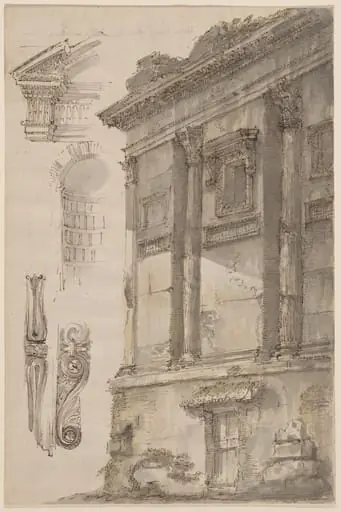 Studies of the Cenotaph of Annia Regilla
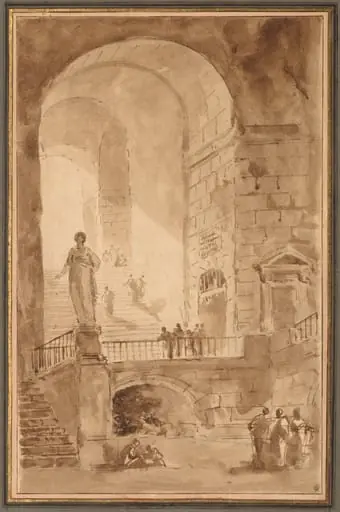 Vaulted Staircase
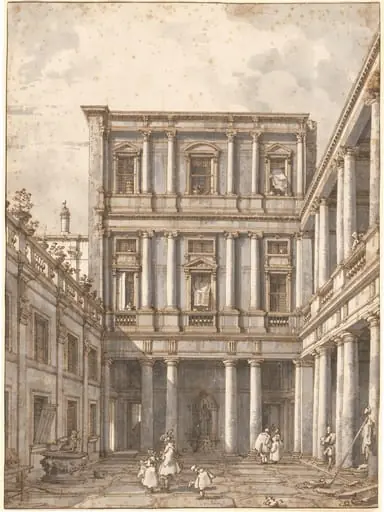 A Venetian Courtyard, in the Procuratie Nuove
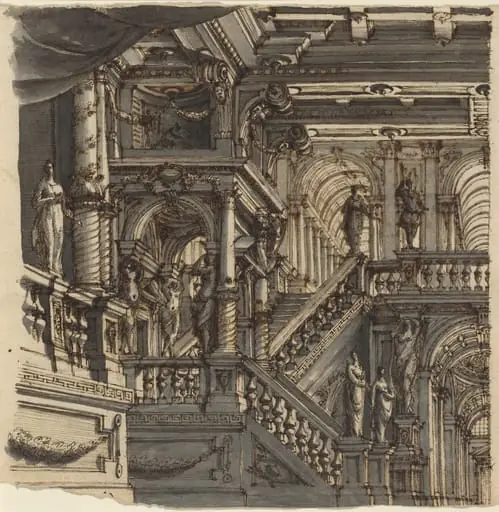 An Elaborate Staircase in a Palace
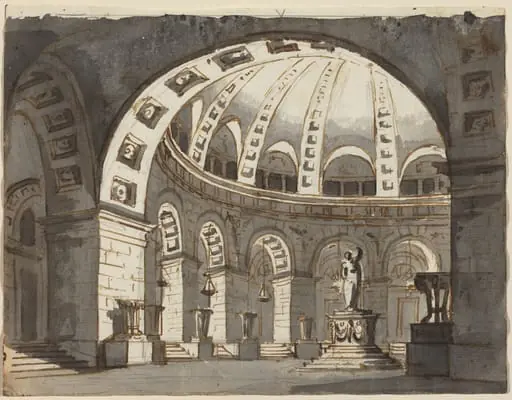 Stage Design
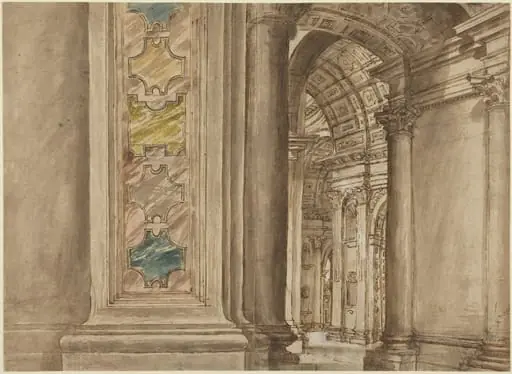 The Interior of Saint Peter's, Rome
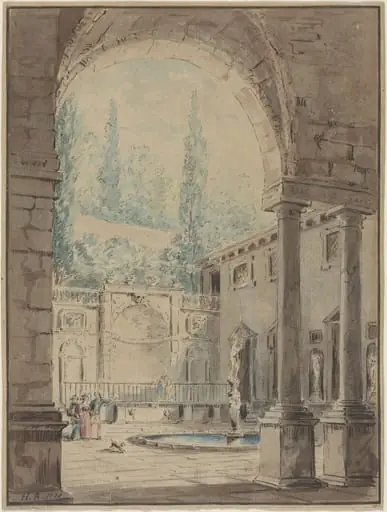 Courtyard of the Villa Pliniana
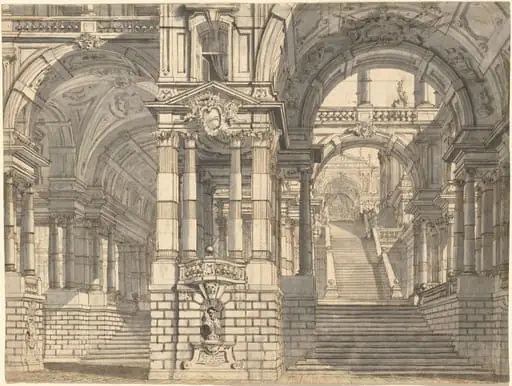 Fantasy of Magnificent Courtyards and Loggie with a Monumental Staircase
 The Staircase with Trophies