Artwork
Vaulted Staircase
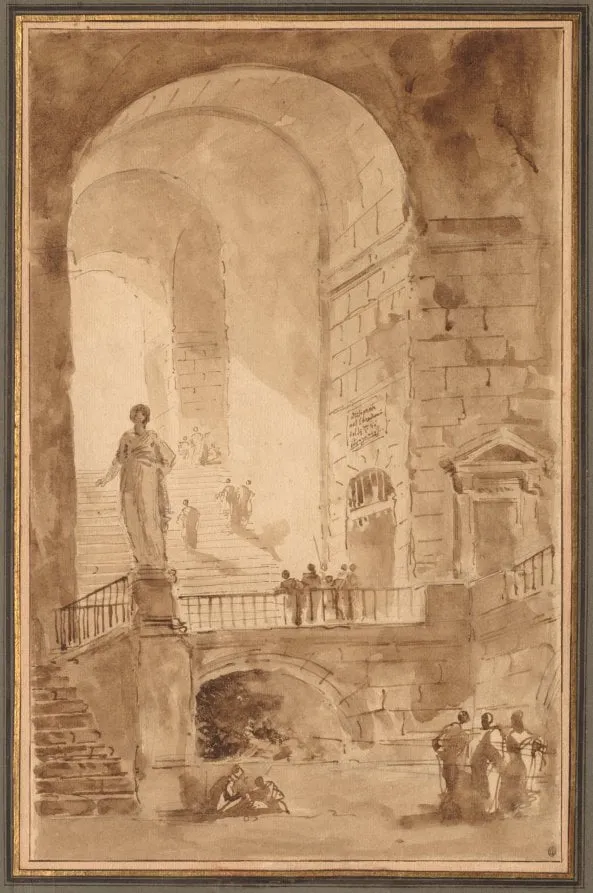
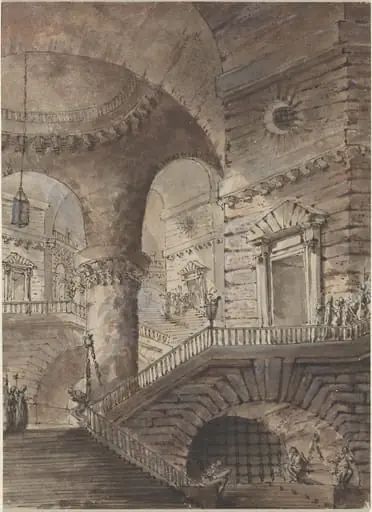
Vaulted Staircase is a drawing by the Romanticist artist Hubert Robert. It dates from 1774 and is held in the collection of the Cleveland Museum of Art. This drawing depicts a dimly lit, spiraling staircase enclosed within a vaulted stone architecture.
About this work
Overview
Executed in pencil and wash, it belongs to a series of architectural fantasies commissioned by Count Alexandre Sergevitch Stroganov during his stay in Paris.
This drawing depicts a dimly lit, spiraling staircase enclosed within a vaulted stone architecture. Executed in pencil and wash, it belongs to a series of architectural fantasies commissioned by Count Alexandre Sergevitch Stroganov during his stay in Paris. The work reflects a fascination with decayed grandeur, rendered with subtle tonal gradations rather than sharp detail, emphasizing atmosphere over literal representation.
Subject & Meaning
The staircase, worn and partially obscured by shadow, evokes a sense of temporal erosion. It is not a real structure but an imagined ruin, symbolizing the passage of time and the quiet decline of once-magnificent spaces. The absence of figures heightens its meditative quality, inviting contemplation rather than narrative engagement, aligning with 18th-century tastes for melancholic antiquity.
Technique & Style
The artist employed soft pencil lines and diluted ink washes to model the stone surfaces, creating a hazy interplay of light and shadow. This use of chiaroscuro avoids dramatic contrast, instead favoring a muted, atmospheric effect. The technique mimics the gradual fading of memory, reinforcing the theme of decay. Details are suggested rather than defined, enhancing the dreamlike ambiguity of the scene.
History & Provenance
Commissioned by Count Alexandre Sergevitch Stroganov during his residence in Paris between 1770 and 1779, the drawing was part of a larger set of architectural studies. These works were intended as decorative pieces for his private collection, reflecting his interest in French artistic trends and classical ruins. The series remained in Russian hands, later entering institutional collections through documented transfers.
Context
In late 18th-century Paris, there was a growing fascination with antiquity and the picturesque ruin, influenced by archaeological discoveries and Enlightenment ideals. Artists like Robert responded by creating idealized, emotionally charged visions of decay. Stroganov’s patronage placed him within this cultural current, bridging Russian aristocratic taste with French artistic sensibilities of the period.
Legacy
The drawing exemplifies a shift in architectural representation—from precise topography to evocative mood. Its influence can be traced in later Romantic depictions of ruins and in the development of atmospheric drawing as an independent art form. Though not widely exhibited in its time, it remains a quiet testament to the aesthetic values of its patrons and the artist’s sensitivity to light and time.
Artist & collection
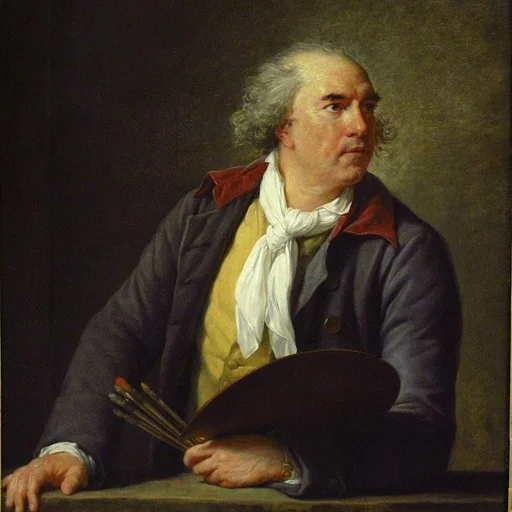
Artist
Hubert Robert (French pronunciation: ; 22 May 1733 – 15 April 1808) was a French painter in the school of Romanticism, noted especially for his landscape paintings and capricci, or semi-fictitious picturesque depictions of ruins in Italy…

 Roman Prison
 Untitled
![Figures on a Monumental Interior Stairway [recto], by Hubert Robert](https://artifactworldgallery.com/img/hubert-robert--figures-on-a-monumental-interior-stairway-recto--6662e6de2172f65b-w320.webp) Figures on a Monumental Interior Stairway [recto]
Figures on a Monumental Interior Stairway [recto]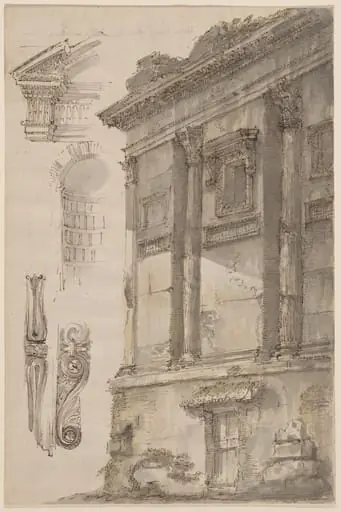 Studies of the Cenotaph of Annia Regilla
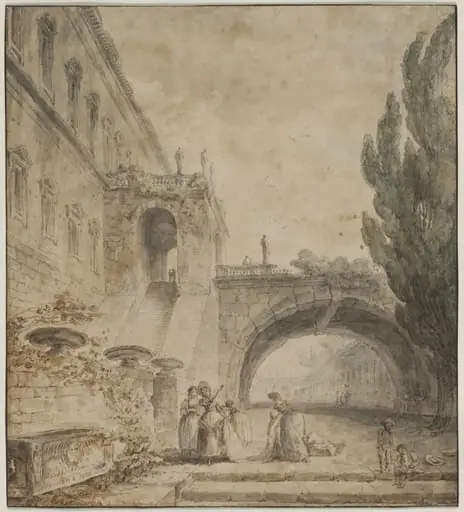 A Palace with an Arched Bridge (A Roman Villa)
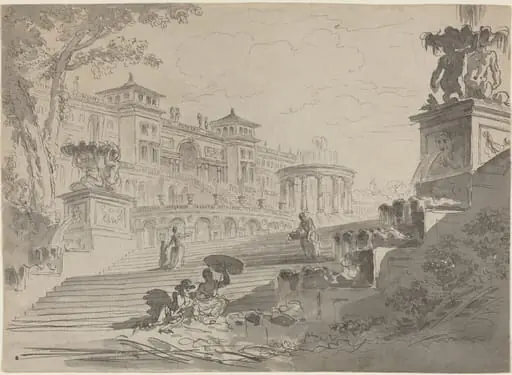 Fantasy on the Villa Medici with Fountains
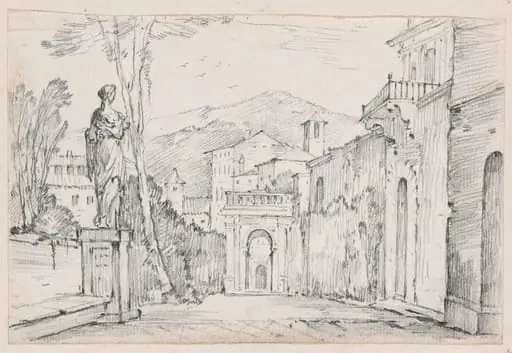 A Roman Street with Monte Cavo in the Distance
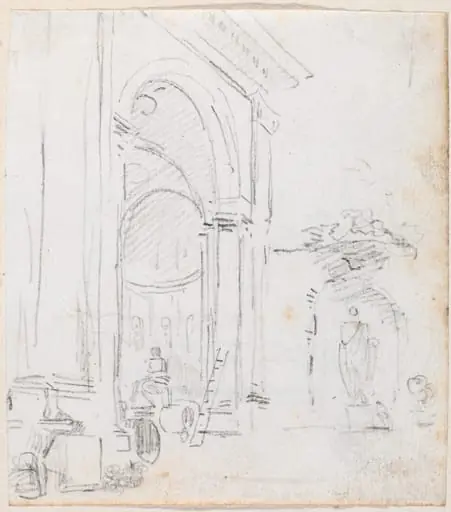 Monumental Arch
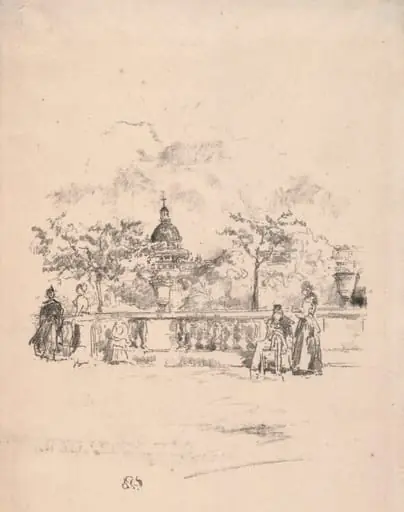 Pantheon from the Terrace of the Luxembourg Gardens
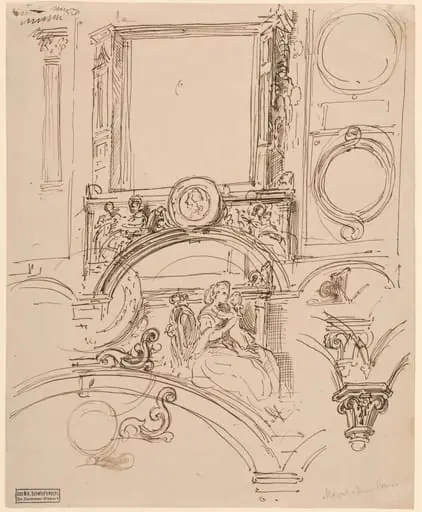 Architectural Details for a Wall Decoration with Empress Maria Theresia Embracing the Young Wolfgang Amadeus Mozart
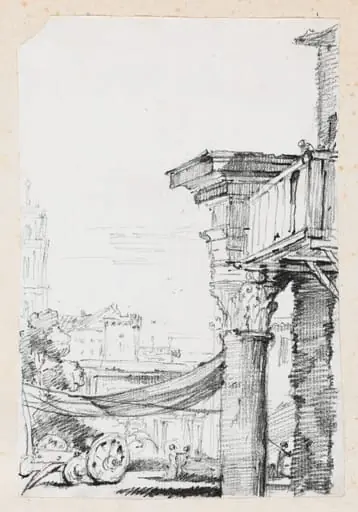 A Balcony in the Roman Forum
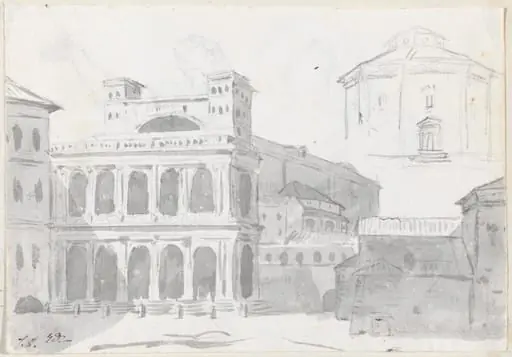 San Giovanni Laterano and a Baptistry