Artwork
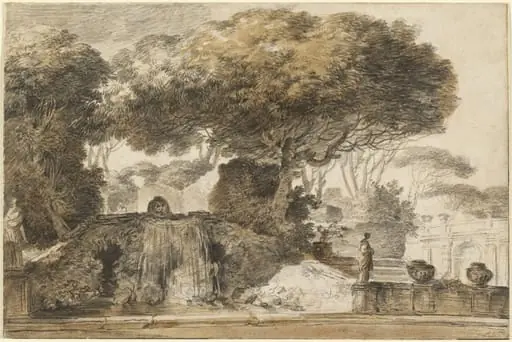
The Fountain
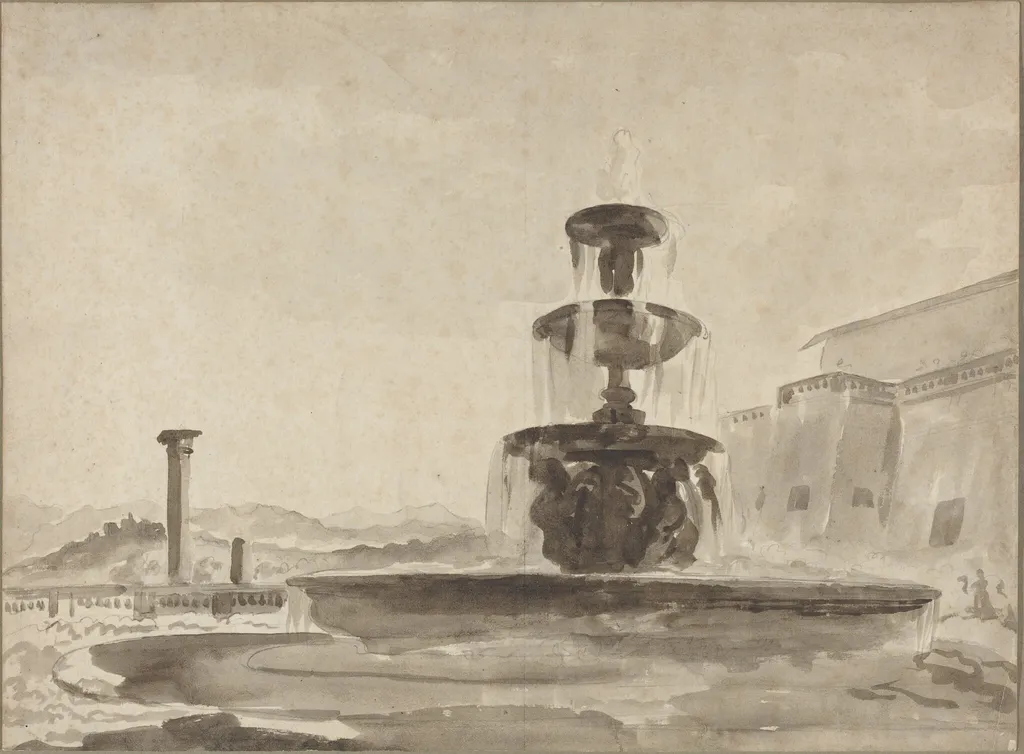
The Fountain is a chalk drawing by the Baroque artist French 18th Century. It dates from 1701 and is held in the collection of the National Gallery of Art. The work is a drawing depicting a stone fountain from which water issues through a lion’s mouth.
About this work
Overview
The work is a drawing depicting a stone fountain from which water issues through a lion’s mouth. Executed with brown wash applied over black chalk, the piece combines diluted ink for tonal shading with darker chalk lines that outline the architectural and sculptural elements, creating a sense of depth on paper.
Subject & Meaning
The central motif is a classical fountain, a common element in public and garden settings, rendered with attention to the ornamental lion that serves as a water spout. The composition emphasizes the interplay of stone texture and flowing water, suggesting a tranquil, ornamental landscape.
Technique & Style
The artist employed a two‑stage process: first laying a brown wash—diluted ink—to establish soft shadows and atmospheric tone, then reinforcing forms with black chalk for sharper definition. This layered approach allows subtle gradations of light while maintaining clear structural outlines, a method typical of preparatory studies in the 19th‑century drawing tradition.
History & Provenance
The drawing is part of the collection of the National Gallery of Art in Washington, D.C. Its acquisition details are recorded by the museum, indicating it entered the institution’s holdings as a representative example of architectural drawing, though the creator’s identity is not specified in the available information.
Artist & collection

Artist
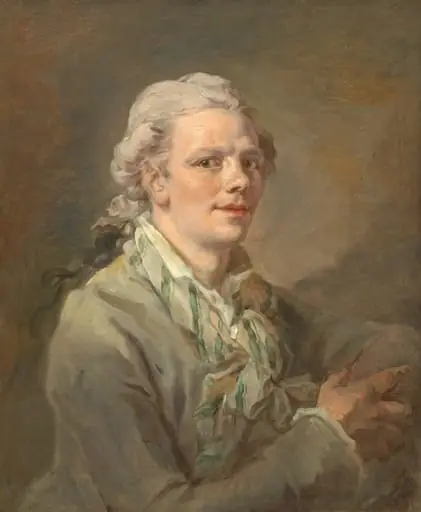
This artist worked in late 18th-century France, making portrait paintings and etched prints.