Artwork
Voltaire
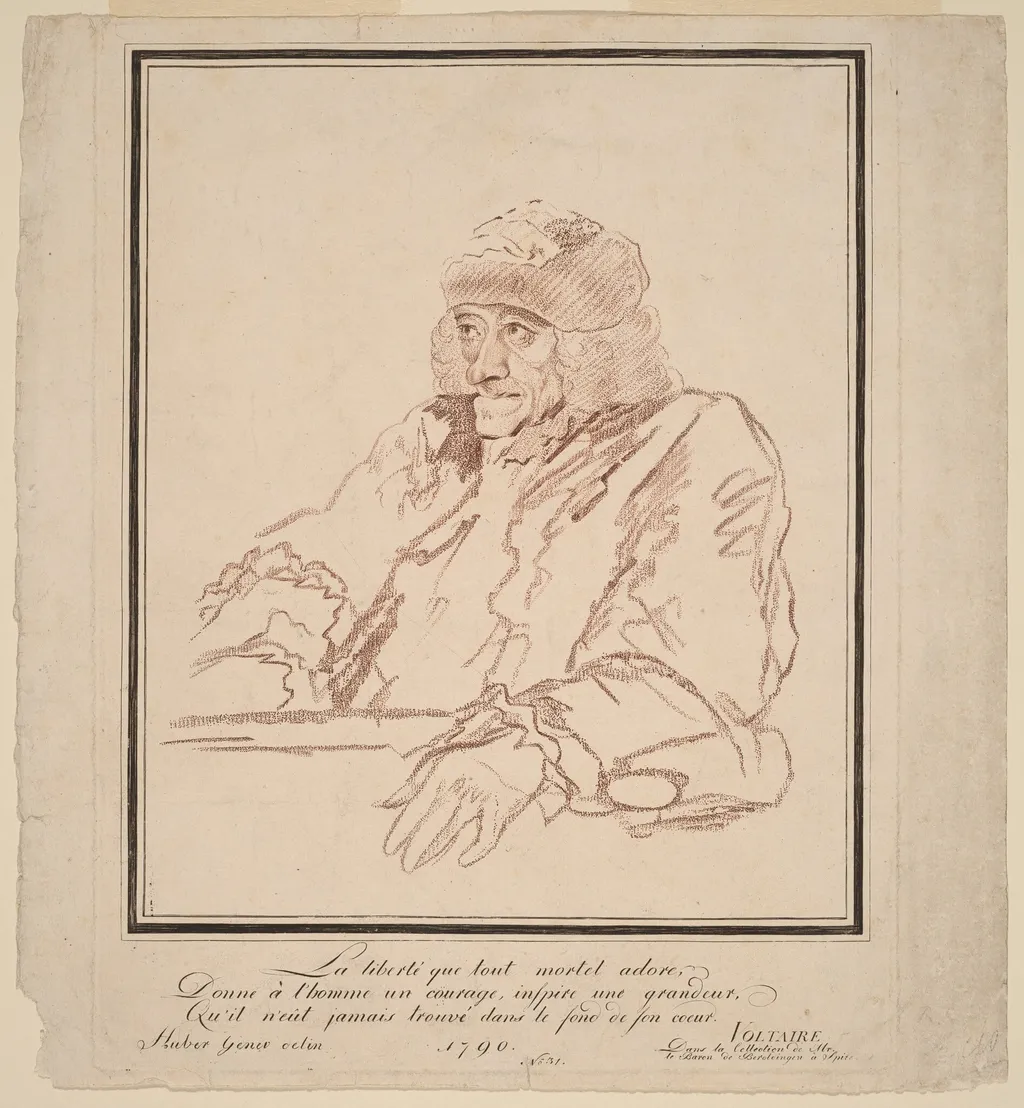
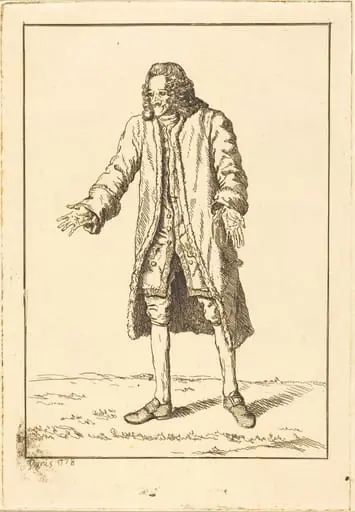
Voltaire is an ink print by the Romanticist artist French 18th Century. It dates from 1790 and is held in the collection of the National Gallery of Art.
About this work
The lines are rough but full of texture, like tiny dots packed together.
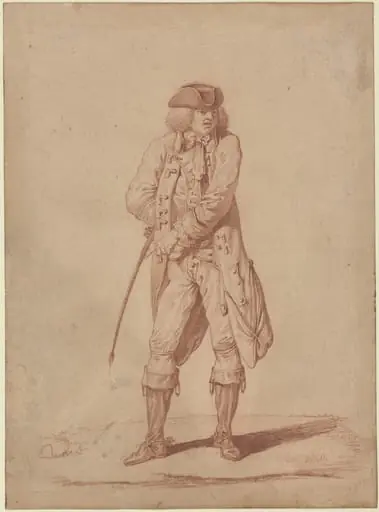
This is a red-brown sketch of a man’s face and shoulders. His hair is curly, and he wears a wide-brimmed hat. The lines are rough but full of texture, like tiny dots packed together. The background is plain, so the face stands out clearly.
The words below are in French, quoting Voltaire himself. The date 1790 is written in the corner—this was made after his death. The technique uses tiny dots to build up shadows and light.
Want to see more? Try looking up engraving.
Overview
This stipple engraving, printed in a reddish-brown hue, depicts the philosopher Voltaire. The portrait shows his face and shoulders, framed by a wide-brimmed hat, with tightly curled hair. A plain background isolates the figure, allowing the textured dot work to define light and shadow across his features.
Technique & Style
Executed with the stipple method, the image builds tonal variation through densely packed dots rather than line drawing. The red ink enhances the subtle gradations, giving the work a warm, almost sepia tone. The rough, tactile quality of the dots creates a sense of depth while retaining a sketch-like immediacy.
Subject & Meaning
The portrait presents Voltaire, the leading Enlightenment writer, with an expression that conveys his intellectual vigor. The inclusion of a French quotation attributed to him underscores his literary legacy, while the straightforward composition focuses attention on his persona rather than narrative context.
History & Provenance
The print bears the date 1790, indicating it was produced posthumously, as Voltaire died in 1778. The timing suggests it was part of a wave of commemorative images that circulated after his death, intended to preserve his image for admirers and scholars.
Context
Stipple engraving gained popularity in the late eighteenth century for its ability to render delicate tonal effects. This work aligns with that trend, employing the technique to capture the likeness of a prominent intellectual figure during a period when printed portraiture was a primary means of disseminating images of notable individuals.
Artist & collection

Artist
This artist worked in late 18th-century France, making portrait paintings and etched prints.