Artwork
Voltaire
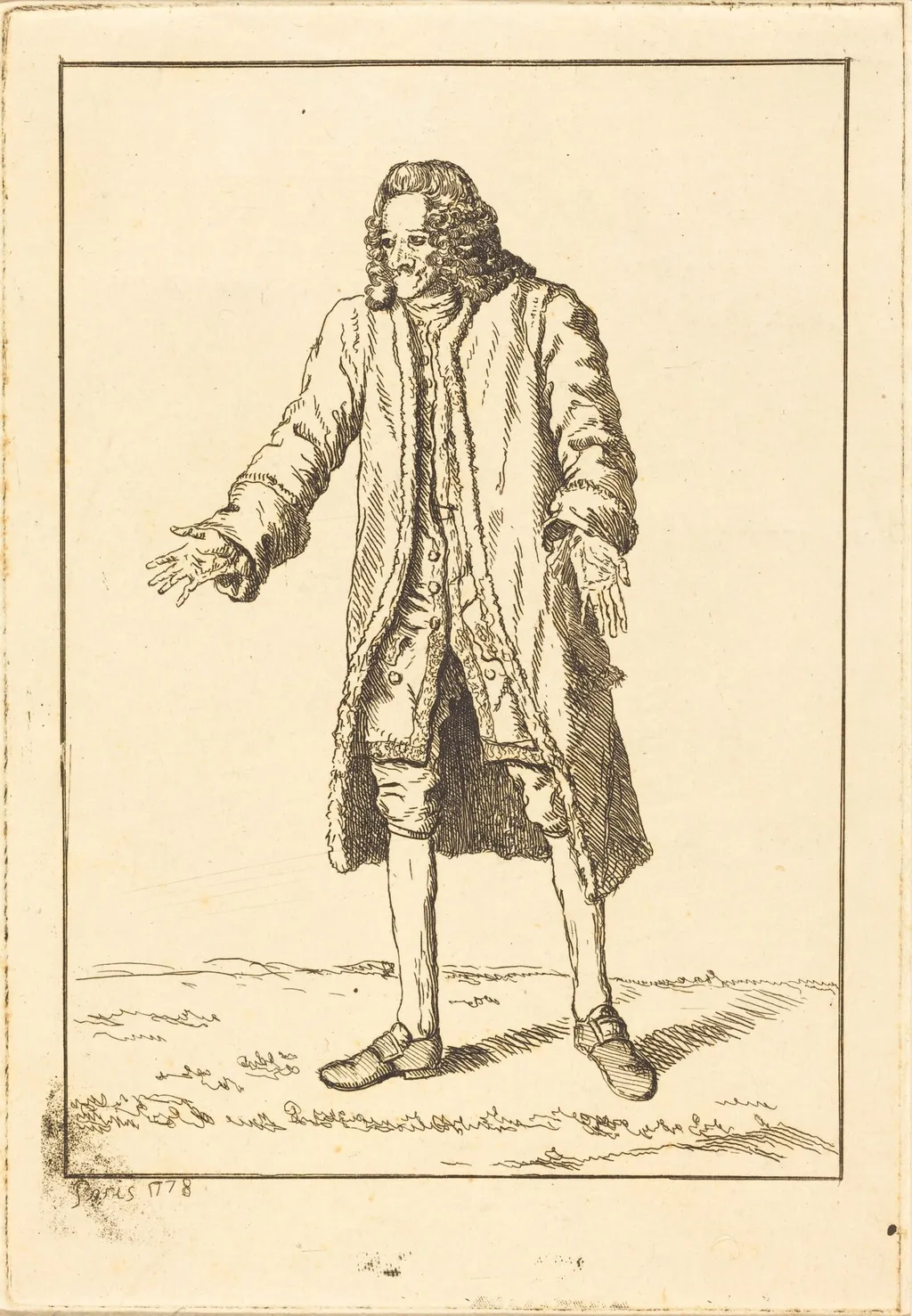
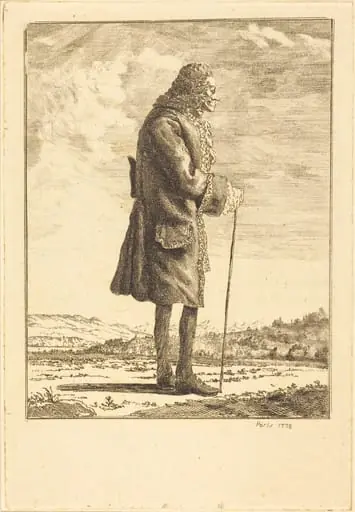
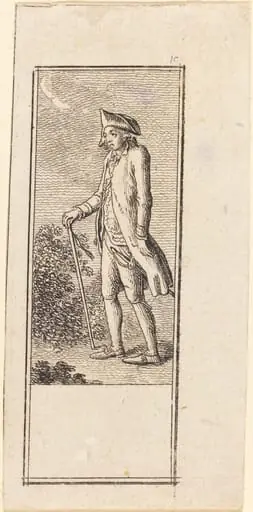
Voltaire is an ink print by the Romanticist artist Jean Huber. It dates from 1778 and is held in the collection of the National Gallery of Art.
About this work
Overview
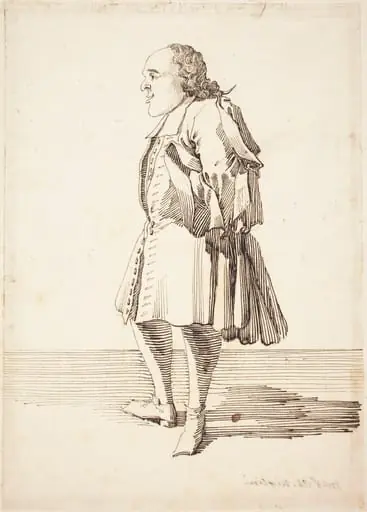
Jean Huber’s 1778 etching presents the Enlightenment philosopher Voltaire in a poised stance, rendered with swift, sketch‑like lines. The print, executed on a plain sheet, shows the thinker in a long, fur‑trimmed coat with prominent buttons, one arm extended, and his feet anchored on a simple ground line. The composition reflects the late‑eighteenth‑century approach to portraiture in print media.
Subject & Meaning
The work captures Voltaire, a central figure of the French Enlightenment, emphasizing his intellectual presence through a dignified posture and elaborate attire. By choosing Voltaire as his subject, Huber aligns himself with the era’s fascination with prominent thinkers, underscoring the philosopher’s cultural significance and the artist’s engagement with contemporary intellectual circles.
Technique & Style
Created by etching, the image relies on rapid, expressive lines that suggest texture—particularly in the fur lining and the fabric of the coat, which appear almost woven. This loose, sketchy handling was typical of the 1770s, allowing the artist to convey immediacy and character while maintaining the reproducibility inherent to printmaking.
History & Provenance
Jean Huber, a Genevan artist known for painting, silhouettes, and varied public roles as soldier, politician, and author, produced the print during a period of active participation in cultural life. While specific ownership records are scarce, the etching stands as a documented example of Huber’s print work and his interaction with notable personalities of his time.
Artist & collection
Artist
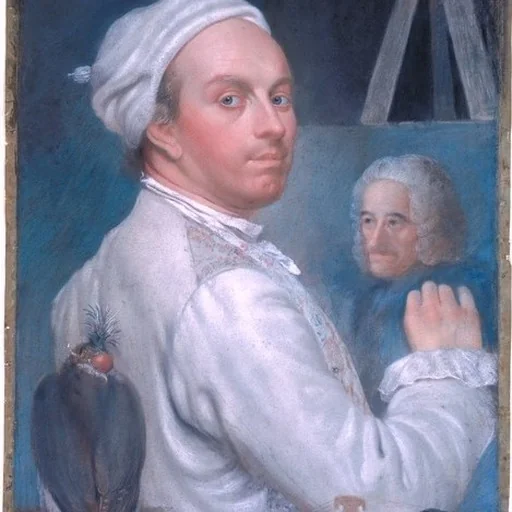
Jean Huber (13 February 1721 – 21 August 1786) was a Genevan painter, silhouettiste, soldier, politician and author, who was a citizen of the Republic of Geneva.