Artwork
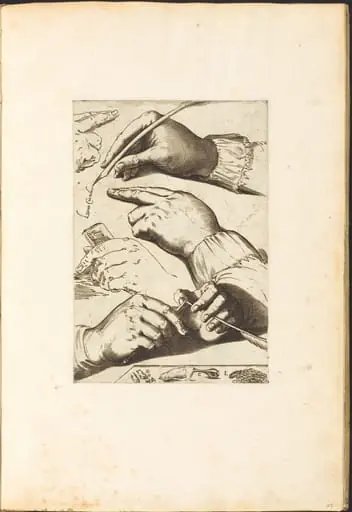
Copy of "Système de Magnée - Veritable Position de la Main et de la Plume" from François Magnée's "Le Parfait calligraphe, ou Méthode pour apprendre soi-même a écrire en peu de leçons"
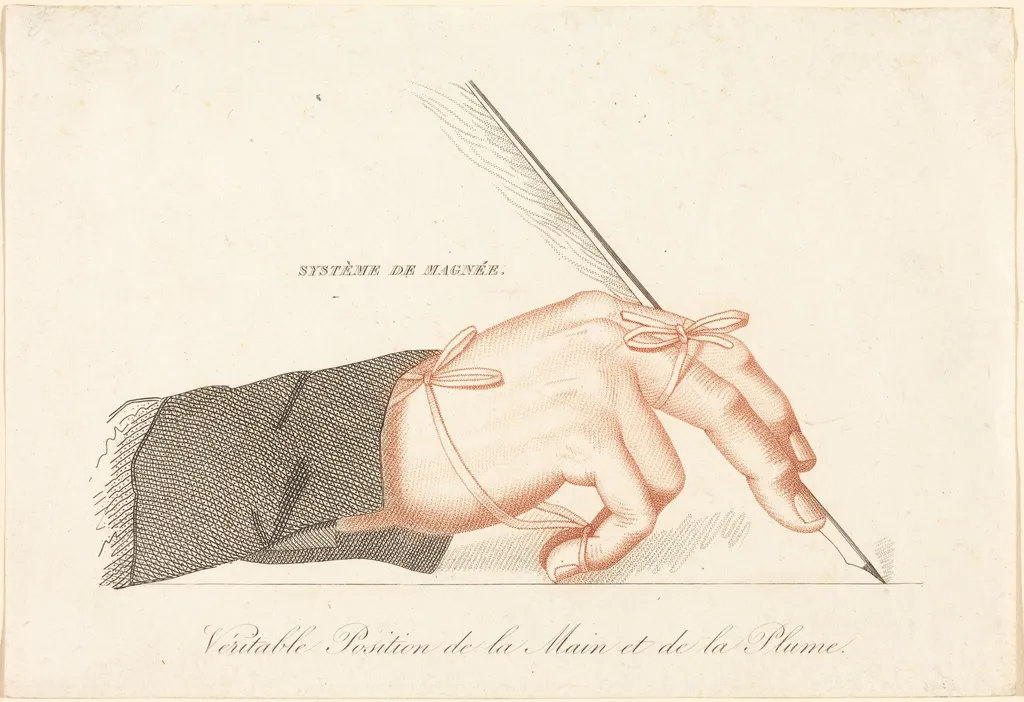
Copy of "Système de Magnée - Veritable Position de la Main et de la Plume" from François Magnée's "Le Parfait calligraphe, ou Méthode pour apprendre soi-même a écrire en peu de leçons" is an ink print by the Romanticist artist French 19th Century. It dates from 1828 and is held in the collection of the National Gallery of Art. The work is a stipple engraving printed in black and red on wove paper, depicting a hand poised with a quill above an empty sheet.
About this work
Overview
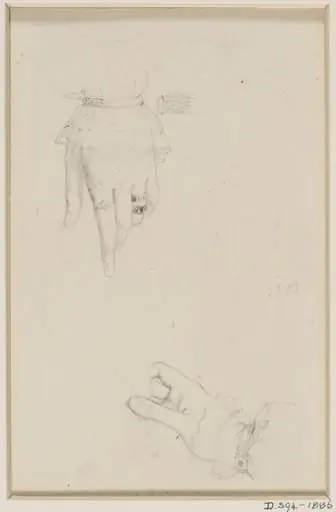
The work is a stipple engraving printed in black and red on wove paper, depicting a hand poised with a quill above an empty sheet. The image is rendered through countless tiny black dots, while the intended writing lines are highlighted in red ink, emphasizing the moment before the first stroke.
Subject & Meaning
The illustration serves as a didactic model for calligraphic practice, showing the exact placement of the hand, fingers, and pen required for an orderly script. By presenting the hand ready to write on a blank page, it underscores the importance of proper posture as the foundation of legible writing.
Technique & Style
Created by stipple engraving, the image relies on a dense field of minute dots to suggest form and shading, a method distinct from line engraving. The addition of red ink to delineate the intended lines introduces a two‑tone contrast that guides the viewer’s eye to the prescribed pen trajectory.
History & Provenance
The plate is a reproduction from François Magnée’s instructional volume "Le Parfait calligraphe, ou Méthode pour apprendre soi‑même à écrire en peu de leçons," a 19th‑century manual that taught aspiring writers to emulate ideal examples. The original print was produced for inclusion in that book, intended for students of penmanship.
Context
During the period when hand‑written correspondence was a primary means of communication, manuals like Magnée’s were essential tools for standardising script. Visual guides such as this engraving provided a concrete reference for learners, reflecting broader educational practices that valued precise, replicable models.
Legacy
While primarily a pedagogical aid, the engraving illustrates the intersection of instructional art and graphic technique, offering modern viewers insight into historic methods of teaching writing. Its precise visual language continues to inform studies of calligraphic pedagogy and printmaking practices.
Artist & collection

Artist
This sculptor liked to keep sharp tools in the studio and blunt ones in his pocket—his niece recalled finding him absentmindedly whittling a stick while talking philosophy.

![Shepard Alonzo Mount, Age Twenty-Three [recto], by William Sidney Mount](https://artifactworldgallery.com/img/william-sidney-mount--shepard-alonzo-mount-age-twenty-three-recto--adf0b3e0763f0137-w320.webp)