Artwork
Young Man Writing by Lamplight
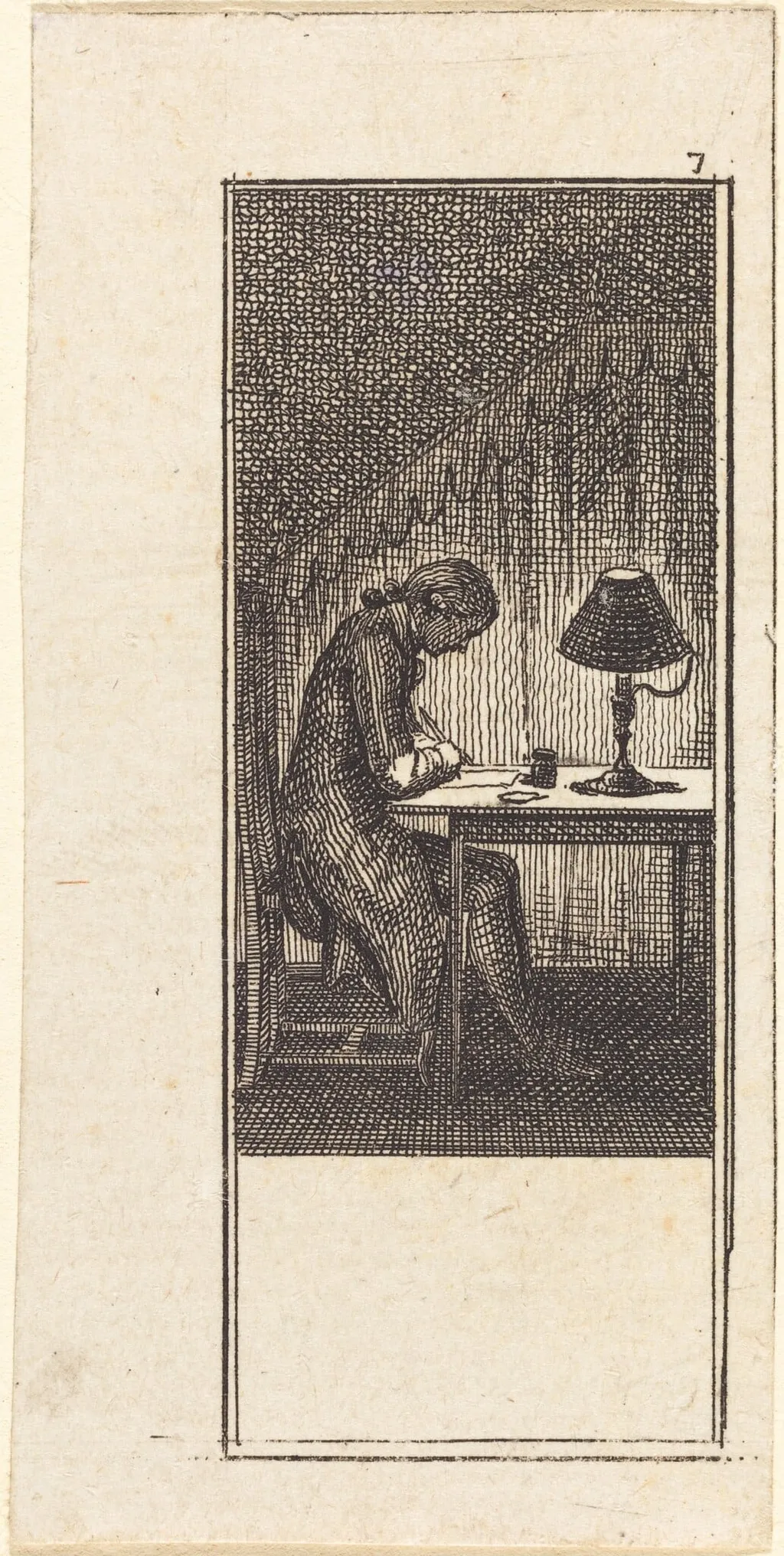
Young Man Writing by Lamplight is an ink print by the Romanticist artist Daniel Nikolaus Chodowiecki. It dates from 1784 and is held in the collection of the National Gallery of Art.
About this work
Overview
Created in 1784, *Young Man Writing by Lamplight* is an etching by Daniel Nikolaus Chodowiecki, a German artist of Huguenot and Polish heritage.
Created in 1784, *Young Man Writing by Lamplight* is an etching by Daniel Nikolaus Chodowiecki, a German artist of Huguenot and Polish heritage. Active primarily in Berlin, where he later directed the Academy of Art, Chodowiecki specialized in printmaking and was known for capturing everyday scenes with quiet precision. This work exemplifies his interest in intimate, contemplative moments rendered through the nuanced possibilities of the etching technique.
Subject & Meaning
The print portrays a young man absorbed in writing, illuminated only by a single lamp. Surrounding him are scattered papers and books, suggesting scholarly or personal labor. His furrowed brow and hunched posture convey concentration, not distress. The scene avoids drama, instead emphasizing solitude and mental engagement. The quiet intensity of the moment reflects Enlightenment ideals of introspection and intellectual pursuit.
Technique & Style
Chodowiecki employed etching to achieve fine, controlled lines that define form without heavy shading. The lamplight is suggested through subtle tonal contrasts, casting soft shadows that define the space without obscuring detail. His use of minimal, deliberate strokes creates a sense of stillness. The composition is tightly framed, focusing attention on the figure and his immediate surroundings, enhancing the intimacy of the scene.
History & Provenance
The print was made during Chodowiecki’s mature period in Berlin, when he was deeply involved in the city’s artistic institutions. While the exact early ownership of this specific impression is undocumented, it aligns with his broader output of domestic and intellectual scenes, widely circulated in prints during the late 18th century. It likely reached audiences through print dealers and private collectors interested in refined, narrative imagery.
Context
In late 18th-century Germany, printmaking flourished as a medium for accessible art, often depicting scenes of daily life. Chodowiecki’s work responded to Enlightenment values that celebrated reason, individual thought, and quiet labor. Unlike grand historical or mythological subjects, his focus on ordinary moments resonated with a growing middle class seeking art that reflected their own experiences and ideals.
Legacy
Chodowiecki’s etchings, including this one, contributed to the elevation of printmaking as a serious artistic medium in Central Europe. His ability to convey psychological depth through simple lines influenced later generations of printmakers. While not widely exhibited today, his works remain studied for their technical restraint and their sensitive portrayal of private intellectual life in the Age of Reason.
Artist & collection
Artist
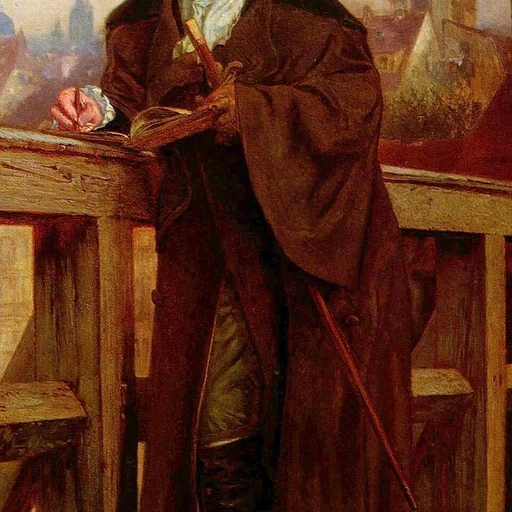
Daniel Niklaus Chodowiecki (16 October 1726 – 7 February 1801) was a German painter and printmaker of Huguenot and Polish ancestry, who is most famous as an etcher.

![Shepard Alonzo Mount, Age Twenty-Three [recto], by William Sidney Mount](https://artifactworldgallery.com/img/william-sidney-mount--shepard-alonzo-mount-age-twenty-three-recto--adf0b3e0763f0137-w320.webp)