Artwork
Tahiti
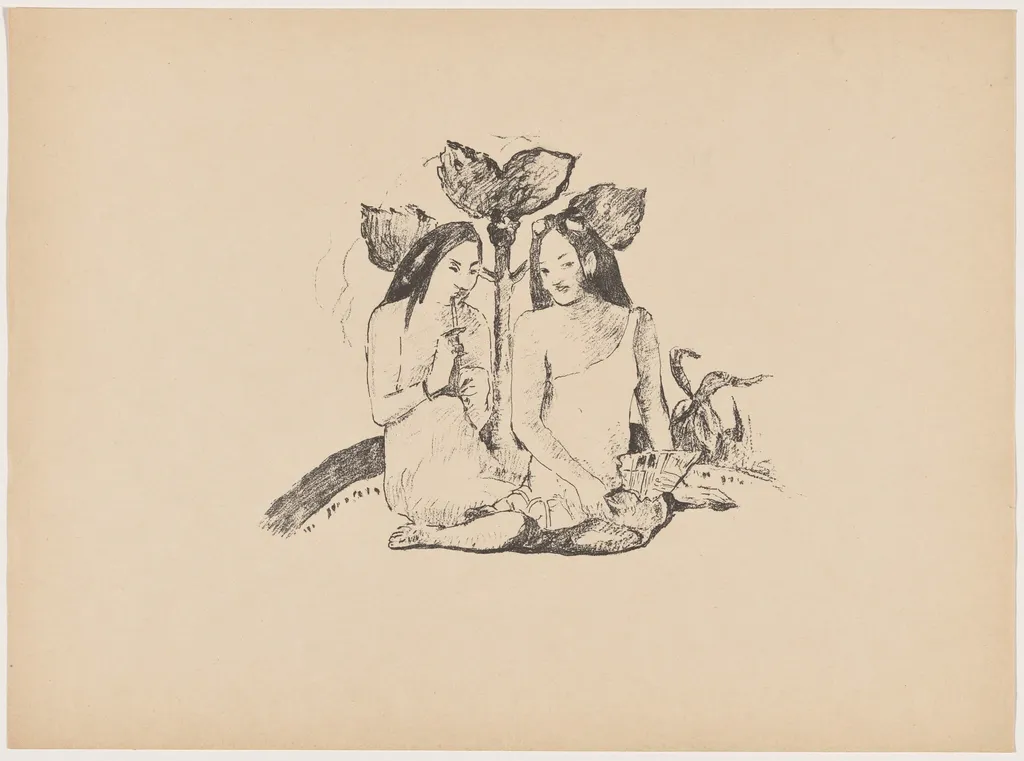
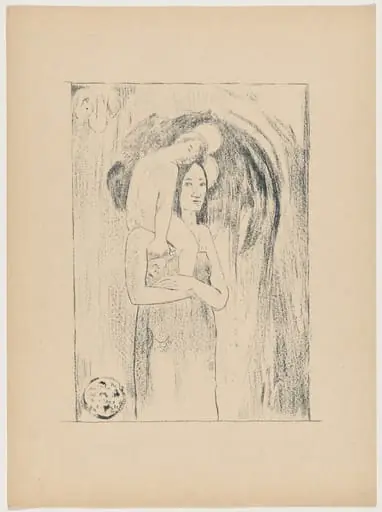
Tahiti is an ink print by the Impressionist artist French 19th Century. It dates from 1895 and is held in the collection of the National Gallery of Art.
About this work
Overview
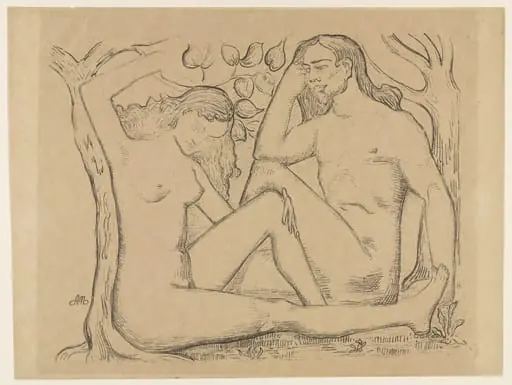
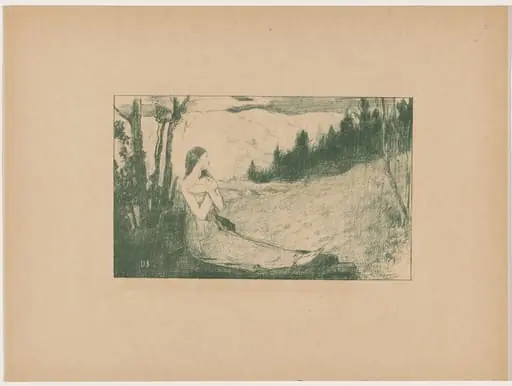
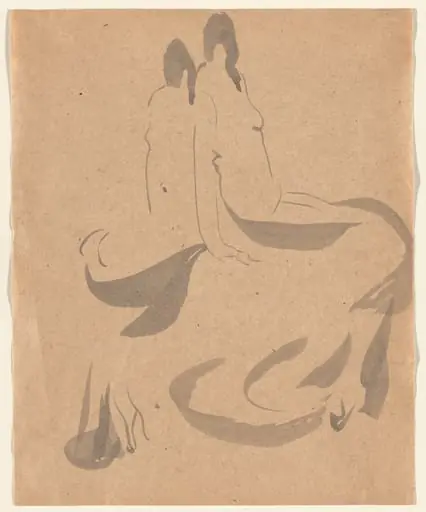
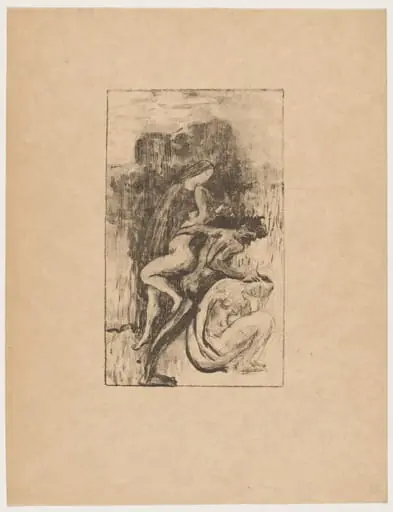
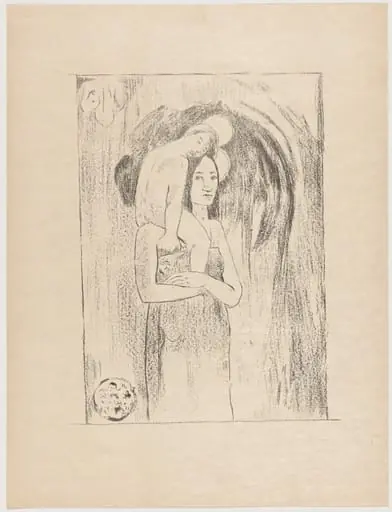
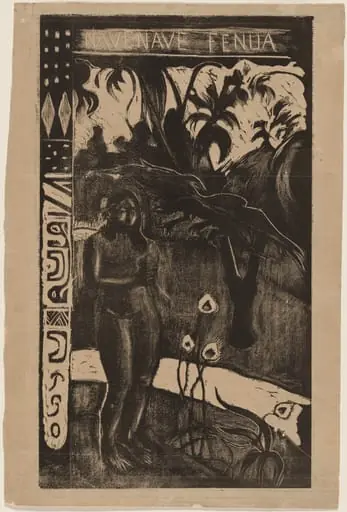
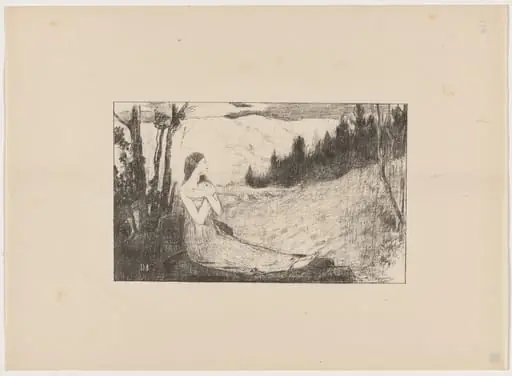
The work titled “Tahiti” is a black lithograph executed on heavy Japan paper. It presents a modest composition of two seated women, a bird on a branch, and a basket placed between them. The image is rendered in loose, sketch‑like lines that convey immediacy, suggesting a moment captured rather than a fully finished tableau.
Subject & Meaning
In the scene, one woman holds a large‑leafed plant aloft, forming a crown‑like shape over her head, while the other rests her hand on her chin, evoking contemplation. The presence of the small bird and the basket adds domestic or natural detail, hinting at a quiet, everyday interaction within a tropical or island setting.
Technique & Style
The piece was produced by lithography, a planographic process in which the artist draws directly onto a flat stone surface with a greasy medium. Ink adheres to the drawn areas and is transferred onto the paper under pressure, allowing for fluid, spontaneous lines that retain the texture of the original sketch.
History & Provenance
The lithograph is listed simply as a print, with no further documented exhibition history or ownership details provided. Its creation on heavy Japan paper suggests a preference for a durable, high‑quality substrate suitable for the fine, yet expressive, line work characteristic of the medium.
Artist & collection

Artist
This sculptor liked to keep sharp tools in the studio and blunt ones in his pocket—his niece recalled finding him absentmindedly whittling a stick while talking philosophy.