Artwork
The Statue of Opportunity and the Passer-by [fol. 8 recto]
![The Statue of Opportunity and the Passer-by [fol. 8 recto], by French early 16th Century, ink, 1514](https://artifactworldgallery.com/img/french-early-16th-century--the-statue-of-opportunity-and-the-passer-by-fol-8-recto--f58e82024ba0577c-w1024.webp)
The Statue of Opportunity and the Passer-by [fol. 8 recto] is an ink drawing by the Renaissance artist French early 16th Century. It dates from 1514 and is held in the collection of the National Gallery of Art.
About this work
Overview
This ink and watercolor drawing on laid paper depicts a surreal architectural structure crowned by a winged figure holding a mirror and a globe. Two men below observe it—one leaning on a staff, the other gesturing upward. The scene, rendered in subtle brown tones with light washes, blends realistic detail with imaginative elements, suggesting allegory rather than literal representation.
Subject & Meaning
The winged figure may symbolize Opportunity, with the mirror reflecting self-awareness and the globe indicating worldly influence.
The winged figure may symbolize Opportunity, with the mirror reflecting self-awareness and the globe indicating worldly influence. The tower’s hybrid architecture—part real, part fanciful—hints at a moral or intellectual puzzle. The two figures below, one passive, one active, could represent differing responses to fleeting chance or insight, inviting viewers to interpret the scene as a cautionary or reflective allegory.
Technique & Style
Executed in pen and brown ink with delicate watercolor shading, the drawing employs fine linear precision to define form while using muted tones to suggest depth without bold contrast. The architectural details are rendered with careful attention, yet deliberately distorted, blending observed reality with whimsical invention. The restrained palette and intimate scale align with Renaissance manuscript illustration practices.
History & Provenance
The work originates from a manuscript folio, likely part of a larger collection of allegorical or didactic illustrations. Its Latin inscriptions suggest a scholarly or humanist context, common in 15th- or 16th-century European codices. Though its exact origin and artist remain unidentified, its style and content place it within the tradition of Northern Renaissance illuminated texts.
Context
Created during a period when visual riddles and moral allegories flourished in manuscript culture, this drawing reflects the era’s fascination with symbolic imagery. Latin texts accompanying such images often encoded philosophical or ethical lessons, intended for educated audiences. Similar motifs appear in emblem books and courtly art, where architecture and figures served as vessels for abstract ideas.
Legacy
Though not widely known today, this drawing exemplifies the Renaissance tendency to merge visual wit with intellectual inquiry. Its blend of realism and fantasy anticipates later traditions of symbolic illustration and allegorical printmaking. As a surviving fragment of a manuscript, it offers insight into how abstract concepts were visually encoded for contemplative reading in pre-modern Europe.
Artist & collection

Artist
A French draftsman from the early 1500s filled sheets of laid paper with tiny, sharp-tongued instructions—ink sketches paired with warnings like “Do Not Eat Your Heart Out” or “Feed Not Things That Have Sharp Claws.”…

!["Do Not Eat Your Heart Out" [fol. 22 recto], by French early 16th Century](https://artifactworldgallery.com/img/french-early-16th-century--do-not-eat-your-heart-out-fol-22-recto--003887c9850175b9-w320.webp) "Do Not Eat Your Heart Out" [fol. 22 recto]
"Do Not Eat Your Heart Out" [fol. 22 recto]![The Calumny of Apelles [fol. 6 recto], by French early 16th Century](https://artifactworldgallery.com/img/french-early-16th-century--the-calumny-of-apelles-fol-6-recto--037fde9ac8dbd27b-w320.webp) The Calumny of Apelles [fol. 6 recto]
The Calumny of Apelles [fol. 6 recto]!["Do Not Make Water on Clippings from Nails or Hair" [fol. 30 recto], by French early 16th Century](https://artifactworldgallery.com/img/french-early-16th-century--do-not-make-water-on-clippings-from-nails-or-hair-fol-30-rec--03ca31c36e5a66b9-w320.webp) "Do Not Make Water on Clippings from Nails or Hair" [fol. 30 recto]
"Do Not Make Water on Clippings from Nails or Hair" [fol. 30 recto]!["You Are Tying a Dolphin by the Tail" [fol. 17 recto], by French early 16th Century](https://artifactworldgallery.com/img/french-early-16th-century--you-are-tying-a-dolphin-by-the-tail-fol-17-recto--0abe83abfb5ccd1d-w320.webp) "You Are Tying a Dolphin by the Tail" [fol. 17 recto]
"You Are Tying a Dolphin by the Tail" [fol. 17 recto]!["Feed Not Things That Have Sharp Claws" [fol. 38 recto], by French early 16th Century](https://artifactworldgallery.com/img/french-early-16th-century--feed-not-things-that-have-sharp-claws-fol-38-recto--1f28115410528631-w320.webp) "Feed Not Things That Have Sharp Claws" [fol. 38 recto]
"Feed Not Things That Have Sharp Claws" [fol. 38 recto]![A Courtier Standing Between Covetousness and Dissimulation [fol. 14 recto], by French early 16th Century](https://artifactworldgallery.com/img/french-early-16th-century--a-courtier-standing-between-covetousness-and-dissimulation-f--2578f4fe9846edc2-w320.webp) A Courtier Standing Between Covetousness and Dissimulation [fol. 14 recto]
A Courtier Standing Between Covetousness and Dissimulation [fol. 14 recto]![A Fool Feeding Flowers to Swine [fol. 42 recto], by French early 16th Century](https://artifactworldgallery.com/img/french-early-16th-century--a-fool-feeding-flowers-to-swine-fol-42-recto--27579a7c495e1682-w320.webp) A Fool Feeding Flowers to Swine [fol. 42 recto]
A Fool Feeding Flowers to Swine [fol. 42 recto]!["You Are Shooting at Heaven" [fol. 9 recto], by French early 16th Century](https://artifactworldgallery.com/img/french-early-16th-century--you-are-shooting-at-heaven-fol-9-recto--28e4ef6e8d8a696d-w320.webp) "You Are Shooting at Heaven" [fol. 9 recto]
"You Are Shooting at Heaven" [fol. 9 recto]
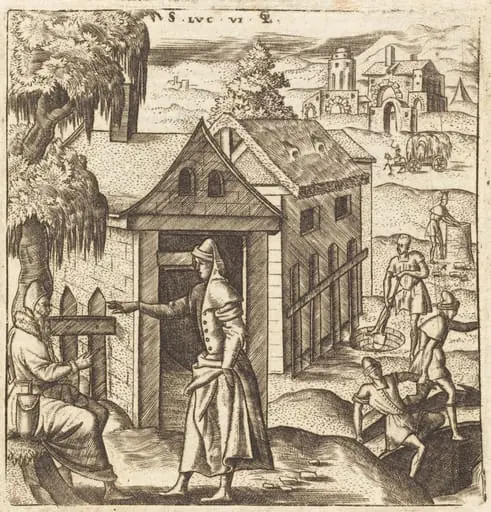 The Parable of the Blind Man
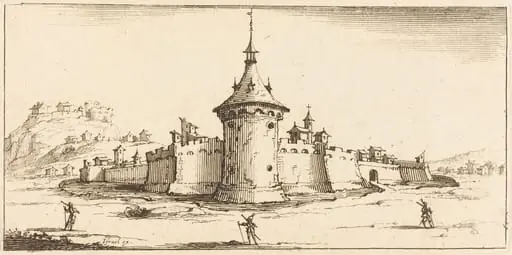 Landscape
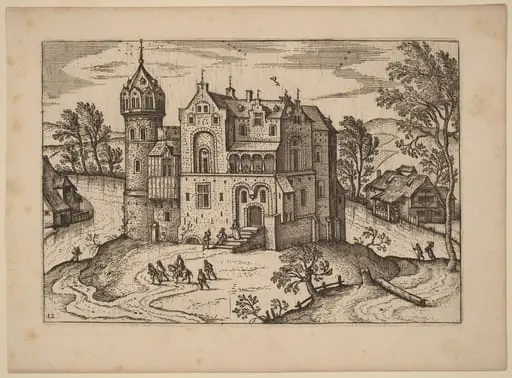 Castle by a River
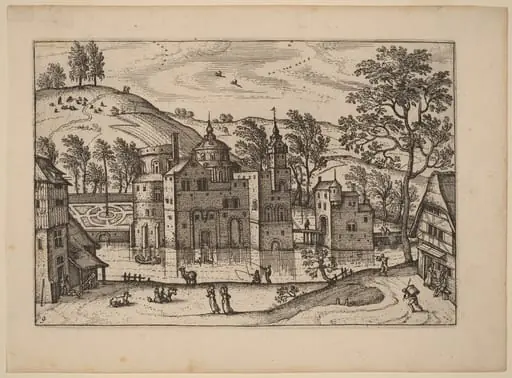 Castle with a Moat
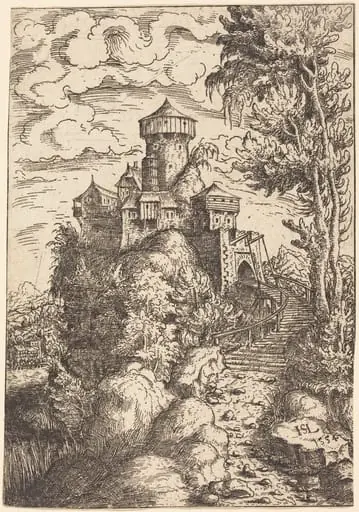 Landscape with a Fortress and Big Stairway
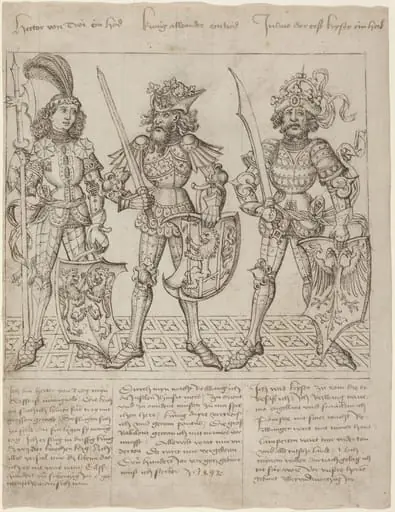 Hector of Troy, Alexander the Great and Julius Caesar
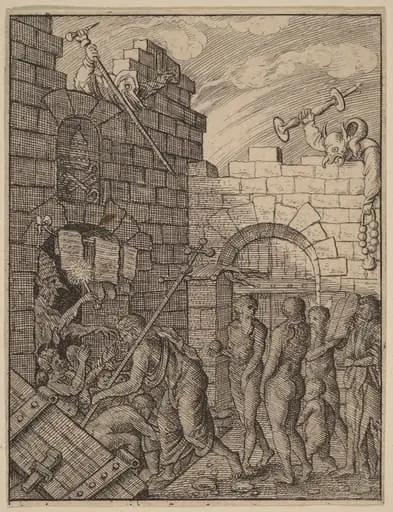 Descent into Hell
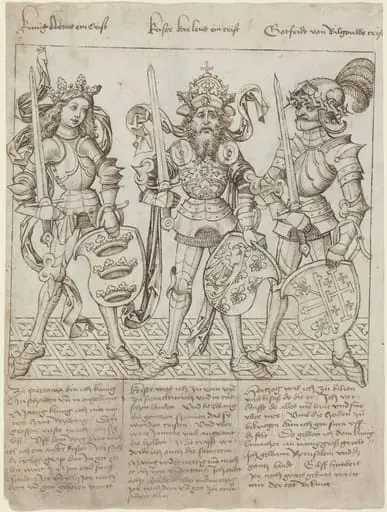 King Arthur, Charlemagne and Godfrey of Boulogne
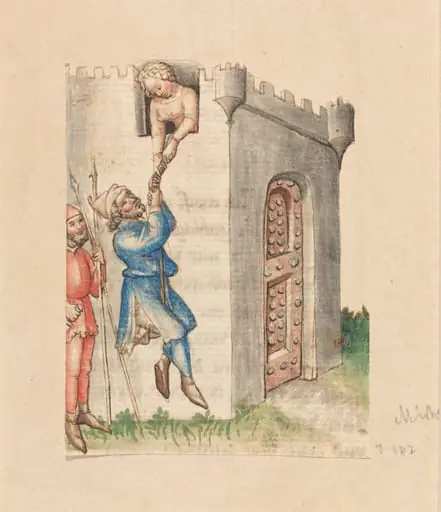 Michol Helping David Escape
![The Statue of Opportunity, a Passer-by, and Remorse [fol. 8r], by French early 16th Century](https://artifactworldgallery.com/img/french-early-16th-century--the-statue-of-opportunity-a-passer-by-and-remorse-fol-8r--6bde779923f886df-w320.webp) The Statue of Opportunity, a Passer-by, and Remorse [fol. 8r]
The Statue of Opportunity, a Passer-by, and Remorse [fol. 8r]![Credulity Preparing to Nurse the Mother of Hope [fol. 18 verso], by French early 16th Century](https://artifactworldgallery.com/img/french-early-16th-century--credulity-preparing-to-nurse-the-mother-of-hope-fol-18-verso--7a59375b6e6f5b02-w320.webp) Credulity Preparing to Nurse the Mother of Hope [fol. 18 verso]
Credulity Preparing to Nurse the Mother of Hope [fol. 18 verso]