Artwork
"Do Not Make Water on Clippings from Nails or Hair" [fol. 30 recto]
!["Do Not Make Water on Clippings from Nails or Hair" [fol. 30 recto], by French early 16th Century, ink, 1514](https://artifactworldgallery.com/img/french-early-16th-century--do-not-make-water-on-clippings-from-nails-or-hair-fol-30-rec--03ca31c36e5a66b9-w1024.webp)
"Do Not Make Water on Clippings from Nails or Hair" [fol. 30 recto] is an ink drawing by the Renaissance artist French early 16th Century. It dates from 1514 and is held in the collection of the National Gallery of Art. Created between 1512 and 1515, this drawing is executed in pen and brown ink with watercolor on laid paper.
About this work
The painting is titled "Do Not Make Water on Clippings from Nails or Hair" and was made around 1512-1515.
This work is from the Renaissance period, a time when art and culture were changing in Europe. The title suggests a religious or mystical theme, which was common during this time.
You can learn more about similar art by exploring the movement: Renaissance.
Overview
Created between 1512 and 1515, this drawing is executed in pen and brown ink with watercolor on laid paper. It originates from the Renaissance era, a period marked by renewed interest in classical ideas and esoteric traditions. The work is part of a manuscript folio, suggesting it was produced as an illustration within a larger textual or devotional context, rather than as a standalone piece.
Subject & Meaning
The title warns against using nail or hair clippings to create water for ritual purposes, hinting at beliefs in sympathetic magic or forbidden occult practices.
The title warns against using nail or hair clippings to create water for ritual purposes, hinting at beliefs in sympathetic magic or forbidden occult practices. Such admonitions were common in Renaissance texts that sought to regulate spiritual conduct, blending Christian doctrine with lingering folk superstitions. The image likely served as a visual caution within a manual on piety or moral discipline.
Technique & Style
The drawing employs precise pen lines and subtle watercolor washes to define forms with clarity and restraint. Its composition is compact, focused on symbolic instruction rather than naturalistic detail. The style reflects the manuscript tradition of Northern European Renaissance illustrators, where clarity and legibility took precedence over decorative flourish.
History & Provenance
The folio is part of a now-dispersed manuscript, likely compiled in a monastic or scholarly setting. Its survival as a single sheet suggests it was separated from its original binding, possibly during the Reformation or later antiquarian collecting. No definitive record of its early ownership exists, though its content aligns with devotional manuscripts from the early 16th century.
Context
During the early 1500s, Europe saw intense scrutiny of magical practices, even as humanist scholarship revived ancient texts on alchemy and astrology. This drawing reflects the tension between emerging scientific inquiry and persistent folk beliefs. Similar warnings appear in contemporary treatises on witchcraft and moral conduct, revealing anxieties about spiritual contamination.
Legacy
This drawing survives as a fragment of a broader cultural effort to codify religious behavior. It offers insight into how visual imagery was used to reinforce doctrinal boundaries in an age of religious upheaval. Though obscure today, such works illuminate the everyday spiritual concerns of Renaissance communities beyond elite art.
Artist & collection

Artist
A French draftsman from the early 1500s filled sheets of laid paper with tiny, sharp-tongued instructions—ink sketches paired with warnings like “Do Not Eat Your Heart Out” or “Feed Not Things That Have Sharp Claws.”…

!["Do Not Eat Your Heart Out" [fol. 22 recto], by French early 16th Century](https://artifactworldgallery.com/img/french-early-16th-century--do-not-eat-your-heart-out-fol-22-recto--003887c9850175b9-w320.webp) "Do Not Eat Your Heart Out" [fol. 22 recto]
"Do Not Eat Your Heart Out" [fol. 22 recto]![The Calumny of Apelles [fol. 6 recto], by French early 16th Century](https://artifactworldgallery.com/img/french-early-16th-century--the-calumny-of-apelles-fol-6-recto--037fde9ac8dbd27b-w320.webp) The Calumny of Apelles [fol. 6 recto]
The Calumny of Apelles [fol. 6 recto]!["You Are Tying a Dolphin by the Tail" [fol. 17 recto], by French early 16th Century](https://artifactworldgallery.com/img/french-early-16th-century--you-are-tying-a-dolphin-by-the-tail-fol-17-recto--0abe83abfb5ccd1d-w320.webp) "You Are Tying a Dolphin by the Tail" [fol. 17 recto]
"You Are Tying a Dolphin by the Tail" [fol. 17 recto]!["Feed Not Things That Have Sharp Claws" [fol. 38 recto], by French early 16th Century](https://artifactworldgallery.com/img/french-early-16th-century--feed-not-things-that-have-sharp-claws-fol-38-recto--1f28115410528631-w320.webp) "Feed Not Things That Have Sharp Claws" [fol. 38 recto]
"Feed Not Things That Have Sharp Claws" [fol. 38 recto]![A Courtier Standing Between Covetousness and Dissimulation [fol. 14 recto], by French early 16th Century](https://artifactworldgallery.com/img/french-early-16th-century--a-courtier-standing-between-covetousness-and-dissimulation-f--2578f4fe9846edc2-w320.webp) A Courtier Standing Between Covetousness and Dissimulation [fol. 14 recto]
A Courtier Standing Between Covetousness and Dissimulation [fol. 14 recto]![A Fool Feeding Flowers to Swine [fol. 42 recto], by French early 16th Century](https://artifactworldgallery.com/img/french-early-16th-century--a-fool-feeding-flowers-to-swine-fol-42-recto--27579a7c495e1682-w320.webp) A Fool Feeding Flowers to Swine [fol. 42 recto]
A Fool Feeding Flowers to Swine [fol. 42 recto]!["You Are Shooting at Heaven" [fol. 9 recto], by French early 16th Century](https://artifactworldgallery.com/img/french-early-16th-century--you-are-shooting-at-heaven-fol-9-recto--28e4ef6e8d8a696d-w320.webp) "You Are Shooting at Heaven" [fol. 9 recto]
"You Are Shooting at Heaven" [fol. 9 recto]!["Do Not Give Your Right Hand to All and Sundry" [fol. 13 recto], by French early 16th Century](https://artifactworldgallery.com/img/french-early-16th-century--do-not-give-your-right-hand-to-all-and-sundry-fol-13-recto--3038ce878ea69e05-w320.webp) "Do Not Give Your Right Hand to All and Sundry" [fol. 13 recto]
"Do Not Give Your Right Hand to All and Sundry" [fol. 13 recto]
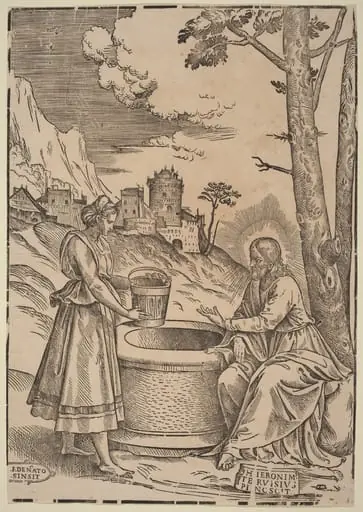 Christ and the Woman of Samaria
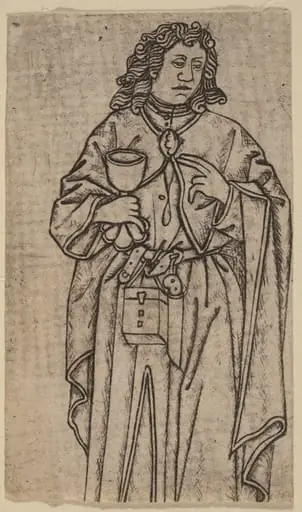 Saint John
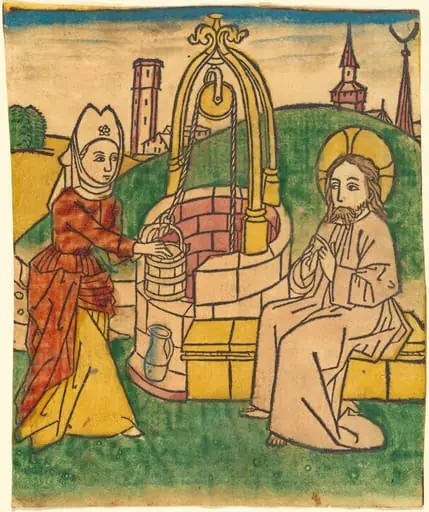 Christ and the Woman of Samaria
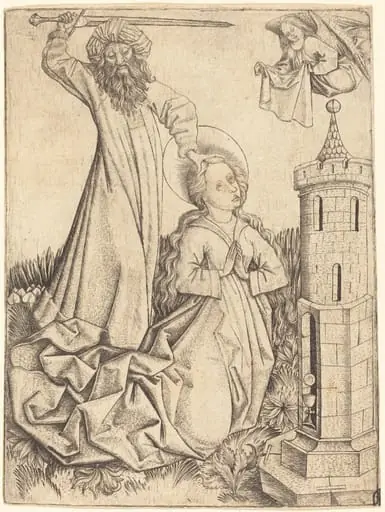 The Martyrdom of Saint Barbara
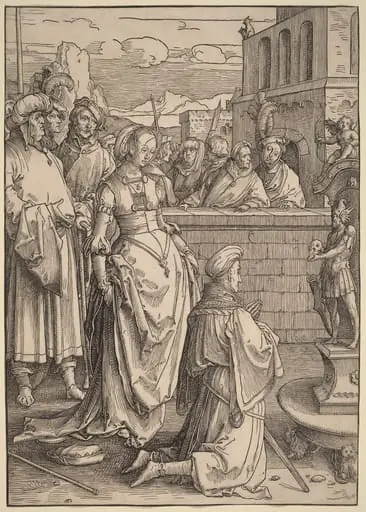 Solomon's Idolatry
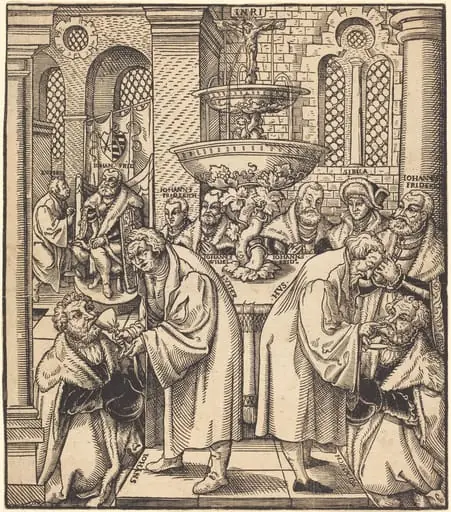 The Reformers Luther and Hus Giving Communion to the Princes of the House of Saxony
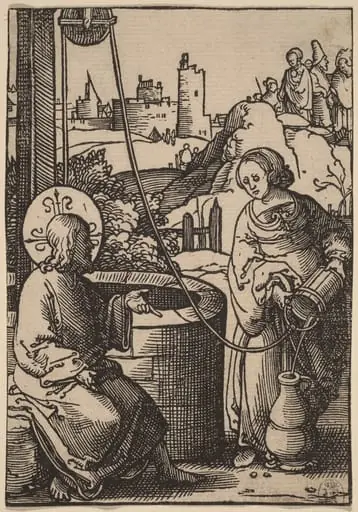 Christ and the Woman of Samaria
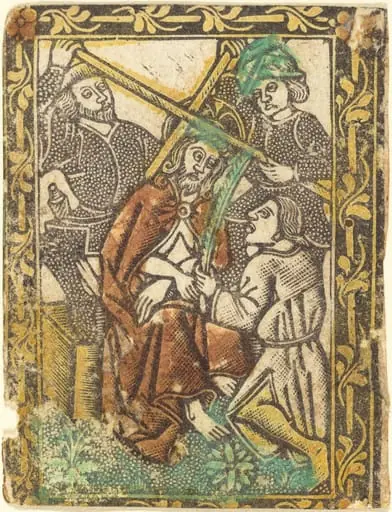 Christ Crowned with Thorns
!["Turn aside the Sharp Sword" [fol. 44 recto], by French early 16th Century](https://artifactworldgallery.com/img/french-early-16th-century--turn-aside-the-sharp-sword-fol-44-recto--fabd8222c92d5d94-w320.webp) "Turn aside the Sharp Sword" [fol. 44 recto]
"Turn aside the Sharp Sword" [fol. 44 recto]