Artwork
"Turn Your Body as You Worship" [fol. 37 verso]
!["Turn Your Body as You Worship" [fol. 37 verso], by French early 16th Century, ink, 1514](https://artifactworldgallery.com/img/french-early-16th-century--turn-your-body-as-you-worship-fol-37-verso--d61f5e0d0cc6a29c-w1024.webp)
"Turn Your Body as You Worship" [fol. 37 verso] is an ink drawing by the Renaissance artist French early 16th Century. It dates from 1514 and is held in the collection of the National Gallery of Art. The drawing, titled “Turn Your Body as You Worship,” is executed with pen, brown ink, and watercolor on laid paper.
About this work
Overview
The drawing, titled “Turn Your Body as You Worship,” is executed with pen, brown ink, and watercolor on laid paper.
The drawing, titled “Turn Your Body as You Worship,” is executed with pen, brown ink, and watercolor on laid paper. It depicts a congregation gathered beneath a towering tree, their postures ranging from kneeling to standing, while a central figure on a rock raises his arms toward the sky. Scattered items such as a sword and a book lie at their feet, adding narrative detail to the devotional scene.
Subject & Meaning
The composition suggests a ritual of worship or communal prayer, with participants clothed in robes and hats, emphasizing collective reverence. The gesturing man atop the rock appears to lead the assembly, perhaps symbolizing spiritual guidance, while the tree’s upward‑curving branches reinforce a sense of aspiration toward the divine.
Technique & Style
Rendered in fine pen lines and muted brown ink, the drawing incorporates subtle watercolor washes that give depth to the foliage and figures. The use of laid paper provides a textured surface, enhancing the delicate interplay of line and tone characteristic of Renaissance drawing practices.
History & Provenance
Catalogued as folio 37 verso, the work belongs to a larger manuscript or sketchbook from the Renaissance period. Its precise origin and ownership trail remain undocumented, but the medium and stylistic traits align it with the era’s devotional illustrations.
Context
During the Renaissance, artists frequently produced preparatory studies for religious narratives, integrating symbolic objects—such as swords representing martyrdom and books denoting learning—into their compositions. This drawing reflects that tradition, merging figure study with allegorical elements.
Legacy
Although not widely reproduced, the piece offers insight into the period’s visual language of worship and the artist’s skill in combining line work with modest color to convey spiritual intensity.
Artist & collection

Artist
A French draftsman from the early 1500s filled sheets of laid paper with tiny, sharp-tongued instructions—ink sketches paired with warnings like “Do Not Eat Your Heart Out” or “Feed Not Things That Have Sharp Claws.”…

!["Do Not Eat Your Heart Out" [fol. 22 recto], by French early 16th Century](https://artifactworldgallery.com/img/french-early-16th-century--do-not-eat-your-heart-out-fol-22-recto--003887c9850175b9-w320.webp) "Do Not Eat Your Heart Out" [fol. 22 recto]
"Do Not Eat Your Heart Out" [fol. 22 recto]![The Calumny of Apelles [fol. 6 recto], by French early 16th Century](https://artifactworldgallery.com/img/french-early-16th-century--the-calumny-of-apelles-fol-6-recto--037fde9ac8dbd27b-w320.webp) The Calumny of Apelles [fol. 6 recto]
The Calumny of Apelles [fol. 6 recto]!["Do Not Make Water on Clippings from Nails or Hair" [fol. 30 recto], by French early 16th Century](https://artifactworldgallery.com/img/french-early-16th-century--do-not-make-water-on-clippings-from-nails-or-hair-fol-30-rec--03ca31c36e5a66b9-w320.webp) "Do Not Make Water on Clippings from Nails or Hair" [fol. 30 recto]
"Do Not Make Water on Clippings from Nails or Hair" [fol. 30 recto]!["You Are Tying a Dolphin by the Tail" [fol. 17 recto], by French early 16th Century](https://artifactworldgallery.com/img/french-early-16th-century--you-are-tying-a-dolphin-by-the-tail-fol-17-recto--0abe83abfb5ccd1d-w320.webp) "You Are Tying a Dolphin by the Tail" [fol. 17 recto]
"You Are Tying a Dolphin by the Tail" [fol. 17 recto]!["Feed Not Things That Have Sharp Claws" [fol. 38 recto], by French early 16th Century](https://artifactworldgallery.com/img/french-early-16th-century--feed-not-things-that-have-sharp-claws-fol-38-recto--1f28115410528631-w320.webp) "Feed Not Things That Have Sharp Claws" [fol. 38 recto]
"Feed Not Things That Have Sharp Claws" [fol. 38 recto]![A Courtier Standing Between Covetousness and Dissimulation [fol. 14 recto], by French early 16th Century](https://artifactworldgallery.com/img/french-early-16th-century--a-courtier-standing-between-covetousness-and-dissimulation-f--2578f4fe9846edc2-w320.webp) A Courtier Standing Between Covetousness and Dissimulation [fol. 14 recto]
A Courtier Standing Between Covetousness and Dissimulation [fol. 14 recto]![A Fool Feeding Flowers to Swine [fol. 42 recto], by French early 16th Century](https://artifactworldgallery.com/img/french-early-16th-century--a-fool-feeding-flowers-to-swine-fol-42-recto--27579a7c495e1682-w320.webp) A Fool Feeding Flowers to Swine [fol. 42 recto]
A Fool Feeding Flowers to Swine [fol. 42 recto]!["You Are Shooting at Heaven" [fol. 9 recto], by French early 16th Century](https://artifactworldgallery.com/img/french-early-16th-century--you-are-shooting-at-heaven-fol-9-recto--28e4ef6e8d8a696d-w320.webp) "You Are Shooting at Heaven" [fol. 9 recto]
"You Are Shooting at Heaven" [fol. 9 recto]
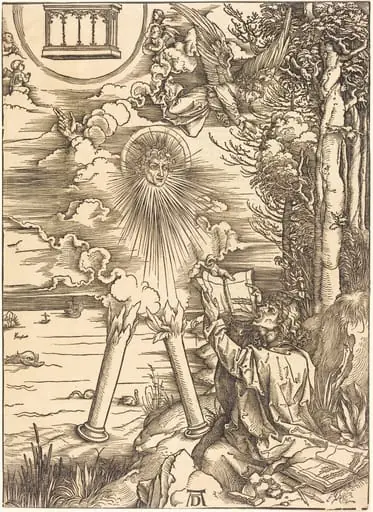 Saint John Devouring the Book
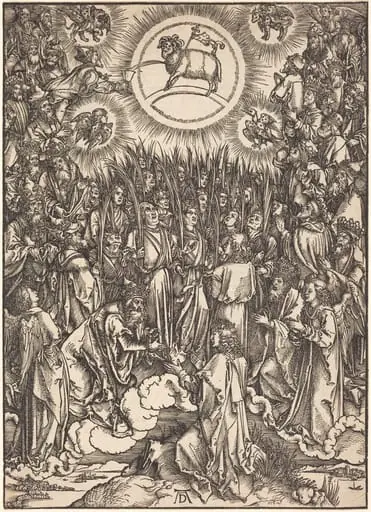 The Adoration of the Lamb
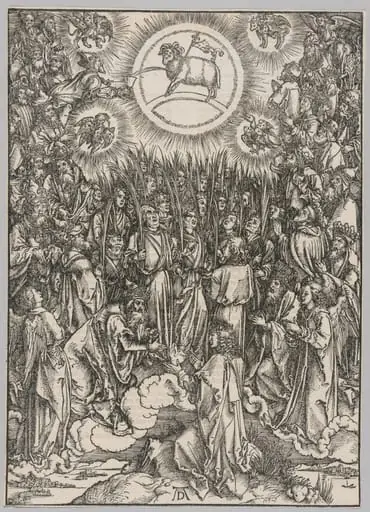 Apocalypse: The Adoration of the Lamb—The Hymn of the Chosen
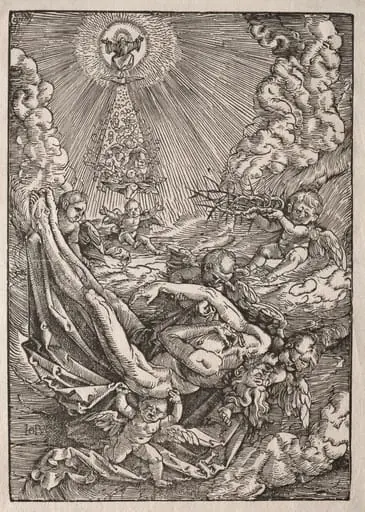 Christ Carried to Heaven by Angels
 The Last Judgment
!["Speak Not Against the Sun" and "Do Not Make Water Facing the Sun" [fol. 39 recto], by French early 16th Century](https://artifactworldgallery.com/img/french-early-16th-century--speak-not-against-the-sun-and-do-not-make-water-facing-the-s--42c37779ed14b75b-w320.webp) "Speak Not Against the Sun" and "Do Not Make Water Facing the Sun" [fol. 39 recto]
"Speak Not Against the Sun" and "Do Not Make Water Facing the Sun" [fol. 39 recto] The Ascension
 The Ascension of Christ
 The Martyrdom of Saint Barbara
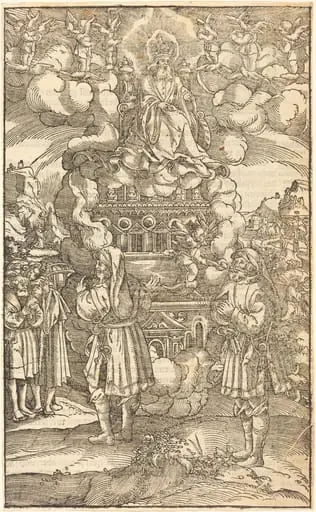 The Apocalypse
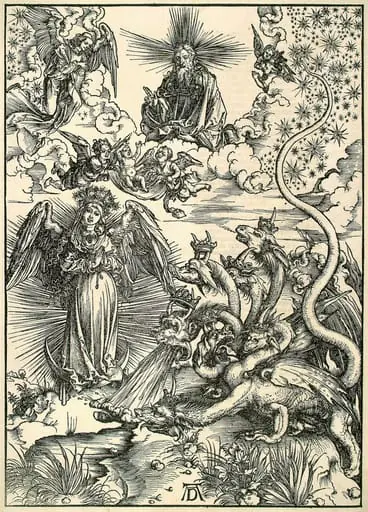 The Apocalyptic Woman
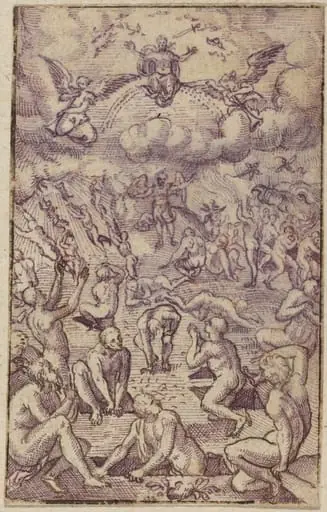 The Last Judgment