Artwork
The Communion of St. Jerome
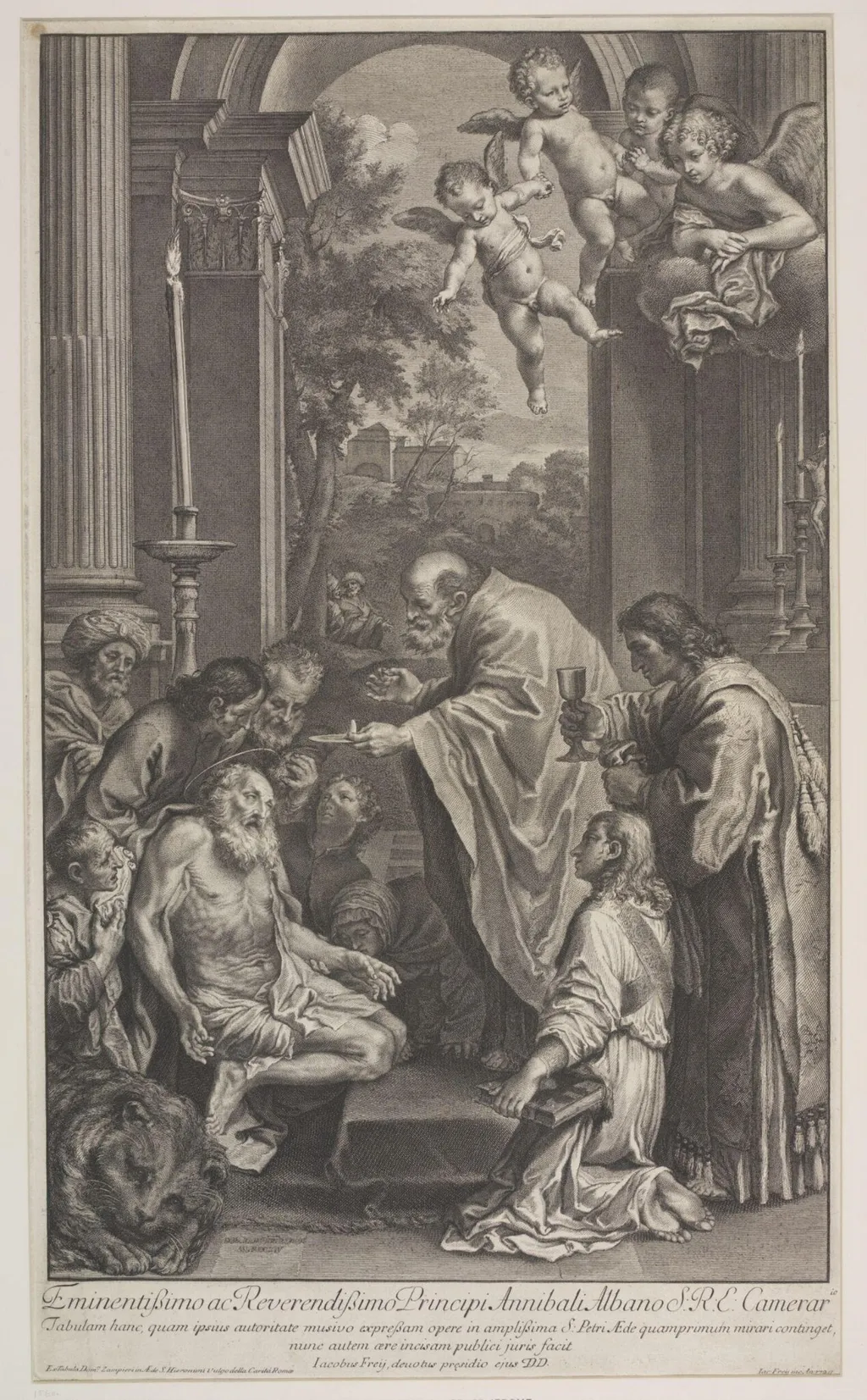
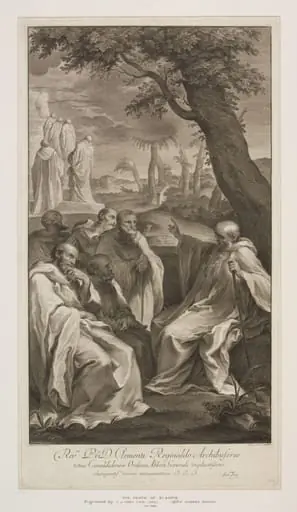
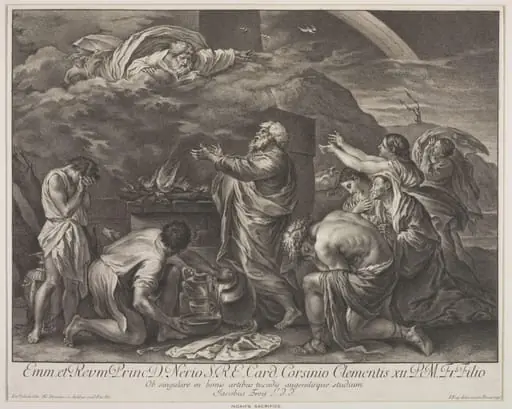
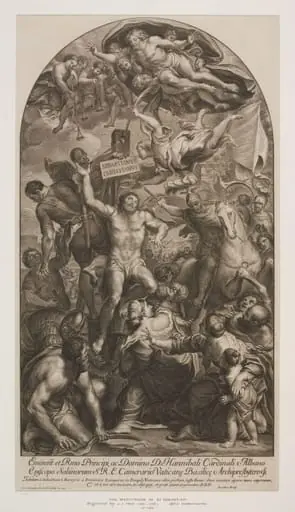
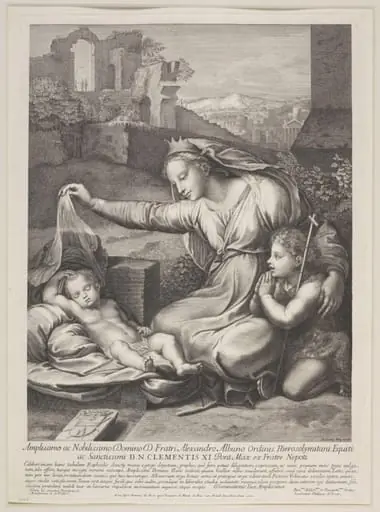
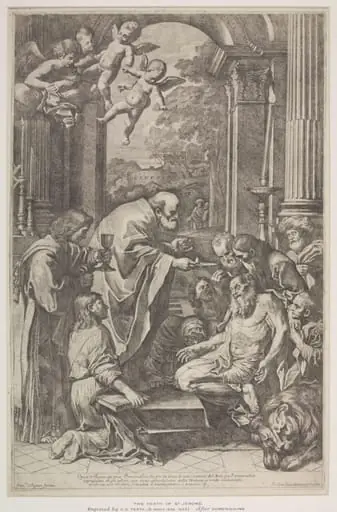
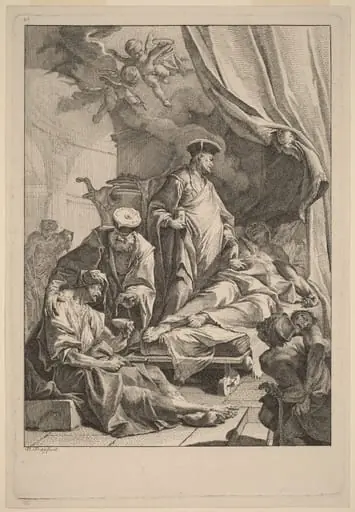
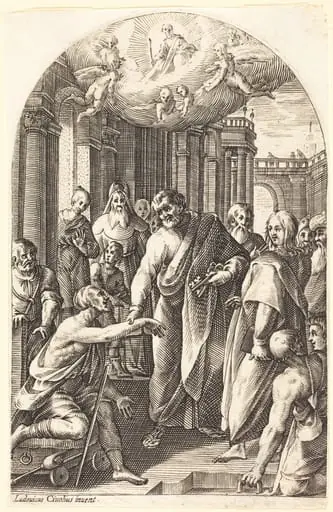
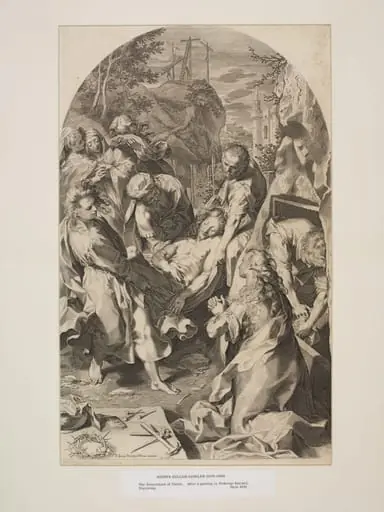
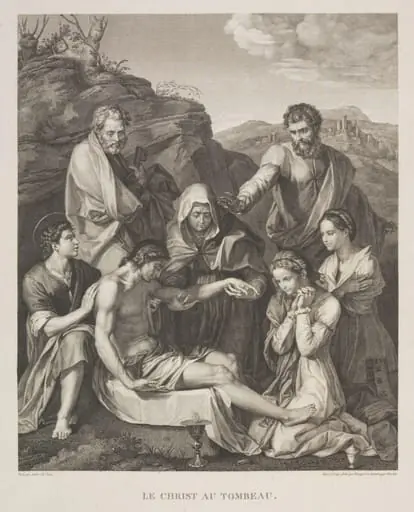
The Communion of St. Jerome is a print by Johannes Jakob Frey. It dates from 1850 and is held in the collection of the Victoria and Albert Museum. This black-and-white print, dated 1850, reproduces a composition originally painted by Domenichino.
About this work
Overview
This black-and-white print, dated 1850, reproduces a composition originally painted by Domenichino. Attributed to Johannes Jakob Frey, it was produced as a reproductive engraving on paper. The image captures a sacred moment with heightened contrast between light and shadow, typical of 19th-century printmaking techniques aimed at disseminating religious imagery to a broader audience.
Subject & Meaning
The composition emphasizes spiritual elevation, with upward gazes and floating angels directing attention toward the sacred event.
The scene depicts Saint Jerome receiving Holy Communion, a moment of divine grace. He is shown centrally, raising the Eucharist as figures and angels surround him in reverence. The presence of celestial beings suggests heavenly witness, reinforcing the sanctity of the act. The composition emphasizes spiritual elevation, with upward gazes and floating angels directing attention toward the sacred event.
Technique & Style
Executed in chiaroscuro, the print uses strong tonal contrasts to model forms and create depth. Fine linear engraving defines the figures and architectural details, while the background landscape recedes through delicate hatching. The style reflects 19th-century reproductive print practices, prioritizing clarity and dramatic effect over painterly texture, adapting a Baroque original for printed reproduction.
History & Provenance
Created in 1850 by Johannes Jakob Frey, the print was likely commissioned or produced for private or ecclesiastical use. Latin inscriptions at the base imply it was intended as a devotional gift for a person of status. Its origin in a Swiss or German printmaking tradition aligns with the period’s demand for religious imagery in domestic and institutional settings.
Context
In mid-19th-century Europe, reproductive prints served as accessible conduits for religious and artistic themes, especially where original paintings were inaccessible. This work reflects the continued influence of Counter-Reformation iconography and the role of print in sustaining devotional culture amid industrialization and changing religious practices.
Legacy
Though not widely known as an independent artistic achievement, the print preserves Domenichino’s composition for later study and appreciation. It exemplifies the transmission of Baroque religious art through print media, contributing to the visual literacy of 19th-century audiences and remaining a documented artifact in institutional collections such as the Victoria and Albert Museum.
Artist & collection
Artist
Mid-19th-century religious prints by Johannes Jakob Frey bring Bible scenes and saints’ lives to paper.