Artwork
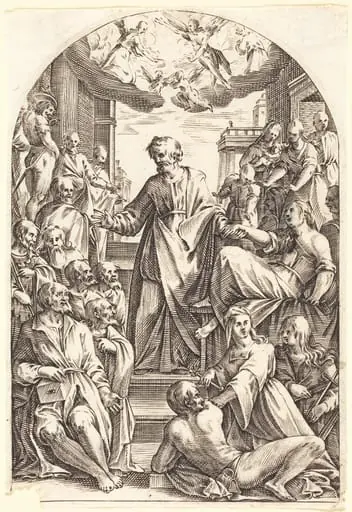
Death of St. Jerome
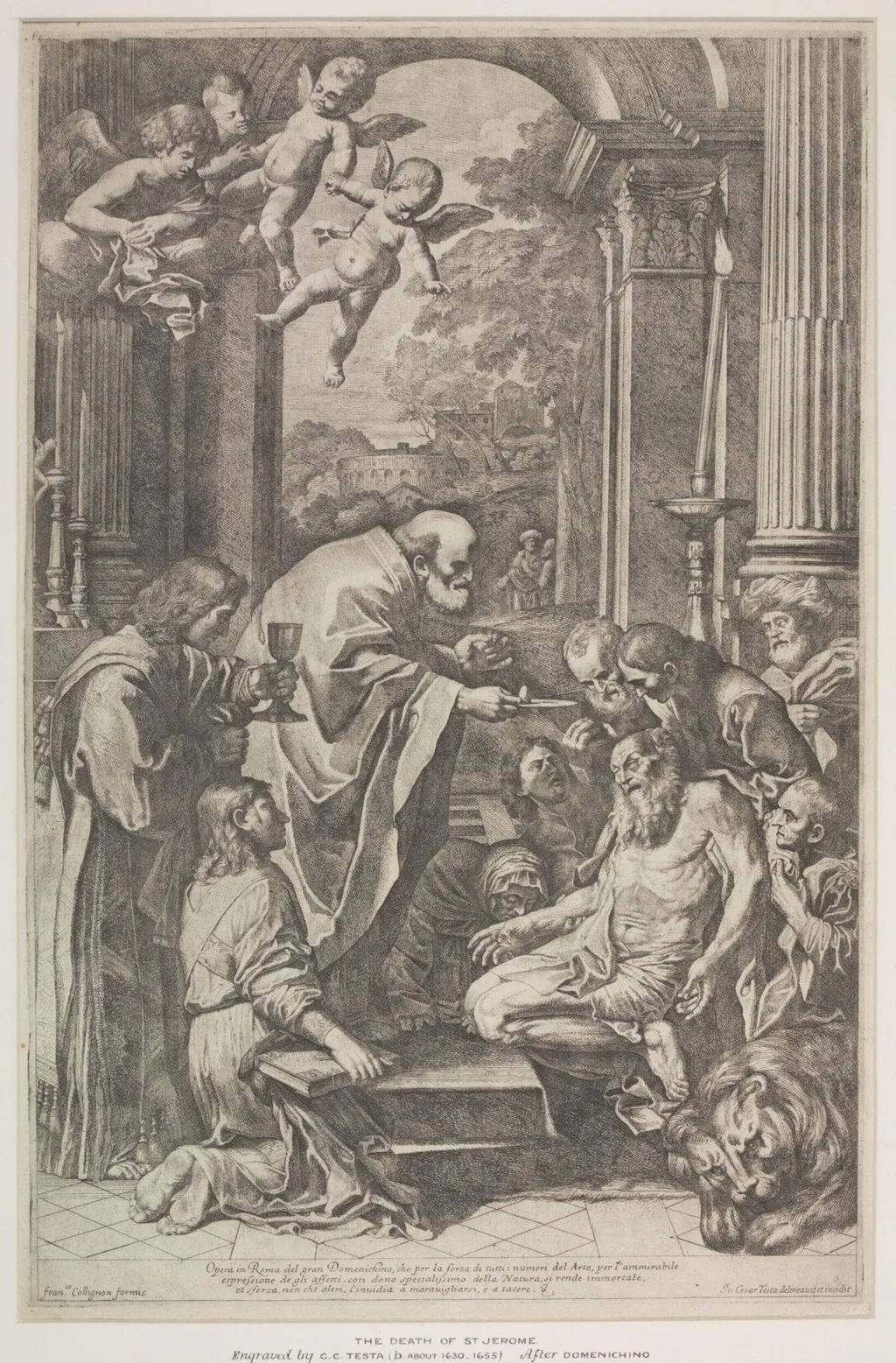
Death of St. Jerome is a print by Giovanni Cesare Testa. It dates from 1650 and is held in the collection of the Victoria and Albert Museum. Death of St.
About this work
Overview
Death of St. Jerome is a 1650 print on paper by Giovanni Cesare Testa, based on a composition by Domenichino. The engraving captures a dramatic, crowded scene of the saint's final moments.
Subject & Meaning
The print depicts St. Jerome on his deathbed, half-naked and solemn, surrounded by attendants. A robed figure holds a book and gestures towards him, while others observe or kneel. Cherubs above carry symbolic objects (book, cross), underscoring the saint's piety and transition.
Technique & Style
Testa employed strong chiaroscuro, leveraging contrasting light and shadow to create depth and emphasize the figures. The composition also features architectural elements like tall columns and a window, adding to the spatial and emotional tension.
History & Provenance
Executed in 1650 by Giovanni Cesare Testa, the print is directly derived from a pre-existing composition by the Italian Baroque painter Domenichino. Provenance details are not provided.
Context
The work reflects the Baroque period's emphasis on emotive, dramatic scenes of religious devotion. The choice of subject and artistic techniques align with contemporary artistic and religious values in 17th-century Europe.
Legacy
While specific legacy details of this print are not provided, it contributes to the broader artistic heritage of Baroque religious art, illustrating the enduring appeal of St. Jerome's story across mediums.
Artist & collection
Artist
Giovanni Cesare Testa made late 17th-century religious prints, often etching scenes of saints’ final moments.

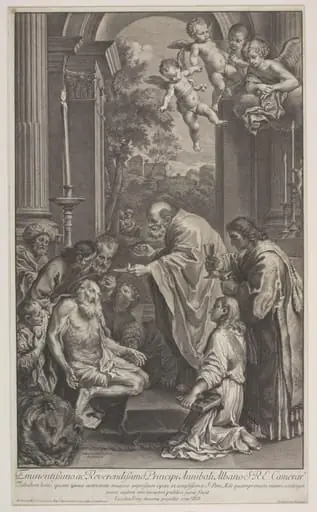 The Communion of St. Jerome
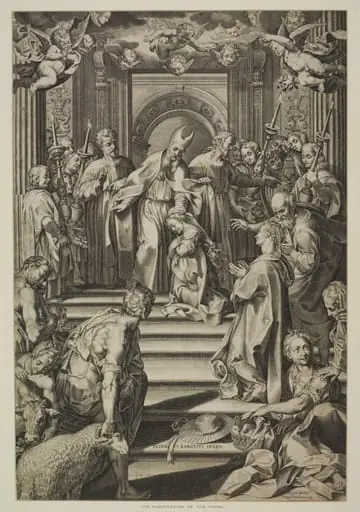 The Purification of the Virgin
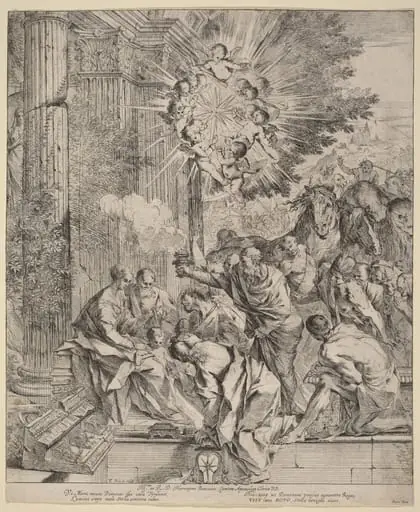 The Adoration of the Magi
 Death of Seneca
 Adoration of the Magi
 Domenico
 Copy of Cornelis Cort: Christ Giving the Key of the Church to Saint Peter
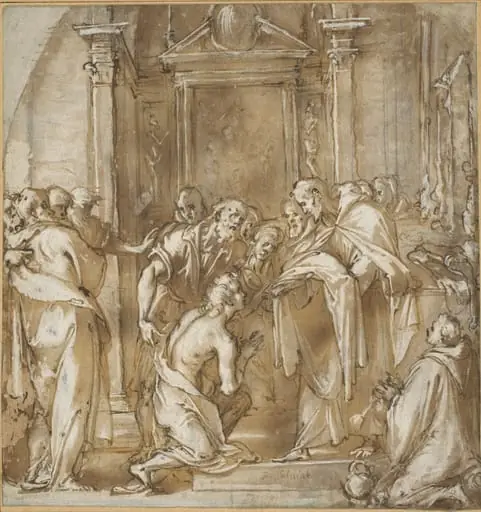 Saint Vincent Ferrer Taking His Vestments
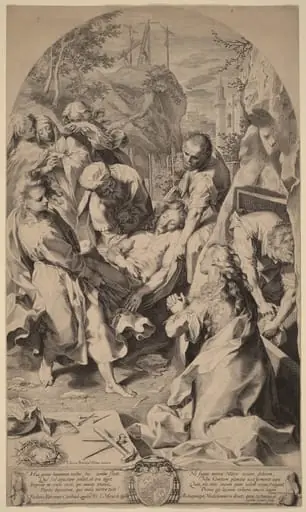 The Entombment
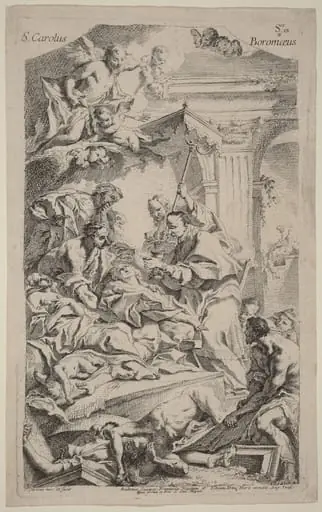 San Carlo Borromeo Giving Last Communion to Victims of the Plague
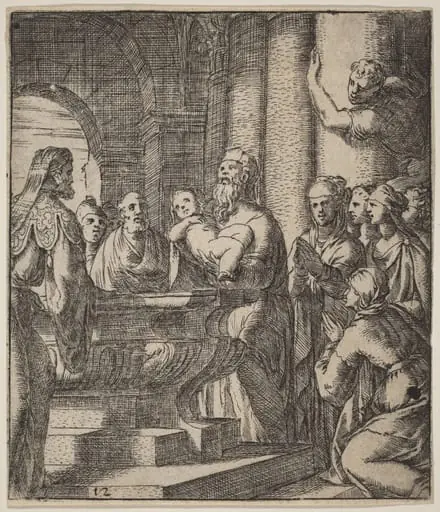 The Baptism of Christ
 Peter Raising Tabitha