Artwork
Untitled
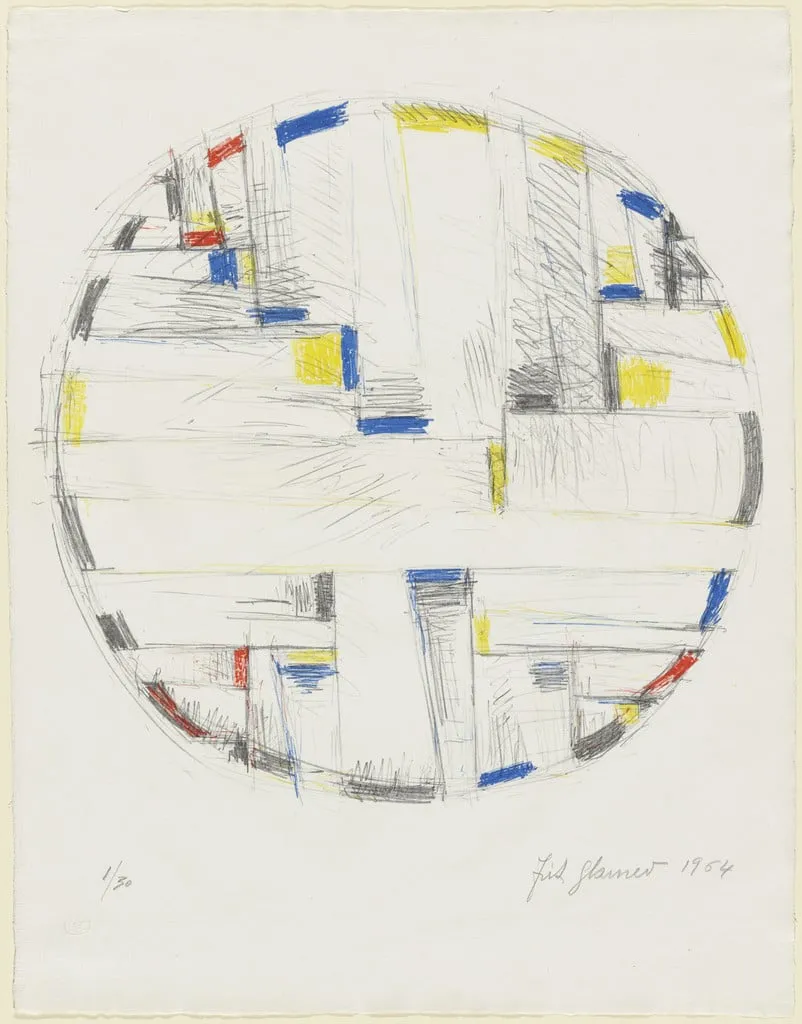
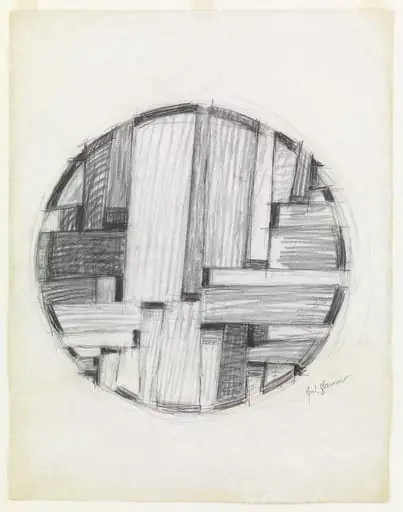
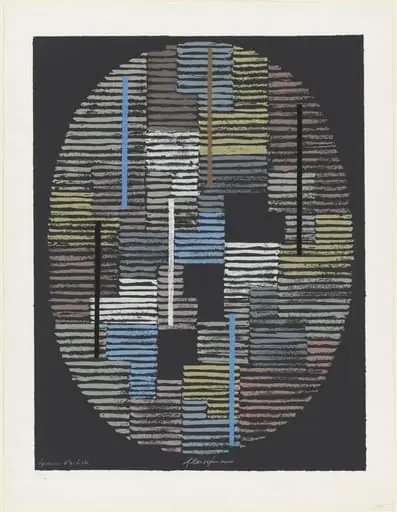
Untitled is an ink print by Fritz Glarner. It dates from 1964 and is held in the collection of the Museum of Modern Art.
About this work
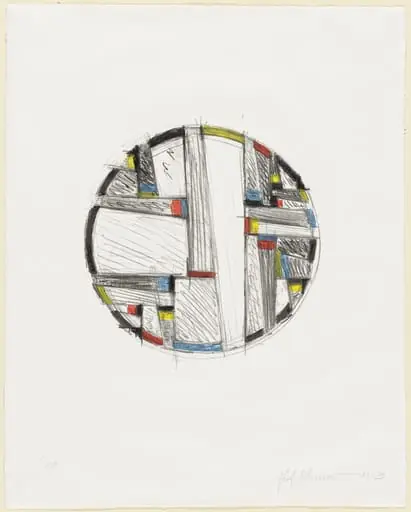
Inside each part, there are quick, sketchy lines—some black, some gray—that make shapes that don’t quite add up to anything real.
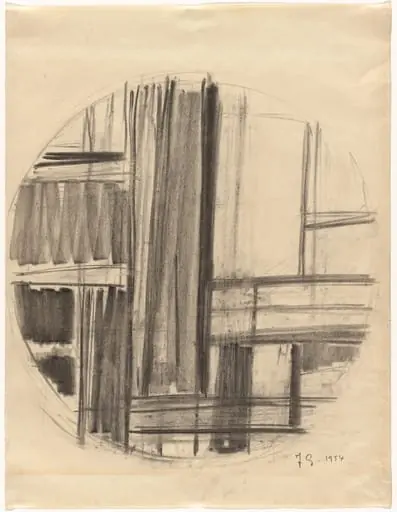
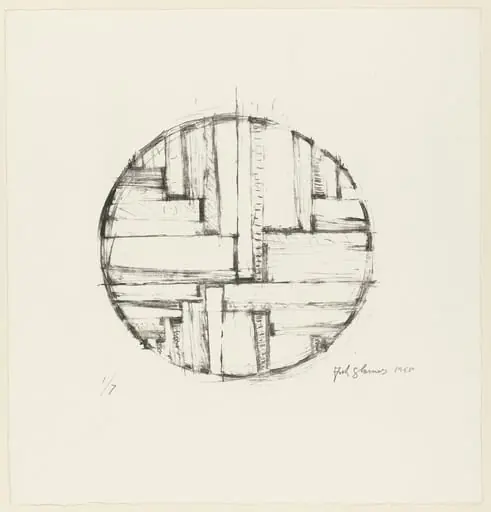
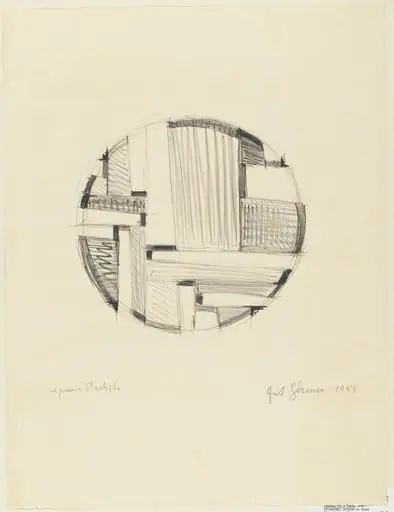
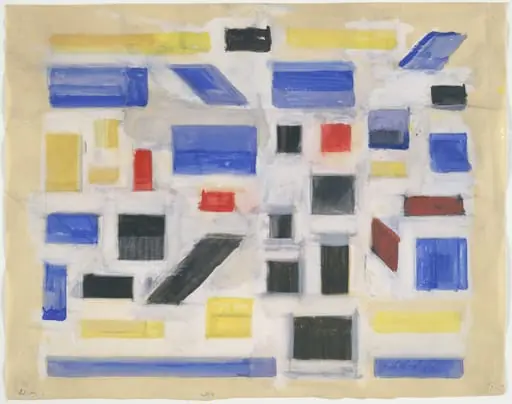
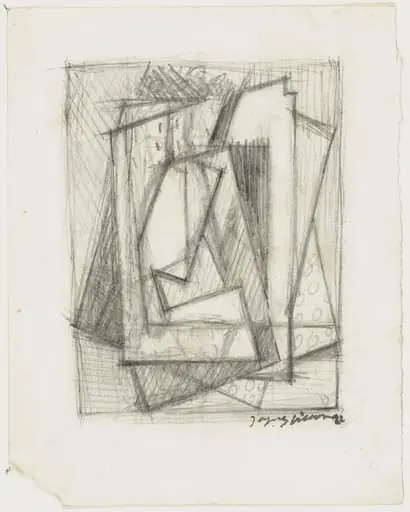
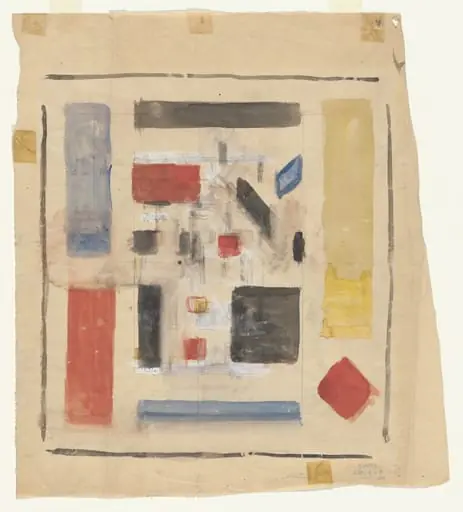
This drawing looks like a circle split into four uneven sections. Inside each part, there are quick, sketchy lines—some black, some gray—that make shapes that don’t quite add up to anything real. Bright colors like yellow, red, and blue pop up in small patches, almost like they were added after the rest. The lines feel rushed, like they were drawn fast, and the whole thing sits on a plain white background.
The artist signed it in the corner with the year 1964. It’s not trying to show a real place or person—just shapes and colors that don’t match anything you’d see in everyday life.
If you like this kind of loose, abstract drawing, check out lithography to see how it’s made.
Overview
Fritz Glarner created this 1964 lithograph as a non-representational composition, now in The Museum of Modern Art’s collection. The work features no recognizable subjects, instead presenting a circular form divided into irregular segments. Each section contains gestural, hurried lines in black and gray, with isolated bursts of primary color—red, yellow, blue—appearing as if applied spontaneously. The plain white ground emphasizes the abstraction, reinforcing the work’s focus on form and gesture over depiction.
Subject & Meaning
The piece resists narrative or symbolic interpretation. No figures, landscapes, or objects are suggested; the arrangement of lines and color blocks functions independently of external reference. Glarner’s intent appears rooted in exploring visual relationships—balance, tension, and rhythm—rather than conveying meaning. The irregular divisions and erratic marks invite observation of structure itself, not what it might represent.
Technique & Style
Executed in lithography, the work exploits the medium’s capacity for fluid, immediate mark-making. The lines appear hastily drawn, with varying pressure creating tonal shifts between black and gray. Patches of saturated color were likely applied as flat, opaque washes, contrasting with the sketchy linework. The technique supports the work’s sense of spontaneity, aligning with Glarner’s interest in dynamic equilibrium and non-objective form.
History & Provenance
Produced in 1964, the lithograph entered The Museum of Modern Art’s collection shortly after its creation. Glarner, a Swiss-born artist associated with Concrete Art, had been refining his abstract language since the 1930s. This work reflects his mature phase, where geometric frameworks were softened by intuitive mark-making. Its acquisition by MoMA situates it within a broader postwar American interest in European abstraction.
Context
In the 1960s, many artists moved away from strict geometric abstraction toward more expressive, process-driven forms. Glarner’s work engages this shift, retaining structural clarity while introducing improvisational elements. His approach diverged from rigid Constructivism, embracing subtle instability within ordered compositions. This piece aligns with contemporaneous experiments in printmaking that prioritized gesture over precision.
Legacy
Though not among Glarner’s most widely exhibited works, this lithograph exemplifies his unique synthesis of order and spontaneity. It contributes to understanding how Concrete Art evolved in the postwar era, incorporating intuitive mark-making without abandoning structural discipline. The work remains a quiet but significant example of mid-century printmaking that prioritized visual inquiry over representation.
Artist & collection
Artist
Fritz Glarner was a Swiss-American painter. He was a proponent of Concrete Art movement and a disciple of Piet Mondrian.