Artwork
Untitled
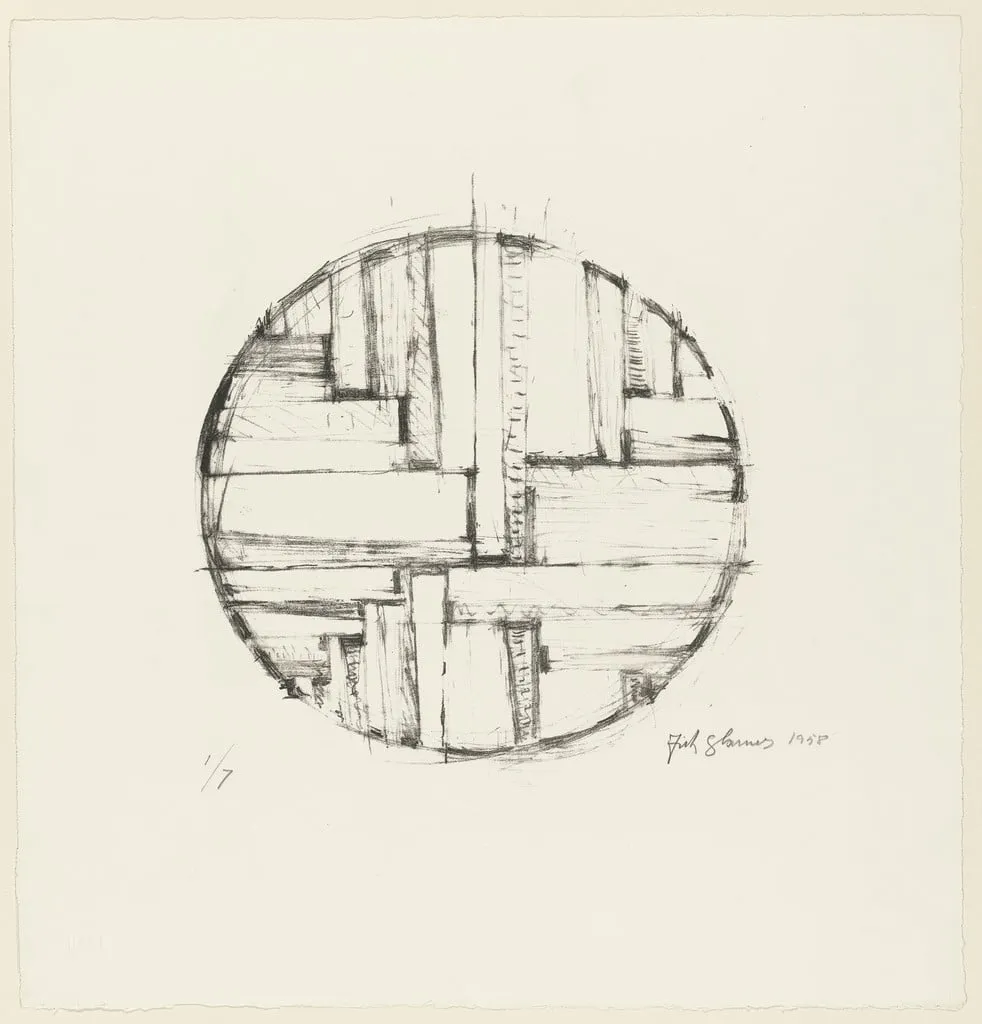
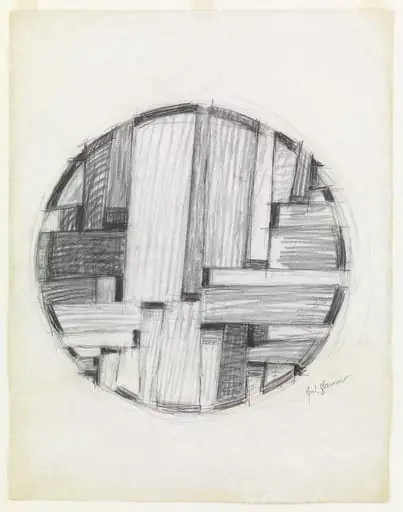
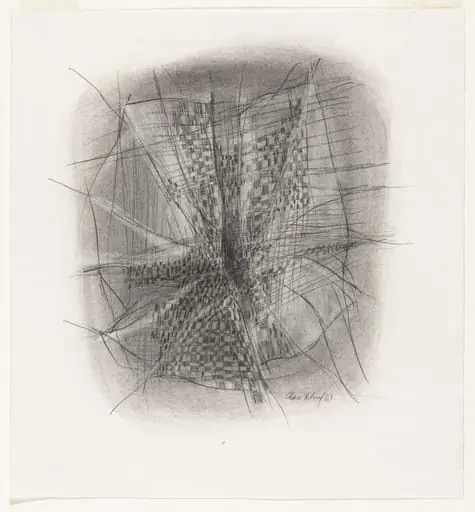
Untitled is an ink print by Fritz Glarner. It dates from 1958 and is held in the collection of the Museum of Modern Art.
About this work
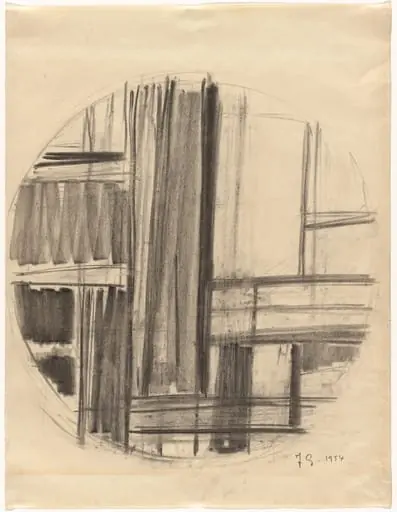
" The artist used a simple black-and-white approach, but the way the lines overlap creates a sense of depth without clear details.
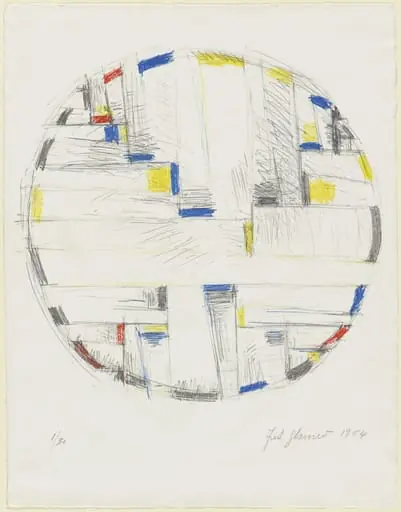
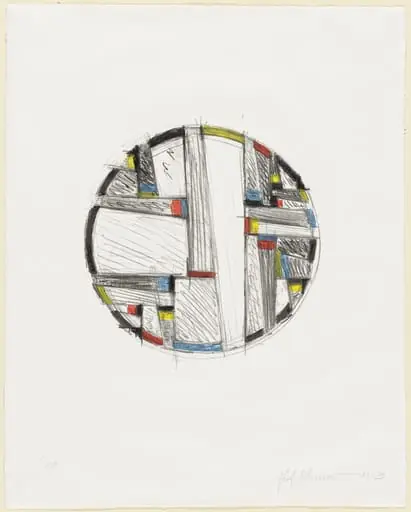
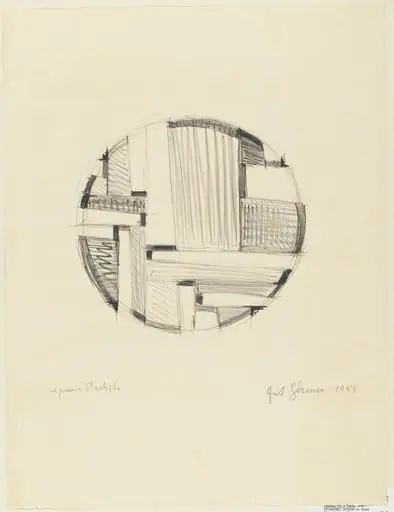
This drawing shows a circle packed with quick, sketchy lines forming shapes that look like buildings or rooms. The lines are uneven, some darker than others, and the whole thing feels a little messy but intentional. There’s a small signature in the corner that reads "Fritz Glarner 1958."
The artist used a simple black-and-white approach, but the way the lines overlap creates a sense of depth without clear details. It’s like a puzzle where you can’t quite figure out what everything is, but that’s the point.
If you like this style, check out lithography to see how artists use it to make prints like this.
Overview
Fritz Glarner created this 1958 lithograph, part of The Museum of Modern Art’s collection. The work is rendered in black ink on paper, employing the lithographic process to produce a single, hand-pulled print. Its composition avoids representational clarity, instead favoring a dense network of gestural lines that suggest structure without defining it. The artist’s signature, faintly placed in one corner, anchors the piece chronologically and personally.
Subject & Meaning
The image resists literal interpretation, presenting no identifiable figures or scenes. Instead, overlapping strokes evoke architectural fragments—walls, windows, rooms—without resolving into coherent space. This ambiguity reflects Glarner’s interest in abstraction as a means to explore perception rather than depict reality. The work invites contemplation of form and rhythm over narrative, aligning with mid-century inquiries into visual uncertainty.
Technique & Style
Glarner used lithography to achieve subtle tonal variations through controlled ink application and pressure. The lines vary in weight and density, creating texture and implied depth without shading or perspective. The hand-drawn quality, with irregular strokes and intentional disarray, contrasts with the precision often associated with geometric abstraction. This tension between order and spontaneity defines the work’s visual language.
History & Provenance
The print was made in 1958 during Glarner’s mature period, following his relocation to the United States and his engagement with American abstract movements. It entered The Museum of Modern Art’s collection shortly after its creation, likely through direct acquisition or donation. Its preservation in a major institution underscores its significance within Glarner’s print oeuvre and the broader context of postwar American abstraction.
Context
Created during a time when artists were redefining abstraction beyond pure geometry, Glarner’s work engages with the expressive potential of line and mark-making. His approach diverged from rigid Constructivism, embracing a more intuitive, almost calligraphic energy. This piece reflects broader trends in 1950s printmaking, where artists explored process and materiality as central to meaning, not merely as reproduction methods.
Legacy
Though not widely exhibited, this lithograph exemplifies Glarner’s unique contribution to mid-century abstraction: a balance between structure and improvisation. It remains a quiet but persistent reference in studies of postwar printmaking, illustrating how lithography could serve expressive ends beyond commercial or illustrative uses. Its influence is seen in later artists who prioritized gesture and ambiguity over formal clarity.
Artist & collection
Artist
Fritz Glarner was a Swiss-American painter. He was a proponent of Concrete Art movement and a disciple of Piet Mondrian.